The low-frequency hum of the tracks beneath my mattress was the soundtrack to the next thirty-six hours. I stood on the platform at Ga Sai Gon, watching the sun dip behind the cluttered horizon of District 3, while the SE6 locomotive hissed in anticipation. To travel the length of the country by rail is not about speed; it is an act of deliberate observation, a slow-motion transition from the manic energy of the south to the storied, humid gravity of the north. Stepping onto the train, the smell of jasmine tea and industrial floor wax greeted me, signaling the start of my journey on the reunification express overnight.
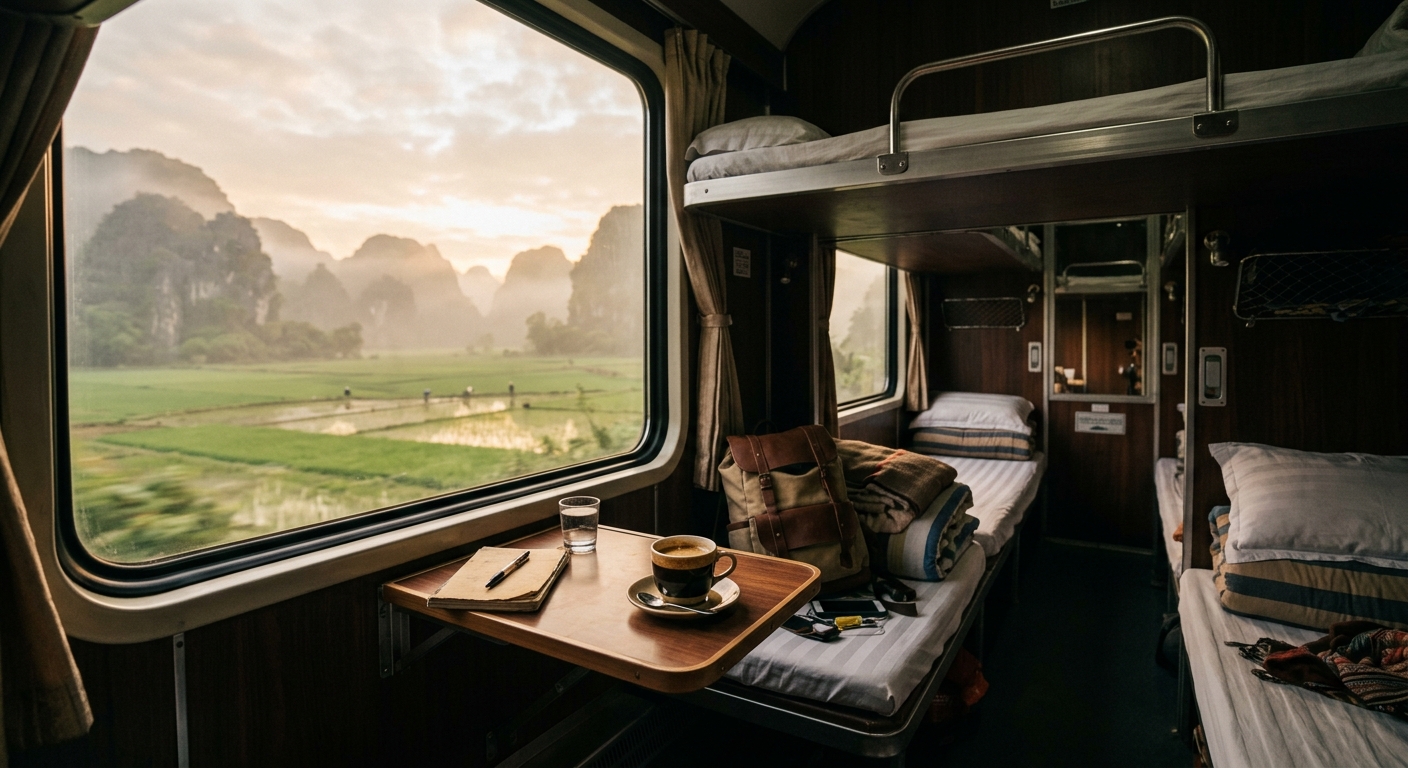
My cabin was a four-berth soft-sleeper, a modest compartment with wood-paneled walls that had seen better decades. I had opted for the upper bunk, a choice that requires a bit of acrobatics but rewards the traveler with a sense of private sanctuary. Nestled against the ceiling, with just enough clearance to sit up if I hunched slightly, I felt like a stowaway in a rolling village. The bedding was surprisingly crisp, provided in plastic vacuum-sealed packages, and the pillow offered just enough loft to watch the suburban sprawls of Saigon dissolve into dark, rhythmic shapes of banana palms and flooded rice paddies.
The Rhythms of the Rails
Life on board the Vietnam train sleeper moves at the pace of the food cart. Every few hours, the cabin door slides open, and a conductor in a sharp, slightly oversized uniform offers tea, coffee, or hot bowls of noodles. There is a specific thrill in eating breakfast while leaning against the window glass, watching the mist roll off the mountains near Da Nang. The pho cart is a staple of the journey; the broth is surprisingly fragrant, heavily seasoned with star anise and served with a side of chili that keeps the morning chill—if the air conditioning is cranked too high—at bay. You learn to balance your bowl against the swaying motion of the carriage, a skill that feels like a rite of passage for the long-distance rail traveler.

If you are planning to make the trek from Sai Gon to Ha Noi rail, the logistics require a bit of foresight. I packed a small “go-bag” for the cabin so I wouldn’t have to wrestle a large suitcase down from the overhead rack in the middle of the night. It contained a portable battery, a good book, noise-canceling headphones, and a pair of sturdy flip-flops for navigating the narrow, oscillating corridor to the washroom. While the train has communal toilets and basins, keeping your own supply of hand sanitizer and toilet paper is a decision you will thank yourself for by the time you reach the second day.
The window is your television, your map, and your meditation tool. I set my alarm for dawn as we neared the Hai Van Pass, arguably the most iconic stretch of the journey. As the train snakes along the coastline, the mountains drop sheer into the turquoise sea, and the tracks seem to hover between the water and the jungle. It is a view that justifies the early wake-up call, capturing the dramatic geography that defined the country’s history for centuries. You see fishermen casting nets in the shallows and motorbikes flickering like fireflies on the distant highway, all framed by the rusted, metallic edge of the train carriage.

As the journey continues into its second night, the exhaustion sets in, but it is a pleasant, heavy kind of tired. You lose track of the stations. The names—Hue, Dong Hoi, Ninh Binh—become markers of time rather than geography. The train is a social ecosystem; families share fruit, solo travelers exchange nods in the hallway, and the conductors keep a watchful, albeit detached, eye on the changing faces of their passengers. By the time the train slowed into the outskirts of the capital, the urban density felt familiar yet shifted, the neon lights reflecting off the wet pavement of the platform.
Stepping off the train in Hanoi feels like waking from a long, vivid dream. Your legs might feel slightly unmoored from the steady rocking of the bunks, and your clothes will carry the faint, metallic scent of the tracks. The air in Hanoi is different—thicker, older, and bustling with a chaotic charm that feels like a stark contrast to the sprawling heat of the south. Walking toward the exit, I felt a strange sense of loss at leaving the narrow confines of the sleeper. It is a distinct, rhythmic way to witness the country, a slow unfolding of landscapes that you simply cannot replicate from thirty thousand feet in the air.
If you choose this route, remember to look past the occasional smudge on the glass or the creaky door hinge. The value here isn’t in luxury, but in the unfolding narrative of the land itself. You are moving through the heart of the country, watching the transition of dialects, architecture, and climates from the comfort of a rolling bunk. It is a journey that asks you to slow down, pay attention, and appreciate the immense, sprawling beauty of the journey between the two ends of the nation.