The road from Cao Bang town to the border winds through a landscape that feels like a Chinese landscape painting brought to three-dimensional, humid life. As you leave the urban cluster of the provincial capital, the concrete gradually gives way to staggering limestone karsts that jut out of the earth like jagged, emerald teeth. This is the northern frontier, where the air is noticeably thinner and carries the scent of wet stone and woodsmoke. For most travelers, the journey to the Ban Gioc waterfall is more than just a transit point; it is a pilgrimage into the heart of Vietnam’s most dramatic topography.
A typical Cao Bang day trip to the falls usually starts before the sun has fully burned off the morning mist. You are looking at roughly two to three hours of driving, depending on how often you stop to photograph the rice paddies or the water buffaloes that seem to own the narrow mountain passes. The route is paved but demanding, characterized by hairpin turns that hug the mountainside. If you are hiring a local driver, you will quickly learn that they treat these curves with a rhythmic familiarity, while those on motorbikes will find themselves constantly shifting gears, balancing the thrill of the ascent against the heavy truck traffic hauling goods toward the Chinese border.
Choosing Between Rushing Water and Clear Pools
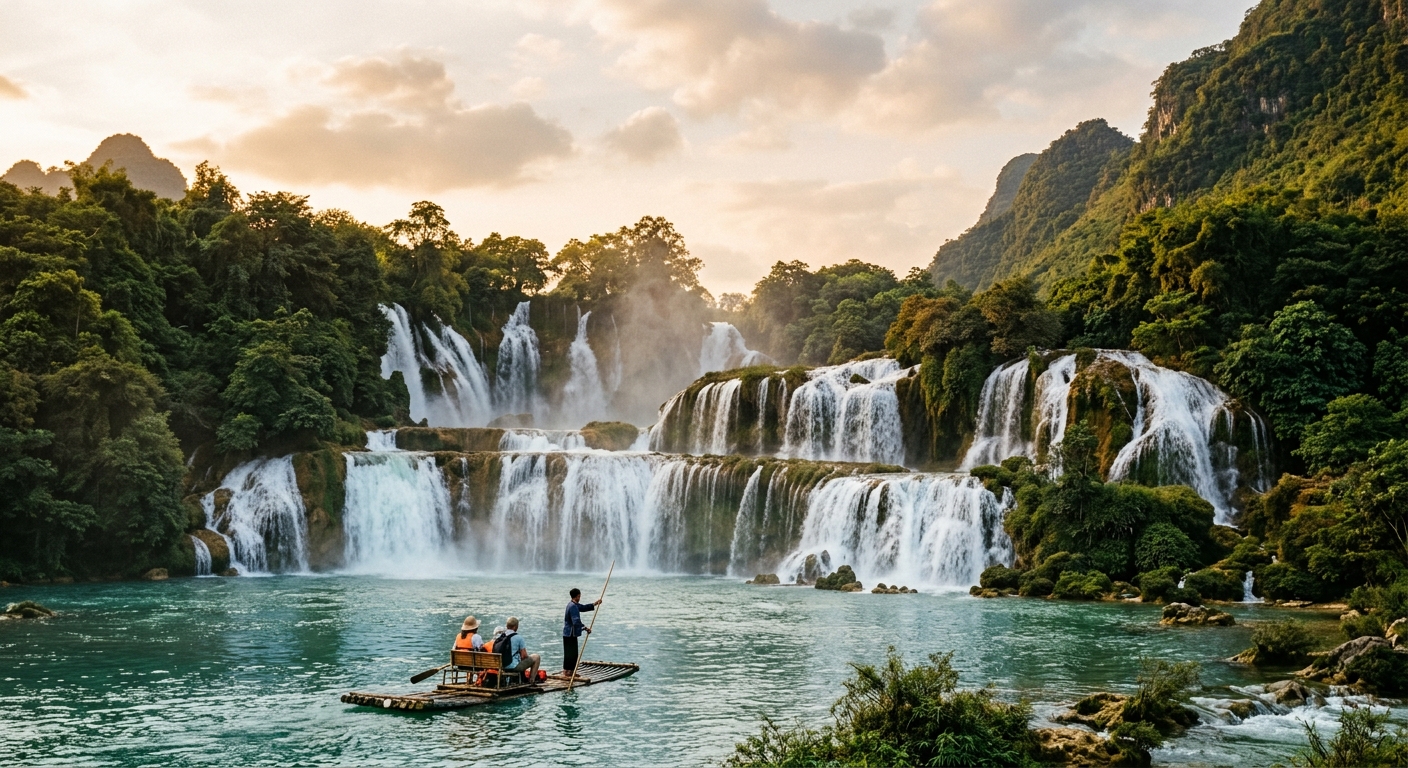
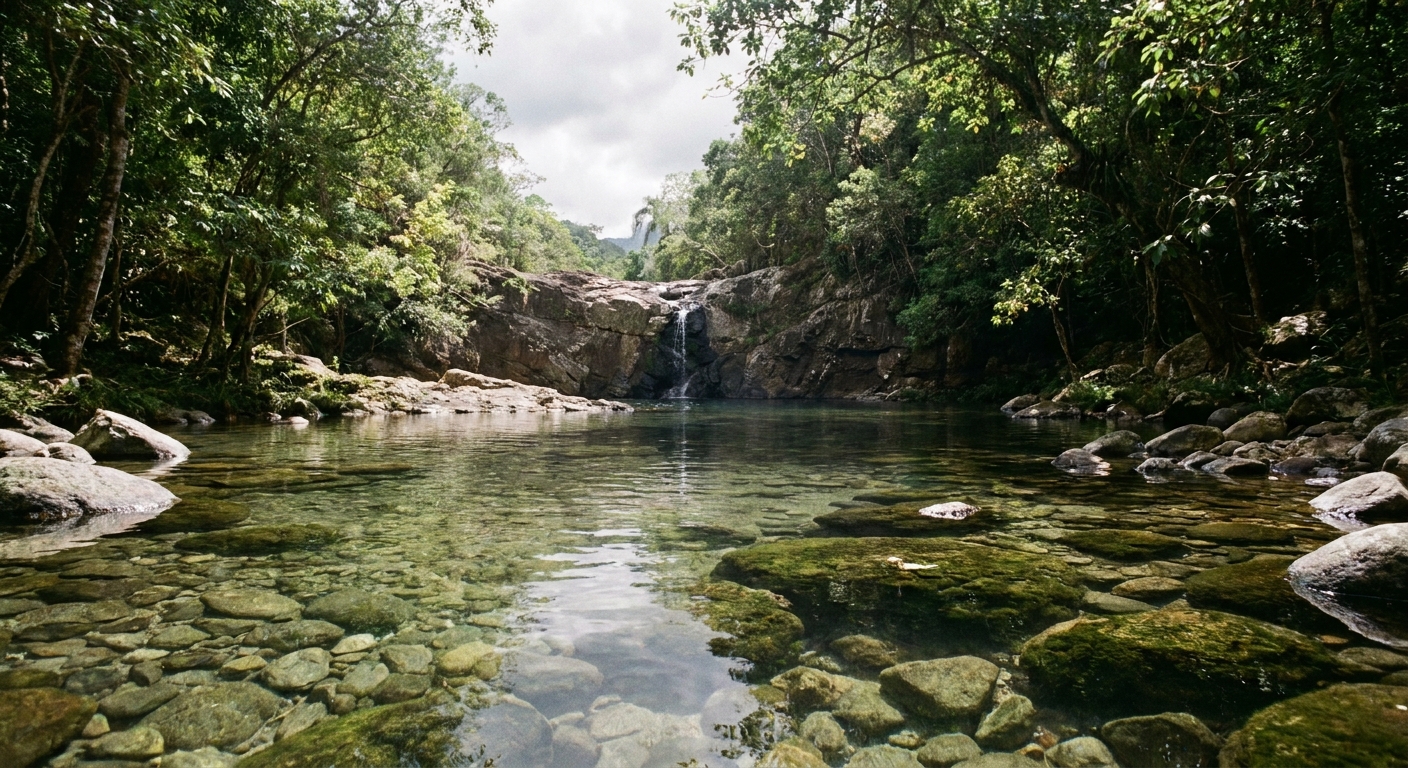
The experience of standing before the Ban Gioc waterfall changes entirely depending on the calendar. During the wet season, from June to September, the Quay Son River swells with torrential rains, turning the falls into a thundering, muddy curtain of raw power. It is violent, loud, and breathtaking, though the spray can make photography a damp exercise in futility. Conversely, the dry season brings a tranquil, turquoise clarity to the water. The tiered limestone ledges become visible, creating a gentle cascade that feels more like a terraced garden than a raging torrent. Choosing your season depends on whether you prefer the primal roar of nature or the painterly aesthetics of the clear, blue pools.
Once you arrive at the site, the border reality becomes immediately apparent. You are standing on the Vietnamese side of the Vietnam China border falls, with the Chinese side clearly visible just a few dozen meters away. The border is demarcated by the river itself, and the most surreal way to appreciate the scale of the falls is by hopping onto one of the small, flat bamboo rafts. These guides will pole you right up to the base of the crashing water. You will likely get misted, and you will certainly be reminded that you are hovering on the edge of a sovereign boundary, with Chinese tourists visible on the opposite bank doing the exact same thing.
While a day trip is feasible, the real magic of this region is found in the slow, fading light of the evening once the tour buses depart for Cao Bang. Staying overnight in a Tay-village homestay, particularly in the village of Ban Gioc or the nearby Khuoi Ky stone village, offers a glimpse into a way of life that remains deeply tethered to the land. You aren’t checking into a hotel; you are staying in a traditional stilt house, often built from thick, darkened wood and perched over communal courtyards. The hospitality here is unpretentious and usually involves a shared dinner of boiled pork, local greens, and a surprising amount of potent homemade corn wine.
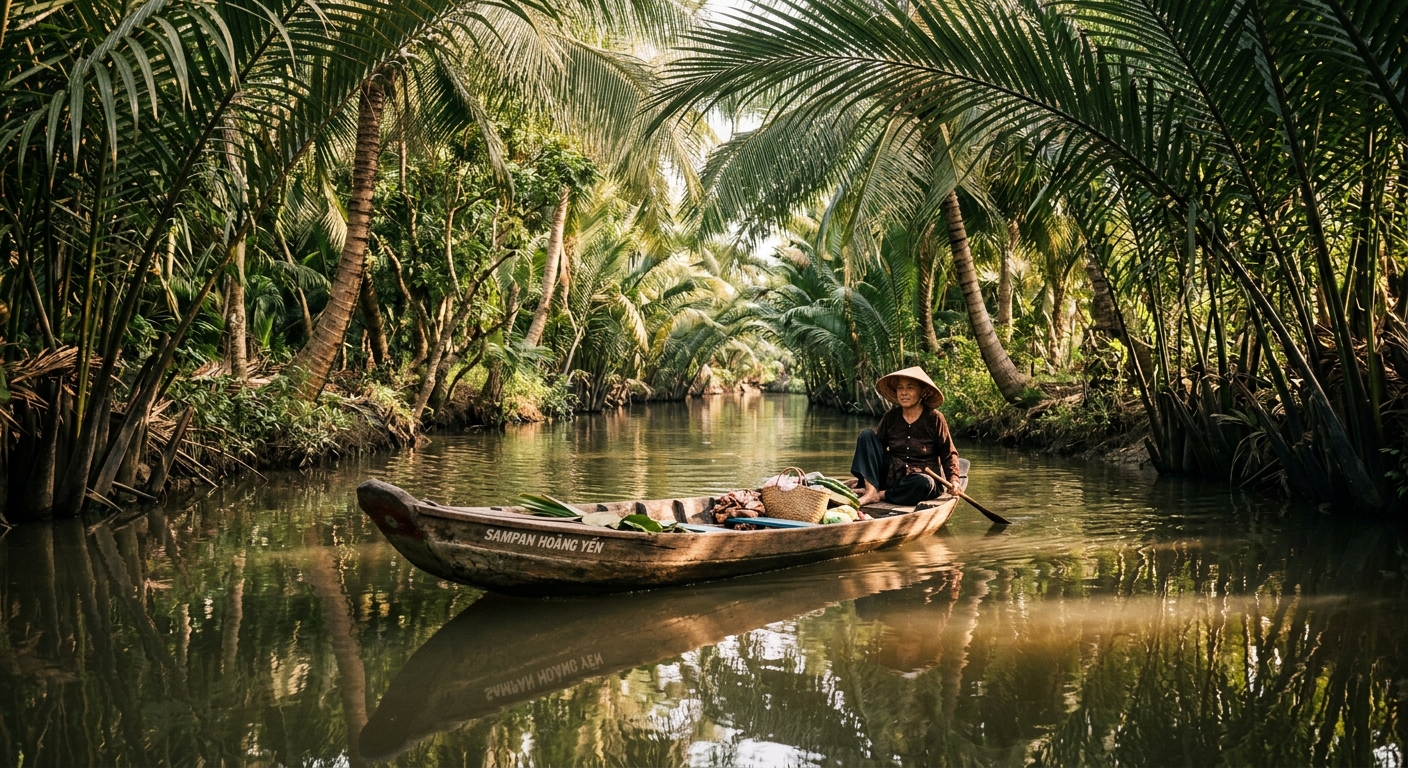
Life in these villages revolves around the rhythm of the agriculture and the seasons. Evenings are quiet, punctuated only by the distant sound of the river and the occasional lowing of livestock. Staying here allows you to wake up before the crowds arrive, giving you an hour or two of near-total solitude at the waterfall. You’ll see the local farmers heading out to the fields while the morning sun hits the limestone peaks, turning them a soft, glowing gold. It is a moment of profound stillness that validates the long, winding drive north. When you finally pack your bag to head back toward Cao Bang town, the landscape feels less like a transit route and more like a place that has quietly imprinted itself on your memory, far removed from the clamor of the more frequented coastal tourist hubs.