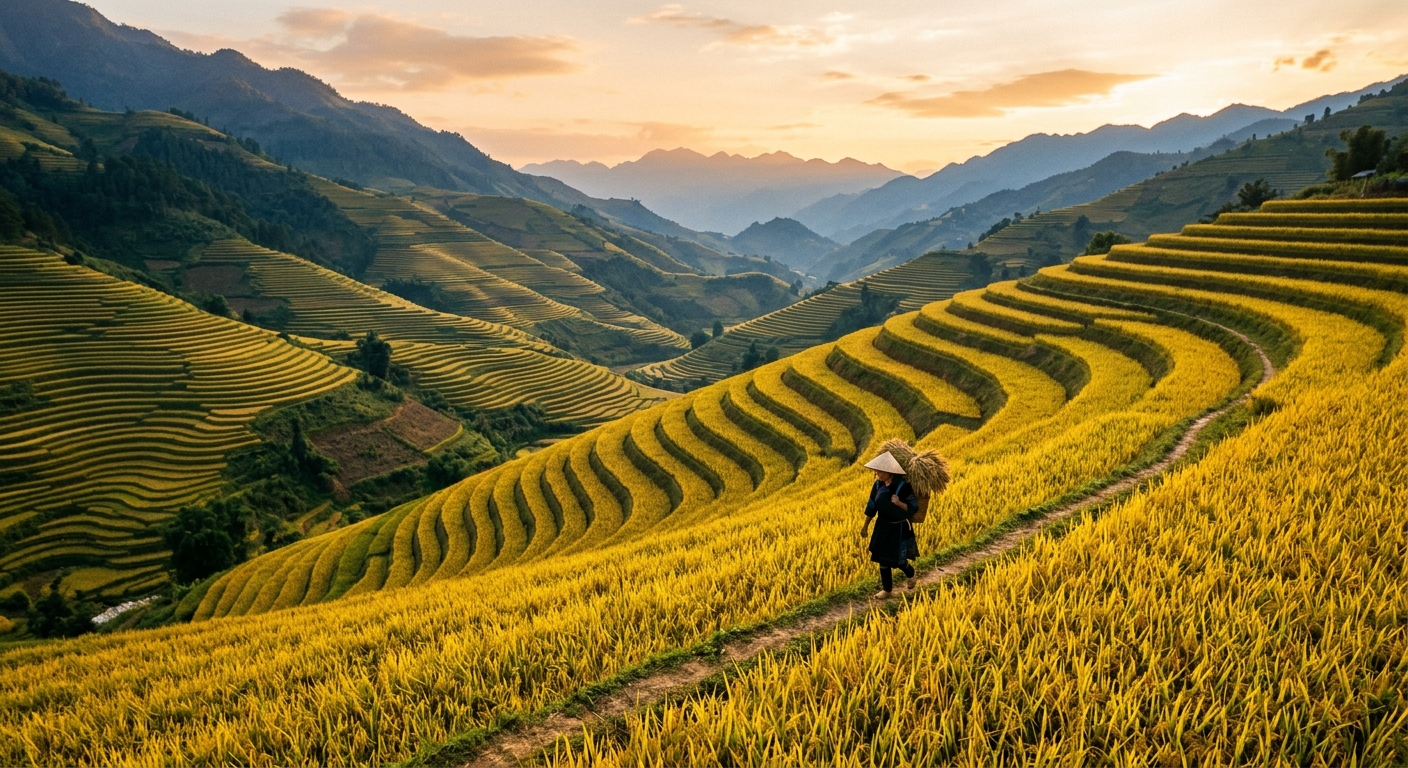
The morning mist clings to the Hoang Lien Son range, but by late September, the air in Sapa begins to shift. It is the height of the tourist season, and the narrow streets near the stone church are crowded with motorbikes, tour groups, and the persistent hum of construction. While Sapa remains the iconic gateway to the northern highlands, those who have spent enough time in the region know that the real show is shifting west. As the harvest begins to turn the mountains into a sea of ochre and burnt gold, the center of gravity moves toward a quieter, more dramatic landscape that feels like a secret kept by the Hmong people themselves.
If you find yourself chasing the elusive sapa rice harvest, you are likely looking for that perfect intersection of culture and landscape. Yet, by mid-September, the terraces immediately surrounding Sapa are often already being cut, leaving behind stubble fields before you even arrive. This is where Mu Cang Chai enters the conversation. Located about 150 kilometers southwest of Sapa, this district in Yen Bai province offers a raw, unfiltered experience that Sapa’s modern expansion has largely obscured. When comparing mu cang chai vs sapa, the distinction isn’t just about geography; it is about the pace of life. While Sapa offers refined coffee shops and luxury boutique hotels, Mu Cang Chai offers silence, sheer mountain faces, and the kind of agricultural mastery that feels ancient rather than curated.
Chasing the Golden Hour Across the Mountain Passes
The journey between these two destinations is not merely a transfer; it is a masterclass in Vietnamese geography. You will likely wind your way through the O Quy Ho Pass, one of the highest and most spectacular mountain passes in the country. As the elevation drops and then climbs again toward Tu Le, the scenery transforms. In vietnam terraces september is the definitive month for color, and the valley of Tu Le serves as the perfect prologue. Here, the scent of sticky rice hangs heavy in the air, a result of the local specialty com (young green rice) being toasted over open fires. It is a sensory experience that defines the region long before you reach the famous Mam Xoi—or Raspberry Hill—terraces of Mu Cang Chai.
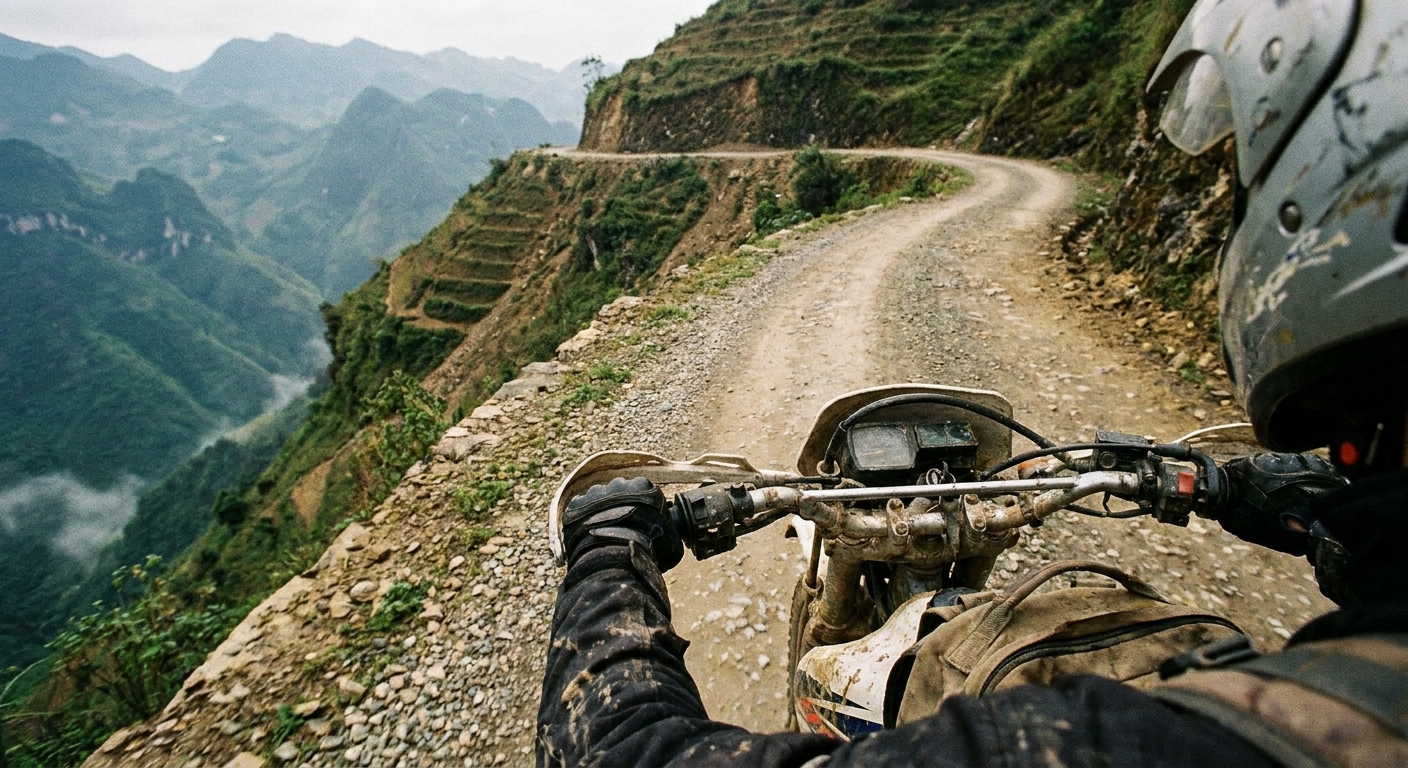
For the traveler, the logistical shift is noticeable. You aren’t just moving to a different town; you are moving into a different tier of tourism development. Sapa has become an urban hub for the highlands, whereas Mu Cang Chai remains a stretch of roadside villages and steep, serpentine roads. You won’t find the same density of hotels here, and that is exactly the point. The homestay experience in villages like La Pan Tan or Che Cu Nha is intimate. You are usually staying in the wooden stilt houses of Hmong families, sharing simple meals of forest greens, local pork, and mountain-grown rice. It is a stark reminder that the landscape is not just a backdrop for photography, but a living, breathing economy for the people who sculpted it over centuries.
If you are planning to make the transition from the bustling Sapa trails to the quieter western hills, keep a few practicalities in mind:
- Hire a private driver for the journey; local buses are available but often lack the flexibility required to stop for the frequent, breathtaking viewpoints along the mountain passes.
- Pack layers, as the harvest season brings crisp, cold nights that drop significantly in temperature compared to the humid afternoons.
- Respect the harvest protocols by staying on established paths, as the terraces are private property and the lifeblood of the community.
- Bring cash, as the smaller villages in the Mu Cang Chai district have limited access to ATMs and often operate exclusively on a local currency basis.
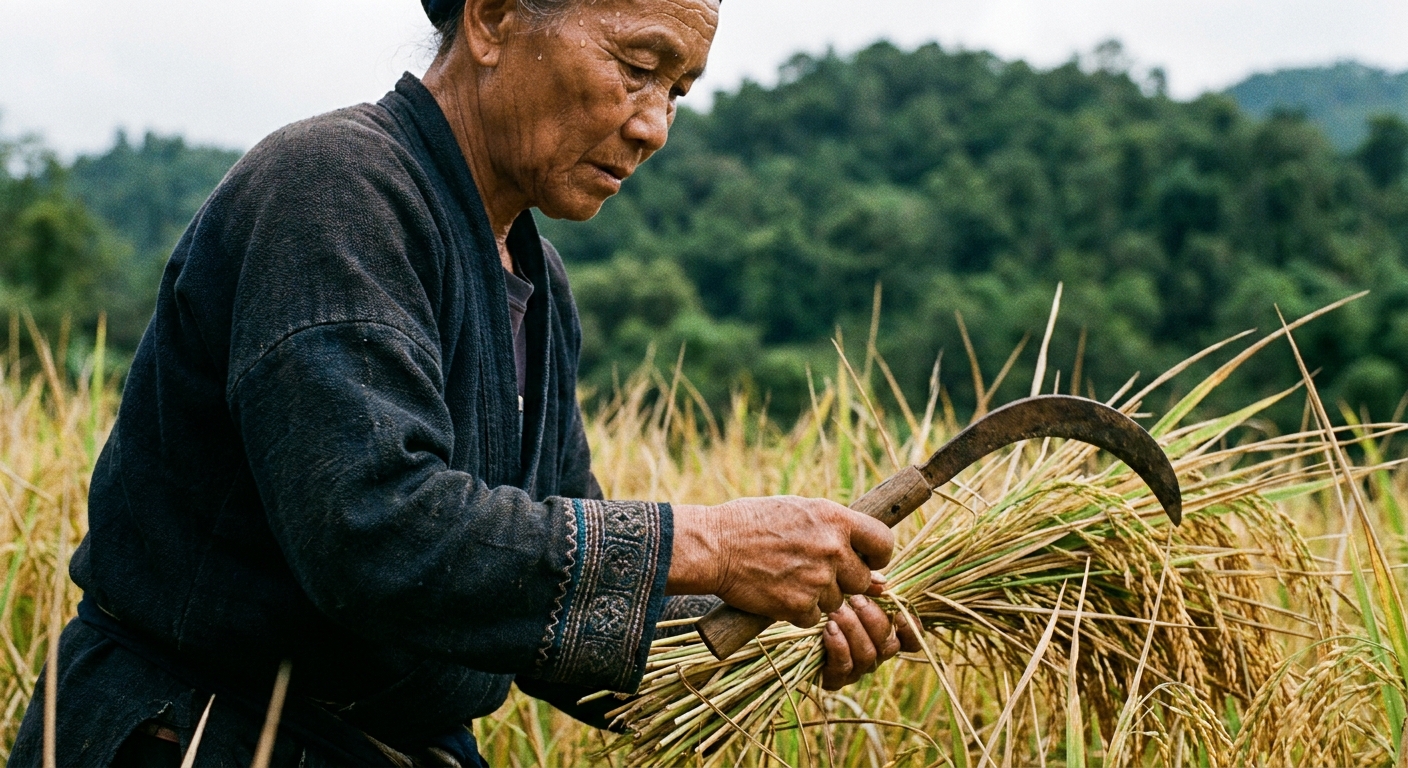
The visual impact of Mu Cang Chai in late September is difficult to overstate. Where Sapa’s terraces are often broken by modern infrastructure and cable cars, the hills in Mu Cang Chai are relentless. They fold over one another in a chaotic, dizzying geometry that defies the eye. Standing on a ridge looking out over the valley, you realize that the crowds haven’t followed you here. The silence is punctuated only by the distant sound of a tractor or the rhythmic thud of a hand-harvesting tool. It is a reminder that in the high mountains of northern Vietnam, the best experiences are often those found when you push past the well-trodden paths of the major hubs. By moving just a few valleys further west, you trade the convenience of the city for the golden, undulating reality of a harvest that belongs to the mountains alone.