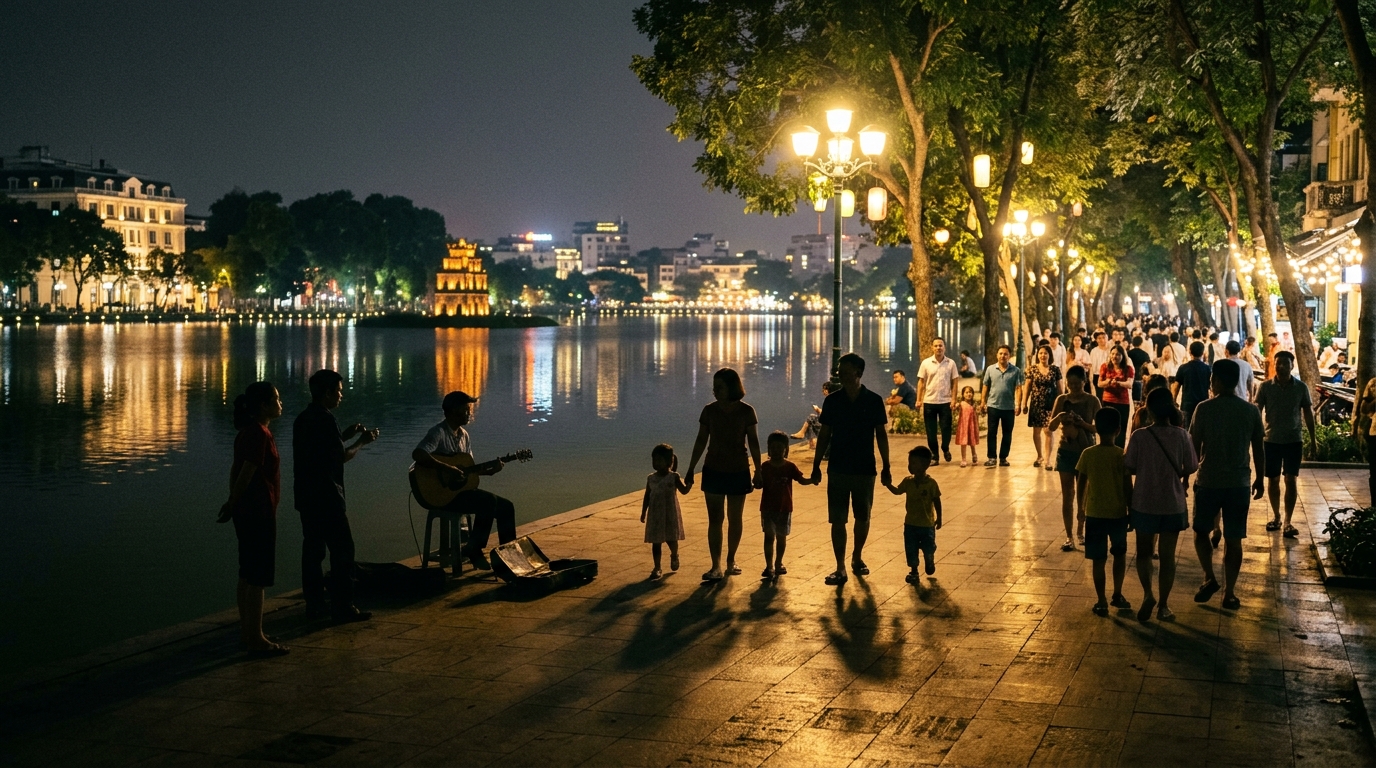
The transition starts at exactly 7:00 PM on Friday. Metal barriers are wheeled across the arteries leading to the heart of the city, and suddenly, the frantic, symphonic roar of a million motorbikes is severed. What remains is a vacuum of sound that is quickly filled by the hum of thousands of human voices. This is the Hanoi weekend night ritual, a city-wide transformation that turns the chaotic perimeter of Hoan Kiem Lake into a sprawling, open-air living room.
For any traveler arriving in Vietnam, the traffic of Hanoi can feel like an intimidating, multi-directional river of exhaust and steel. But when the Hoan Kiem Lake walking street comes into effect, the logic of the city shifts entirely. Pedestrians reclaim the asphalt. There is a palpable, collective exhale as families, tourists, and students spill out from the cramped alleys of the Old Quarter to occupy the very middle of the thoroughfare. It is a rare moment in Southeast Asia where the sheer scale of the city feels like it belongs to the people on foot rather than the machines they drive.
The space is not just empty; it is reclaimed by a vivid, grassroots culture that seems to materialize out of thin air. In one corner, near the iconic red bridge of Ngoc Son Temple, a group of teenagers might be practicing synchronized K-pop dance routines, their portable speakers booming against the colonial-era architecture. A few meters away, elderly locals gather for intense, hushed games of human-sized Chinese chess, while further down, a makeshift stage hosts a live band playing a mix of Vietnamese pop and acoustic covers. The air smells of charcoal smoke from nearby street vendors, not diesel fumes, creating an atmosphere that is uniquely Hanoian.
The Evolution of Hanoi’s Public Life
What makes the hanoi old quarter walk truly special during these weekend hours is the total absence of pretension. You will see children zipping around in glowing, plastic pedal cars that zip between the legs of unsuspecting tourists. You will see elderly couples ballroom dancing with surprising grace to scratchy recordings, and groups of university students desperate to practice their English with any foreigner who looks open to conversation. It is an egalitarian space. No one is in a rush because there is nowhere for them to go, and the lack of mobility constraints makes the usual stress of crossing a Hanoi street look like a distant, irrelevant memory.
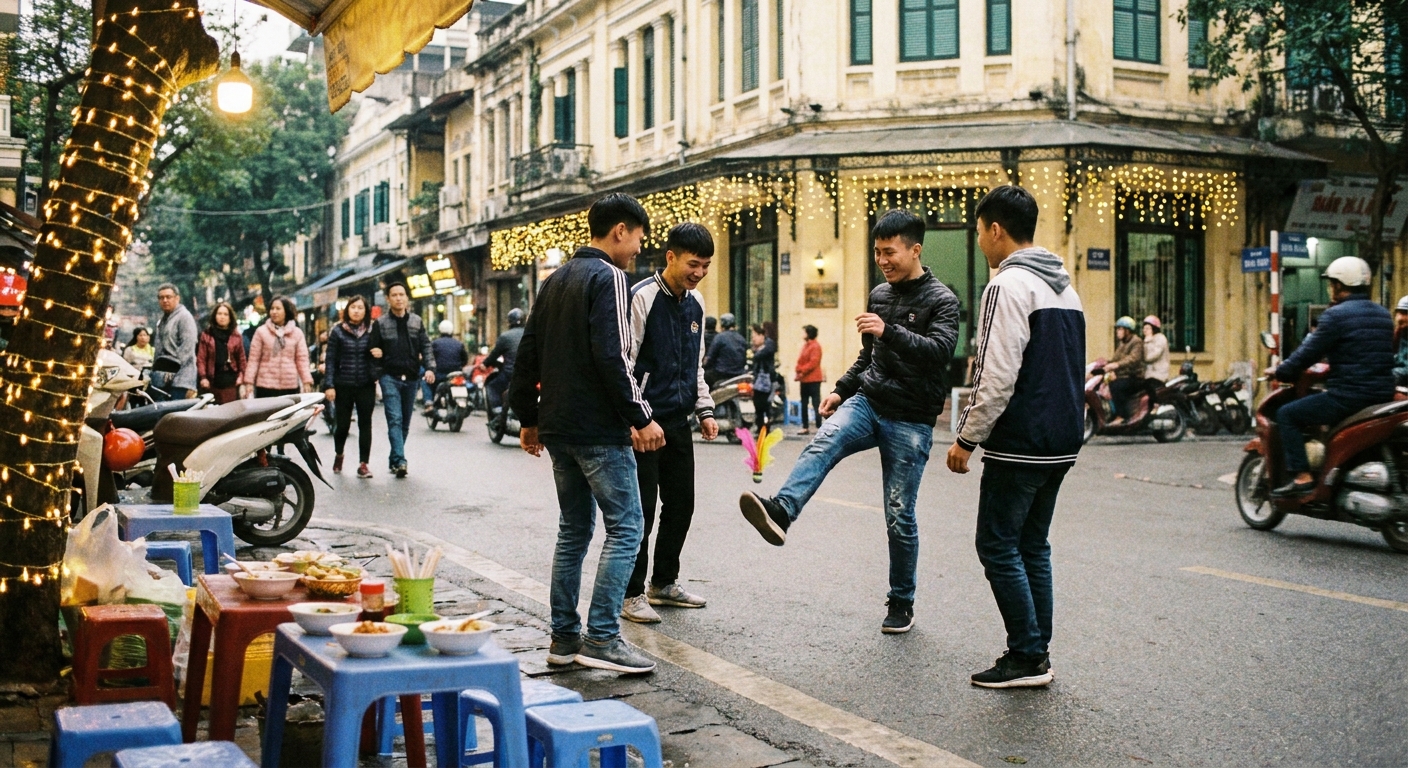
If you head toward the northern tip of the lake, you will find the landscape shifts from performance to play. This is where the local kids congregate. Games of traditional shuttlecock kicking—or da cau—are a constant fixture, with players showcasing athletic feats that put professional athletes to shame. It is common to see someone stumble into a game, get handed a shuttlecock, and find themselves mid-rally within seconds. This openness is the soul of the weekend scene. It is not designed for the tourist camera; it is designed for the city itself, and yet it is one of the most welcoming environments a visitor could ask for.
To enjoy this space to its fullest, consider these observations:
- Bring comfortable shoes, as the loop around the lake and through the surrounding pedestrian zones covers several kilometers.
- Keep your belongings secure, as the density of the crowds in the narrowest streets can be high.
- Try the local street snacks like kem trang tien (traditional ice cream) which becomes a cultural staple for everyone walking the lake.
- Look up into the balconies of the French-era buildings, where people often sit with beers to watch the spectacle below.
As the night deepens, the atmosphere changes once more. The high-energy performances start to fade, replaced by a more intimate, reflective vibe. The lake reflects the shimmering neon signs of the surrounding buildings, and the temperature drops just enough to make a light jacket feel appropriate. It is the best time to find a small plastic stool on the sidewalk, order a bia hoi—the city’s famously fresh, light draft beer—and simply observe the flow of humanity. Watching the locals lean back and enjoy the stillness of their own city is a privilege that few urban environments can offer.
By Sunday night, just before the barriers are removed and the engines begin to stir again, there is a sense of calm resilience. You realize that the hoan kiem lake walking street isn’t just a tourist attraction or a weekend party. It is a necessary reprieve, a way for Hanoi to remember what it sounds like when it isn’t constantly moving. When the motorbikes eventually return on Monday morning, the memory of that quiet, music-filled pavement lingers, serving as a reminder that even the most frantic cities have the capacity for stillness.