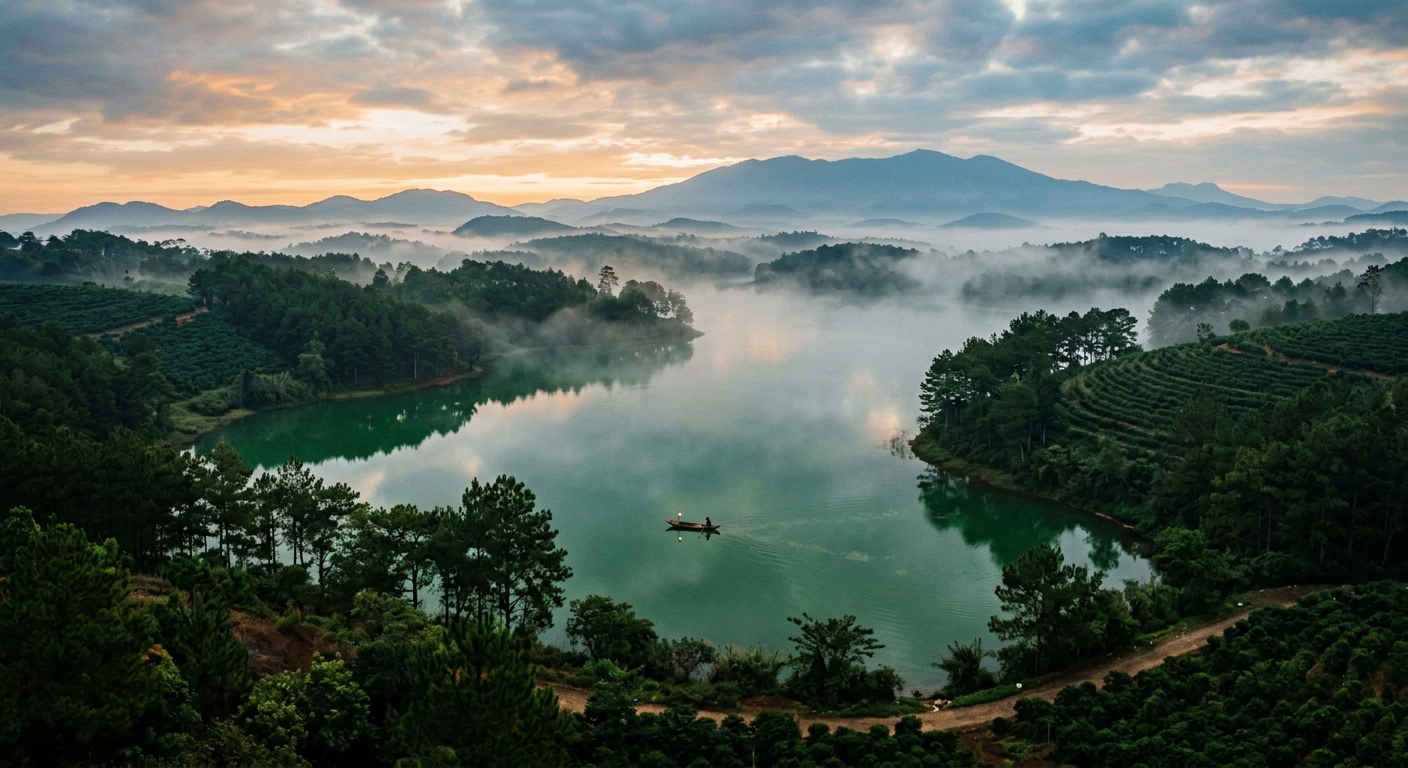
The air in Pleiku sits differently than it does in the frenetic humidity of Saigon or the cool, manicured air of Da Lat. It is red, dusty, and smells faintly of roasted beans and wet earth. When you touch down at the airport, you aren’t met with the polished chaos of a major tourist hub. Instead, you are greeted by the vast, rolling expanse of the Central Highlands, a region that still feels largely unbothered by the heavy footprint of mass tourism. Pleiku is not a city that demands your attention with flashing lights or heritage sites wrapped in velvet ropes. It is a working city, defined by the rhythmic cycle of the rubber and coffee harvests that quietly fuel the regional economy.
Most travelers skip this part of the map, aiming instead for the coastal resorts or the northern mountains. This is their loss. To explore Pleiku, Vietnam, is to accept that you are an outsider in a place that has no real interest in performing for you. The city is a mosaic of concrete low-rises, bustling morning markets, and wide, tree-lined boulevards that feel oddly spacious. Life here moves at the speed of a motorbike climbing a steep hill—deliberate, persistent, and grounded in the immediate tasks of the day.
Into the Culture of the Jarai and Bahnar
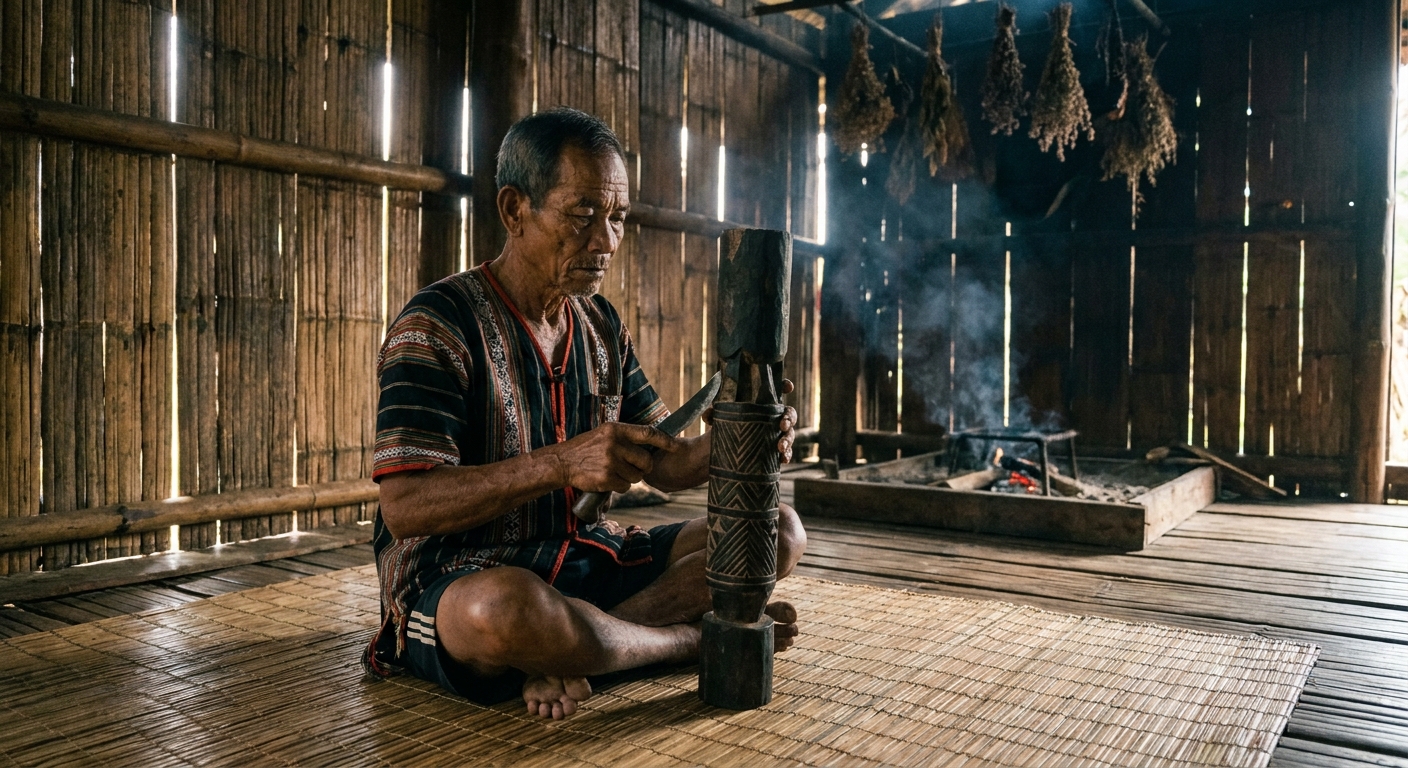
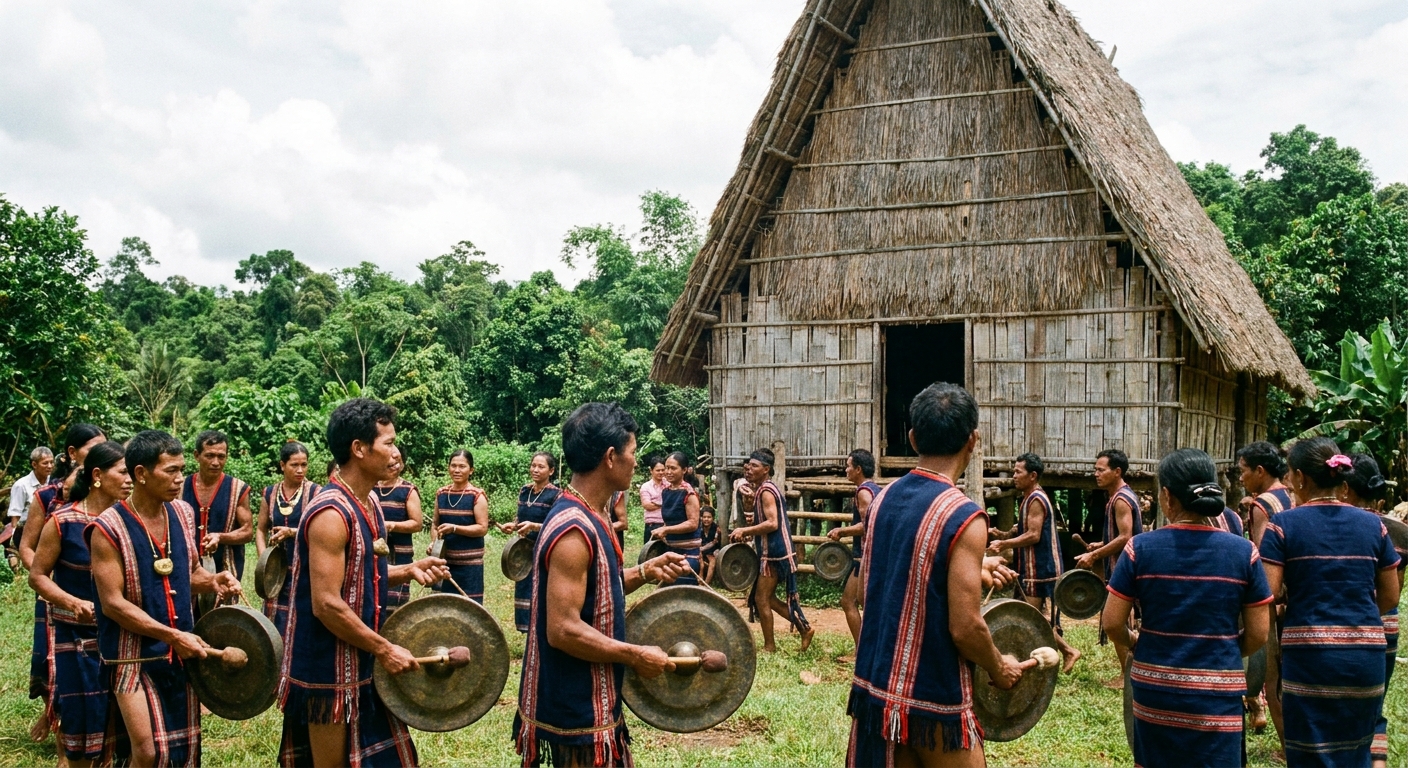
To really understand the soul of this province, you have to leave the city center behind. The outskirts are home to numerous Bahnar and Jarai stilt villages, where the architecture serves as a living record of ancestral traditions. These communities are defined by their longhouses and the communal rong houses—towering, thatched-roof structures that serve as the village’s spiritual and social anchor. Unlike the curated “ethnic villages” you might find elsewhere in the country, these settlements are functional. You will see elders weaving baskets, children playing in the dirt, and the ubiquitous red dust settling on everything. It is a privilege to walk these paths, and it should go without saying that your presence should be quiet and respectful. Do not treat these villages like an outdoor museum; treat them as homes, because that is exactly what they are.
When venturing into the Central Highlands travel circuit, the terrain shifts from orderly plantations to wilder, untamed slopes. The landscape is a patchwork of deep green coffee shrubs and the skeletal, uniform rows of rubber trees. In the early morning, the mist clings to the valleys, and the silence is broken only by the sound of a distant chainsaw or the hum of a cultivator. It is a stark, rugged beauty that makes you feel incredibly small. If you find yourself driving through these backroads, take time to stop at a roadside café. You will likely be served the strongest, most viscous coffee of your life, prepared by a local farmer who has been tending to the same plot of land for decades.
As the afternoon light begins to fail, the local rhythm shifts toward the edge of town. Bien Ho lake, or “Sea Lake,” sits inside a dormant volcanic crater, its water reflecting the sky with a mirror-like intensity. Watching the sunset here is an exercise in patience. As the sun dips below the crater rim, the sky bleeds from an electric blue into a bruised purple, and the local teenagers arrive on motorbikes to share snacks and conversation. It is one of the few places in the city where you can sense the collective exhale of the residents. It is not spectacular in the way a postcard is, but it is deeply, profoundly still.
Eating in Pleiku is an exercise in local pride. The food here isn’t trying to capture the fancy of the international palate; it is meant to sustain people who work hard. You will find that the local specialties lean heavily into the ruggedness of the highlands. A few things you shouldn’t miss during your stay include:
- Pho kho: The famous “dry noodle” dish of the region, served with a separate bowl of flavorful broth and plenty of fresh herbs.
- Grilled chicken with com lam: Sticky rice cooked in bamboo tubes, paired with free-range chicken marinated in local mountain spices.
- Wild honey and local highland coffee: Best purchased directly from small-scale growers in the surrounding districts.
Logistically, Pleiku requires a bit more effort than the well-trodden paths of the north or south. You won’t find a sprawling network of tourist information kiosks, and your hotel reception might be the only place where English is spoken with any consistency. Renting a motorbike is the most effective way to see the surrounding Jarai and Bahnar villages, though the roads can be winding and prone to sudden, torrential rain. Always keep an eye on the fuel gauge, as the space between petrol stations can grow significantly once you head into the hills. Despite the lack of fanfare, there is a rewarding sense of discovery that comes with navigating a place where the people are genuinely surprised—and often delighted—to see a visitor who has traveled so far just to be there.
As you spend more time in the highlands, the city’s initial anonymity starts to peel away. You begin to recognize the faces at the coffee stalls. You understand the way the town shuts down after the sun vanishes. Pleiku doesn’t offer a climax or a highlight reel of grand attractions, but it offers something far rarer: the chance to see a slice of Vietnam that is entirely, unapologetically itself. It is a place that reminds you that travel is not just about what you see, but about the patience you cultivate while you are seeing it.