Vietnam is a welcoming country, and visitors are rarely judged harshly for small cultural missteps. Still, understanding a few basic customs turns polite interactions into warm ones and shows respect for a culture that values courtesy deeply. None of these rules are difficult, and learning them takes only a few minutes of attention before and during your trip.
Dress modestly when visiting temples, pagodas, and mausoleums. Shoulders should be covered and shorts should reach at least to the knees. Some sites provide simple wrap-around skirts or shawls for visitors who arrive in shorts or tank tops, but it is much more pleasant to dress appropriately from the start. Remove your shoes before stepping into the inner halls of a temple, lower your voice, and never point your feet toward an altar or a Buddha statue. These small gestures matter.
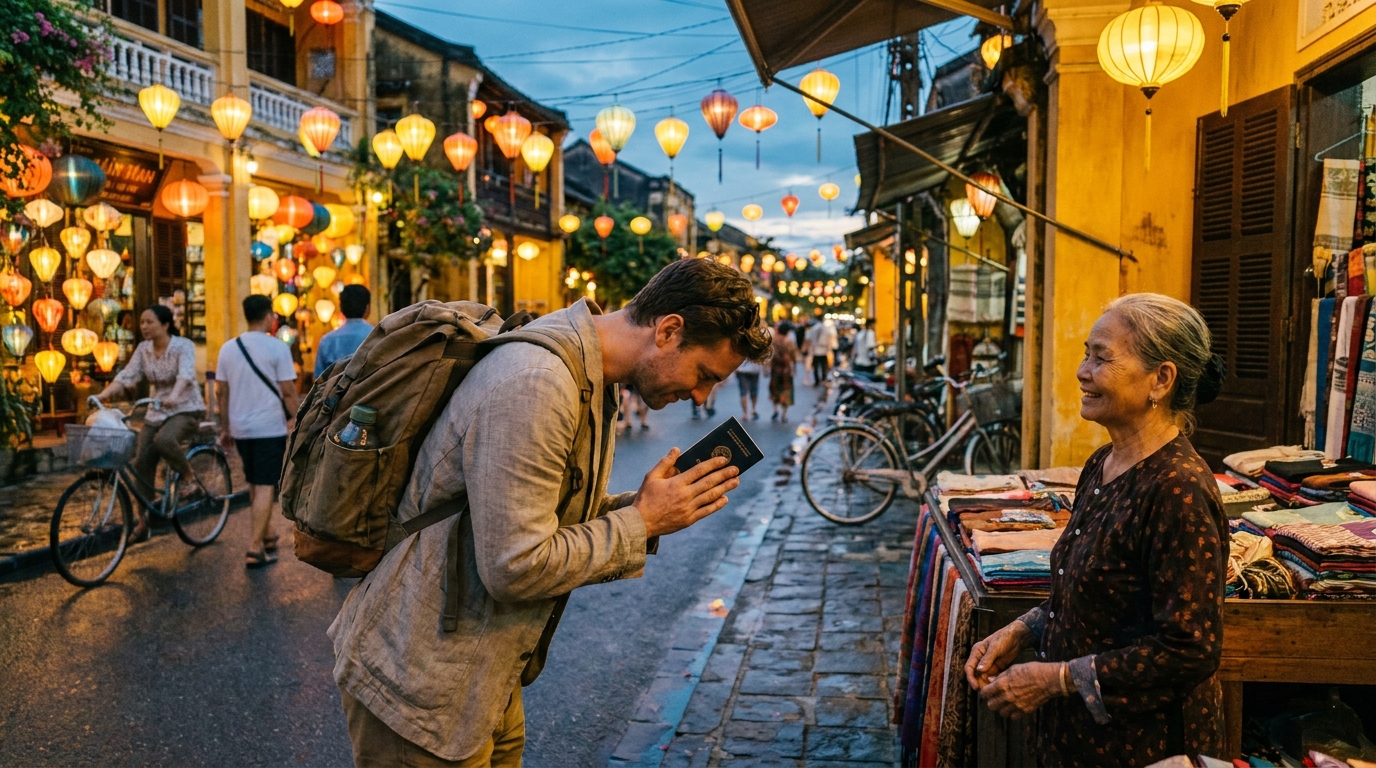
Greetings in Vietnam tend to be gentle. A slight bow or a friendly nod is common, and handshakes are becoming more widespread, especially in business contexts and with younger people. When meeting older people, a small bow with both hands lightly clasped in front is a particularly respectful gesture. Using both hands when giving or receiving something, such as a business card, a gift, or even your change at a shop, is a subtle sign of respect that locals notice.
Food culture has its own small etiquettes. At shared meals, wait for the oldest person at the table to begin eating before you start. Hold your chopsticks properly and never stick them upright into a bowl of rice, as that resembles incense offerings for the dead and is considered unlucky. Pouring tea or beer for others at the table before filling your own cup is a gesture of care that makes you feel instantly more welcome. These things are small but they matter.
Finally, be mindful with photographs. Vietnamese people are often friendly and happy to be photographed, but asking first is simple courtesy and usually results in a warmer picture anyway. Avoid photographing military sites, checkpoints, or anything that looks official unless you are sure it is permitted. And when visiting ethnic minority villages in the northern highlands, remember that you are stepping into someone’s real community, not a theme park. A friendly smile and a bit of patience open doors that cameras alone never will, and the conversations you have along the way will almost always be more memorable than any photo you could have taken instead.