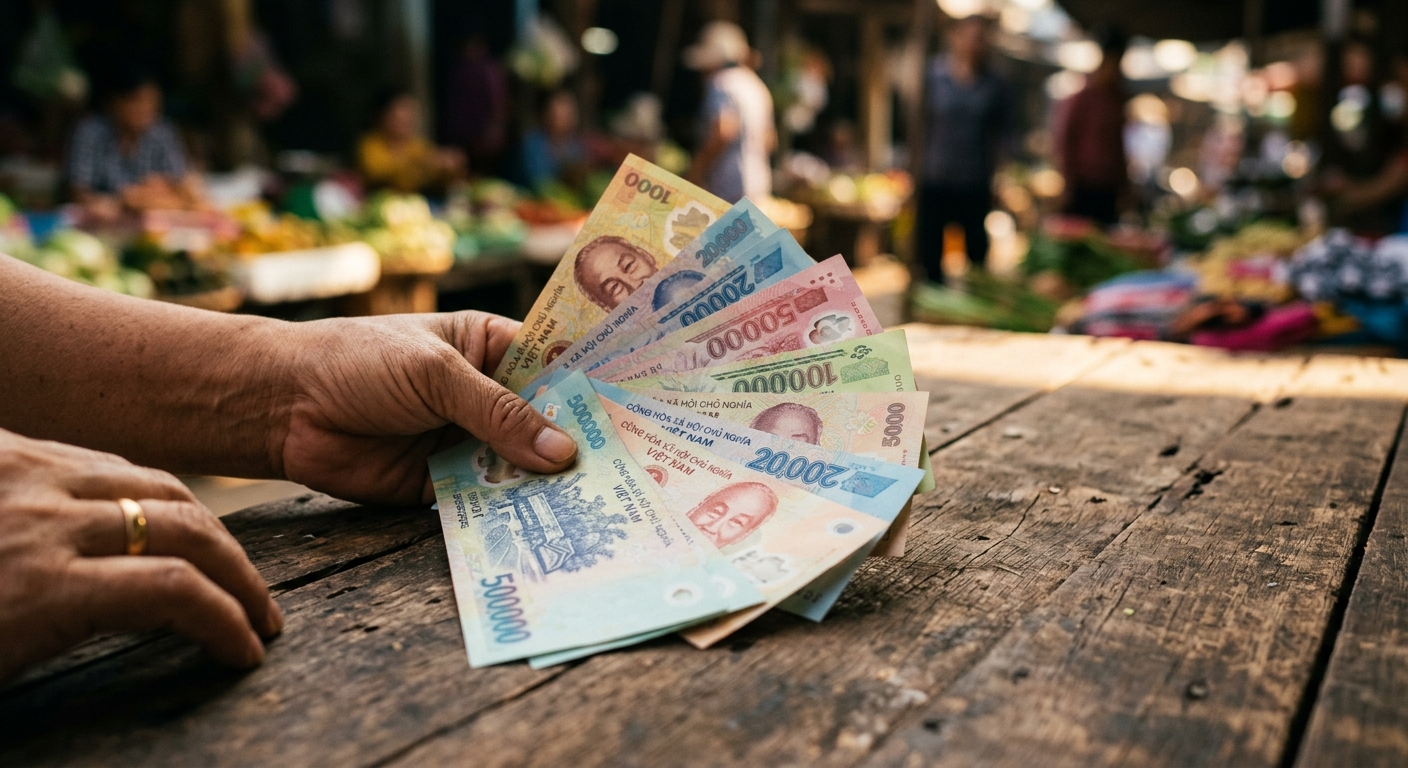
The first time you reach into your wallet to pay for a banh mi on a street corner in Hanoi, you will likely freeze. Vietnamese dong currency is a vibrant, sometimes dizzying collection of polymer notes, each saturated in colors that don’t always correlate intuitively to their value. Because the currency operates in the thousands and tens of thousands, the zeros can blur together. It is a rite of passage for every traveler to accidentally offer a 20,000 note when they meant to hand over a 500,000 note, only to be corrected by a smiling street vendor who has seen this exact look of confusion a thousand times before.
Most of the notes you will encounter daily are made of polymer, which makes them durable, waterproof, and slightly slippery. They are practically indestructible, which is fortunate considering how often they get crumpled into pockets or dampened by tropical humidity. The bills are color-coded: the 10,000 is yellow, the 20,000 is blue, the 50,000 is magenta, the 100,000 is green, the 200,000 is red, and the 500,000 is cyan. The most common pitfall is the color similarity between the 20,000 and the 500,000 notes if you aren’t paying close attention in low light, or mixing up the 100,000 and the 200,000. It happens to the best of us, but taking five extra seconds to look at the digit count is the best insurance against a costly mistake.
Mastering the art of small change
Paying cash Vietnam style requires a strategy, specifically regarding the “big bills.” While you might withdraw a large amount from an ATM, many local shops, taxi drivers, and street food vendors will not have the change for a 500,000 note, especially in the early morning. If you try to pay for a 30,000 dong coffee with a 500,000 bill, you will likely be met with a polite shake of the head. It is wise to break your large notes at supermarkets, hotels, or convenience stores like Circle K or WinMart whenever you have the chance. Keeping a stash of 10,000 and 20,000 notes in a separate pocket for quick transactions ensures you aren’t holding up the line while digging for exact change.
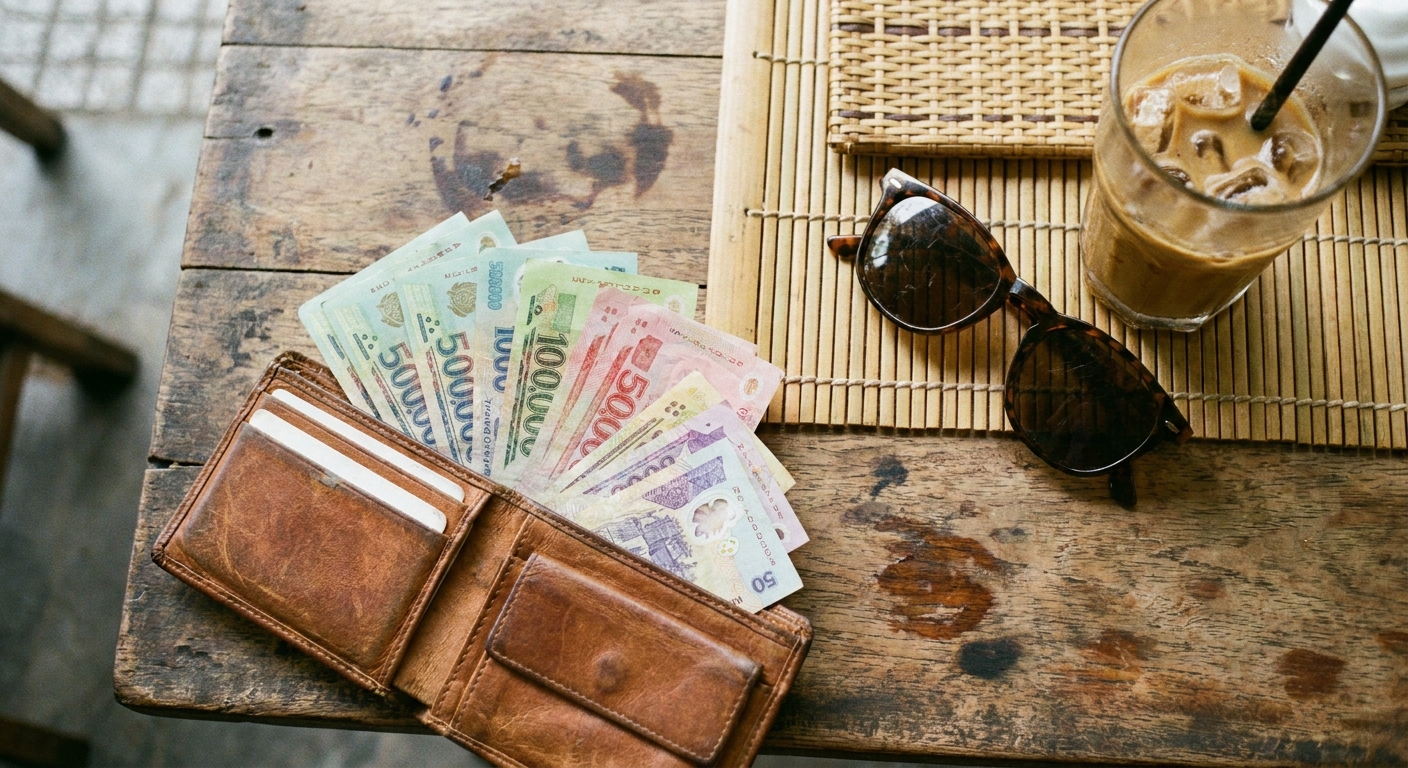
There are a few specific items to keep in mind when organizing your cash:
- Always check the corners of the bills for the number of zeros.
- Avoid folding the polymer notes too tightly, as they can retain a stiff crease.
- Keep your high-denomination notes in a secure wallet away from your daily spending cash.
- Accept that small, worn-out paper notes (the old denominations) might still appear, though they are increasingly rare.
While digital wallets and credit cards are gaining ground in major urban centers like Ho Chi Minh City and Da Nang, Vietnam remains fundamentally a cash-based economy. Upscale hotels, international restaurants, and boutique shops will happily accept your Visa or Mastercard, often adding a three-percent surcharge for the privilege. However, once you wander into the local wet markets, ride a motorbike taxi, or sit on a plastic stool for a bowl of pho, plastic is useless. Relying entirely on cards will limit your access to the authentic side of the country. Even in the digital age, a thick stack of dong in your pocket is the surest way to guarantee you can buy whatever you need, wherever you find yourself.

There is also the matter of tipping and small change etiquette. You are not expected to tip with the aggressive percentage-based fervor found in North America, but rounding up the bill or leaving the small change after a meal is a gesture of appreciation that goes a long way. If you are handed change in the form of a small, crinkled bill, don’t worry about its condition. As long as the bill isn’t torn in half, it will be accepted everywhere without issue. Vietnamese merchants are pragmatic; they care far more about the number printed on the bill than its aesthetic state. After a few days, you will stop counting the zeros so carefully and start recognizing the colors by instinct, and that is when you know you have finally settled into the rhythm of daily life on the ground.