The air in Hue turns heavy and gray somewhere in early October, signaling the arrival of the monsoon. It isn’t a gentle patter that refreshes the gardens; it is a relentless, horizontal sheet of water that transforms the Perfume River into a churning, muddy torrent. For those who have secured their travel documents and are waiting for that final visa approval to land in their inbox, the central Vietnam rainy season is a logistical reality that demands a shift in perspective. If you are heading to the coast during this three-month window, you are not just packing a raincoat—you are entering into an agreement with the elements.
Living With the Rising Tide in Hoi An
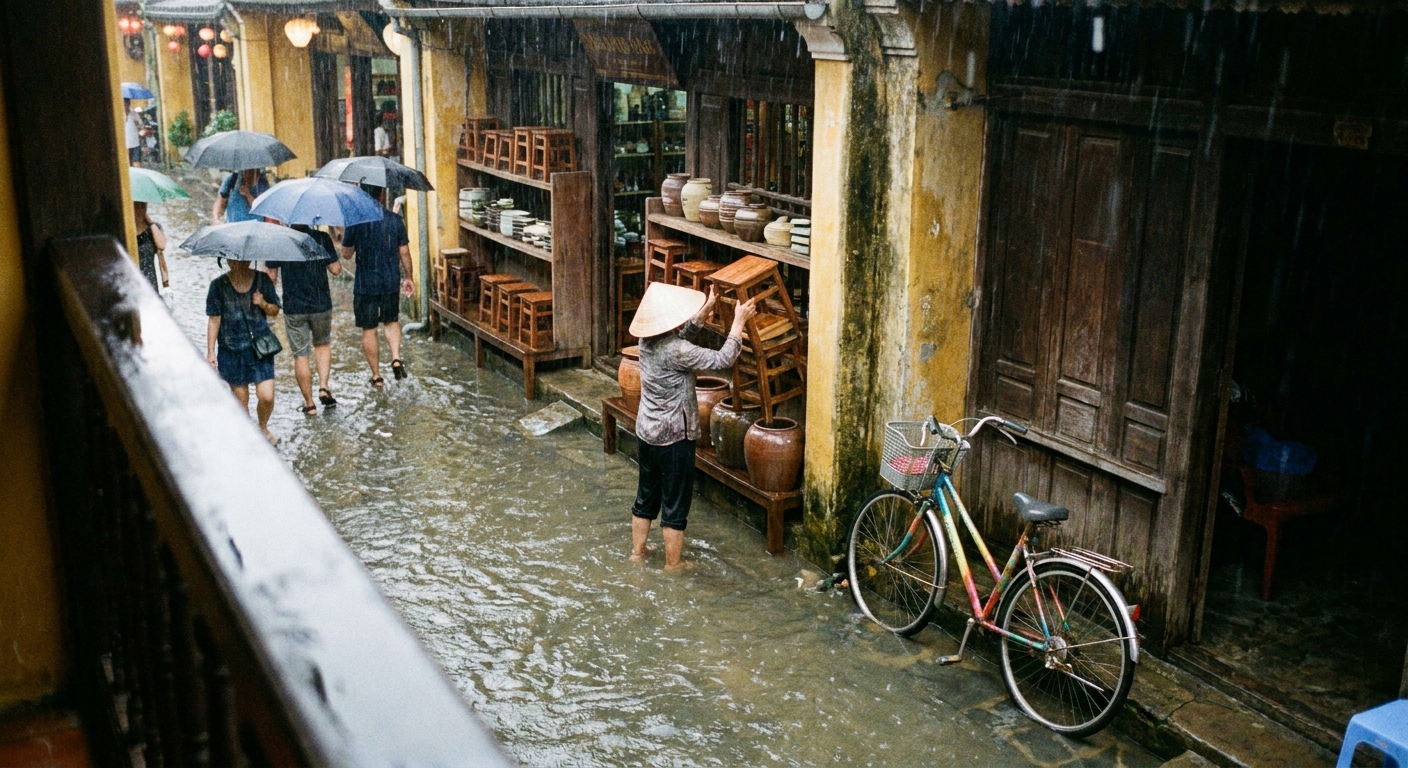
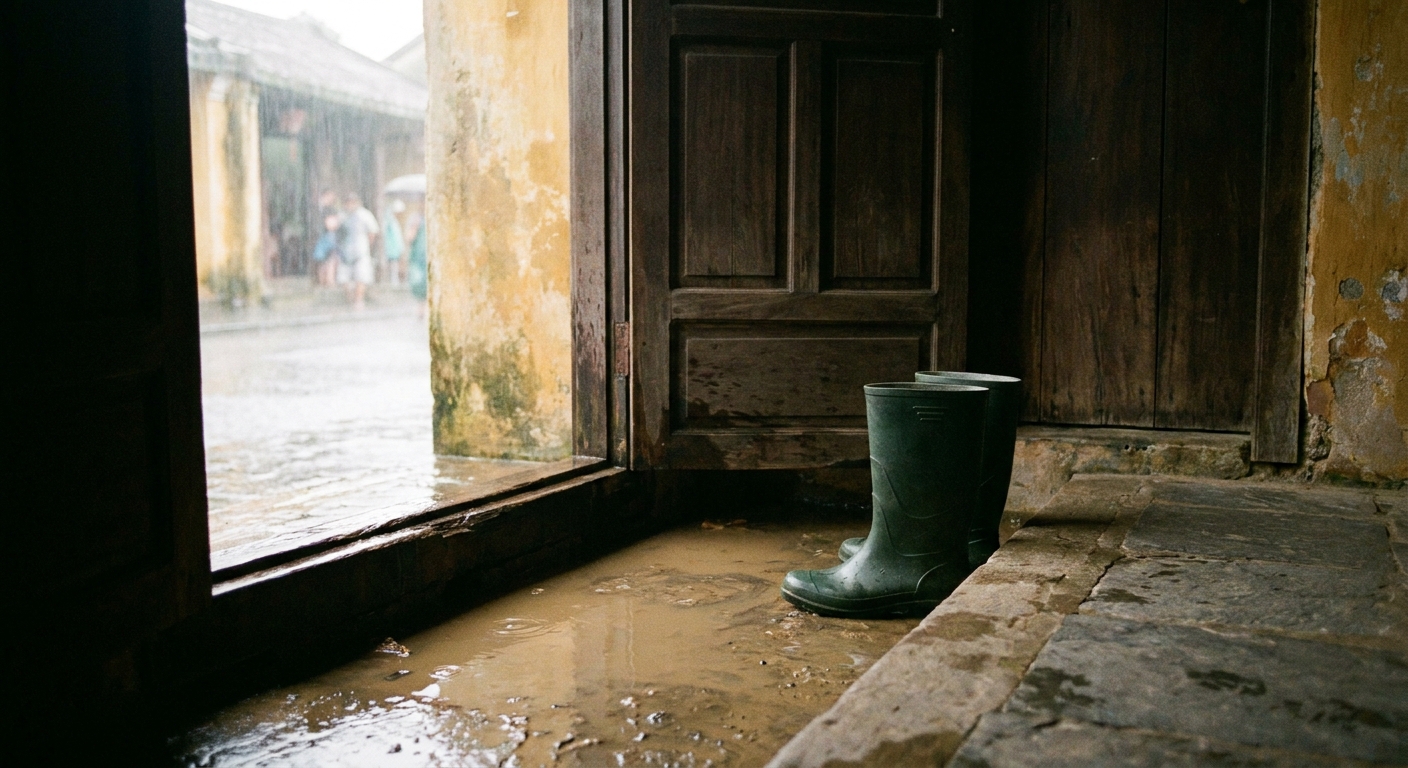
Hoi An is the most iconic victim of this seasonal shift. While the town remains breathtakingly beautiful under a veil of mist, the reality of living with rising water is inescapable. By the time November peaks, it is common for the streets of the Ancient Town to experience localized flooding. Locals have mastered the art of this phenomenon, switching from motorbikes to flat-bottomed wooden boats to cross the streets of the heritage district. If you find yourself in the middle of a serious bout of hoi an flooding october or November, you will see the ground floors of historic shophouses cleared out, furniture moved to upper levels, and life continuing with a stoic, quiet efficiency. It is a surreal experience to sip Vietnamese coffee on a balcony while watching the Thu Bon River gently reclaim the alleyways below.
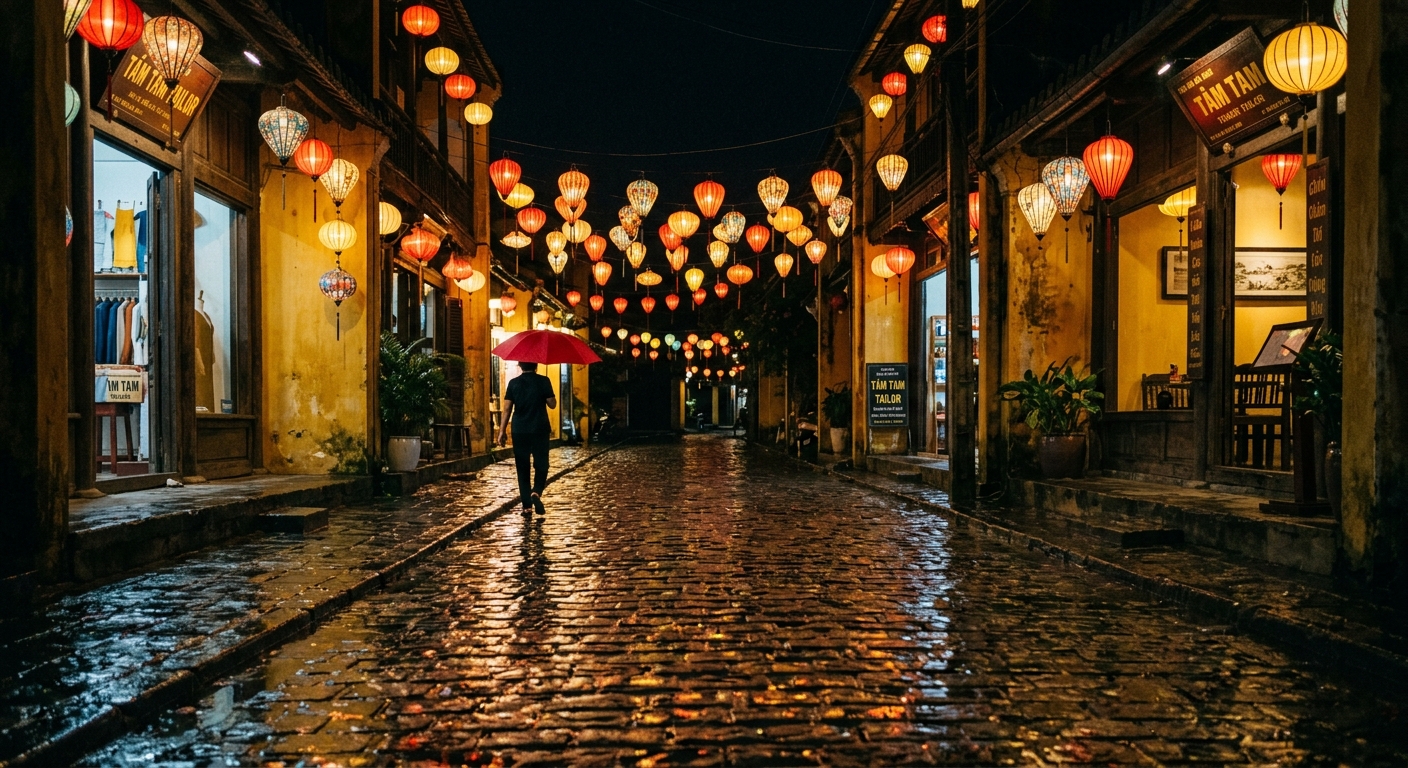
Travelers who insist on visiting during this time must be prepared for the suspension of traditional tourist activities. The basket boat tours in the coconut forests often halt when the currents become too aggressive, and the popular cycling routes through the rice paddies become impassable quagmires. However, there is a silver lining to the deluge. The crowds that usually choke the narrow lanes of the Ancient Town vanish, leaving you to experience the lanterns reflecting off the wet cobblestones in near-solitude. If you stay in a hotel that is elevated or located slightly outside the low-lying core, you can witness the town in a rare, reflective mood that feels entirely different from the sun-drenched chaos of July.
The situation in Da Nang is marginally more manageable, largely due to the city’s wider boulevards and better-equipped drainage systems. While you should expect significant beach erosion and red flags on the sand that prohibit swimming, the city functions as a comfortable base camp. When the rain makes outdoor exploration impossible, Da Nang’s robust cafe culture and sprawling shopping centers provide a necessary sanctuary. It is the perfect time to tuck into a bowl of spicy bun bo hue or seek out hidden galleries that would be easily overlooked during the frantic pace of the high season.
Flexibility is your most valuable asset during these months. Rather than pinning your hopes on a rigid itinerary, consider these strategies to maintain your sanity when the sky refuses to clear:
- Book accommodations that offer flexible cancellation or are known for having generator backups for power outages.
- Prioritize indoor cultural experiences, such as the elaborate imperial tomb visits in Hue which are surprisingly atmospheric in the fog.
- Keep a dry bag for your electronics and physical documents, as even a short walk to a restaurant can result in a thorough soaking.
- Check the status of your transport options daily, as heavy rains frequently delay trains and occasionally close mountainous passes between cities.
Moving between Hue and Da Nang via the Hai Van Pass is a classic bucket-list journey, but the monsoon turns it into a high-stakes gamble. When the clouds descend, visibility on the winding road can drop to near zero, making the transit hazardous. Many travelers find that the train is a far more reliable, and frankly more scenic, alternative during these months. Watching the rain lash against the train window as it hugs the coastline offers a perspective of the landscape that is both dramatic and safe. The tracks take you directly through the heart of the pass, and the slow pace allows you to appreciate the raw power of the ocean crashing against the cliffs.
There is a specific kind of melancholy that settles over central Vietnam in late December, just as the rains begin to taper off. The moss on the walls of the Hue Imperial City looks greener, and the smell of the damp earth is sharp and distinct. You will inevitably find yourself spending more money on taxis and less on outdoor excursions, and you will likely spend more time than planned sitting in cozy cafes listening to the rain tap against the glass. If you can embrace the fact that the landscape is not merely being dampened, but being fundamentally reshaped by the water, the experience becomes less of a disruption and more of a unique, immersive encounter with a side of the country that most visitors never see.