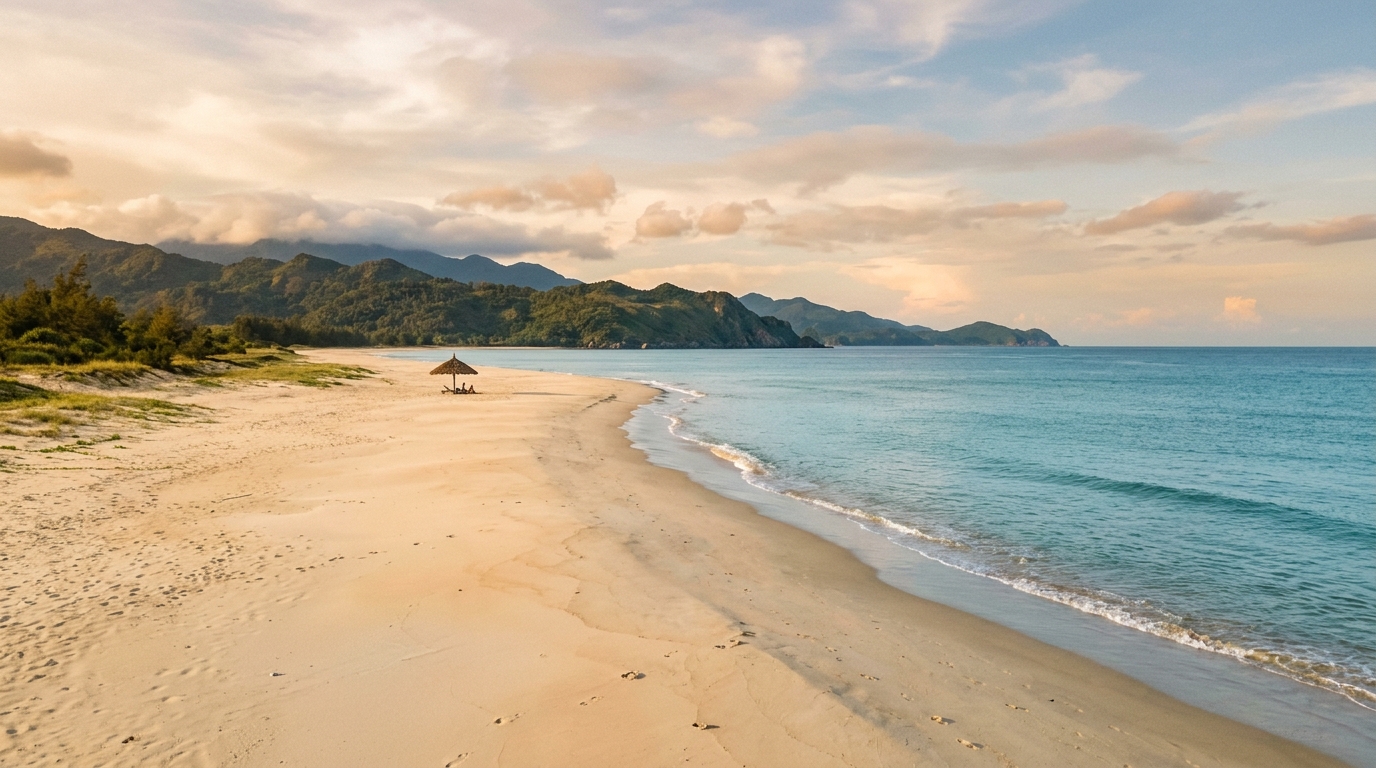
The morning sun in Da Nang hits the white sands of My Khe with an intensity that brings thousands of visitors to the water’s edge by 7:00 AM. It is a spectacle of local life, where thousands of bathers bob in the surf, but it is rarely a place for quiet reflection. If you are seeking the rhythm of the tide without the hum of motorbikes or the density of beach umbrellas, you have to look beyond the major hubs. The stretch of coastline connecting Hoi An to Quy Nhon is a jagged ribbon of peninsulas, hidden coves, and fishing villages that most travelers speed past on the train or the coastal highway.
The Hidden Coves Between the Tourist Hubs
The beauty of this central corridor lies in its geography. As the Truong Son mountains push toward the South China Sea, they create natural barriers that keep mass development at bay. South of Hoi An, once you clear the busy bridge infrastructure, the road begins to hug the coastline. The area surrounding Tam Ky and the Ky Anh tunnels offers rugged, unmanicured stretches of sand. These are not resort beaches; they are working waterfronts where you might share the shoreline with a local fisherman repairing his nets or a few grazing water buffalo. You will not find lounge chairs or craft cocktail bars here. Instead, you find the raw, salty air of the Pacific and the genuine silence of a place that hasn’t yet been packaged for the international circuit.
Further south, approaching the province of Binh Dinh, the landscape shifts again. The coastline becomes more dramatic, with granite boulders punctuating the surf. Places like Bai Xep, near Quy Nhon, have gained a slight reputation, but if you venture five kilometers in either direction, you stumble upon unnamed bays reachable only by narrow, winding concrete paths. Access is the primary barrier for most, and that is exactly why these spots remain quiet. You need a reliable motorbike or a local driver who knows the labyrinthine coastal tracks. Rental shops in Da Nang or Hoi An can provide the wheels, but ensure you are comfortable on uneven, unpaved surfaces before attempting to reach the more isolated southern bays.

If you are plotting a route to find a quiet beach in Vietnam’s central coast, consider these three pockets where the crowds dissolve:
- The coastal roads of Tam Ky, where the sand stretches for miles beneath pine forests.
- The northern tip of the Phu Yen province, specifically the areas near the Ganh Da Dia rock formations, which are rarely crowded outside of weekends.
- The tiny inlets accessible only by walking through the fishing villages north of Quy Nhon.
Timing your visit is the difference between a pristine afternoon and a wash-out. The central coast follows a distinct meteorological calendar that confuses many first-time visitors who assume the entire country experiences the same weather. The dry, blue-sky window usually swings open in March and runs through August. During these months, the sea is calm, the visibility is clear, and the heat is manageable in the early morning and late afternoon. September marks the beginning of the monsoon shift; by October and November, the ocean can become volatile, and the sky turns a heavy, consistent grey. While the rain does add a moody, cinematic quality to the coastline, it is not the time for swimming or lounging on the sand.

Finding these My Khe alternatives requires a shift in mindset. You are trading the convenience of a nearby convenience store and an English-speaking waiter for the solitude of a bay where you might be the only person for a mile. There is a specific satisfaction in leaving the mapped-out tourist zones behind. You start to notice the small things: the way the local architecture changes, the different varieties of seashells tossed up by the tide, and the slower, deliberate pace of the coastal villages. The central coast is vast, and the most rewarding parts are rarely the ones highlighted on a top-ten list.
As you plan your journey, remember that the best experiences often exist in the gaps between scheduled stops. Give yourself an extra two days to drift down the coast. When you see a dirt path veering toward the sound of crashing waves, take it. Even if it leads to a dead end, it usually offers a perspective of the shoreline that is completely removed from the noise of the main tourist tracks. The quiet of the Vietnamese coast is not a destination you arrive at; it is a quality of space you uncover by simply being willing to go a little further than everyone else.