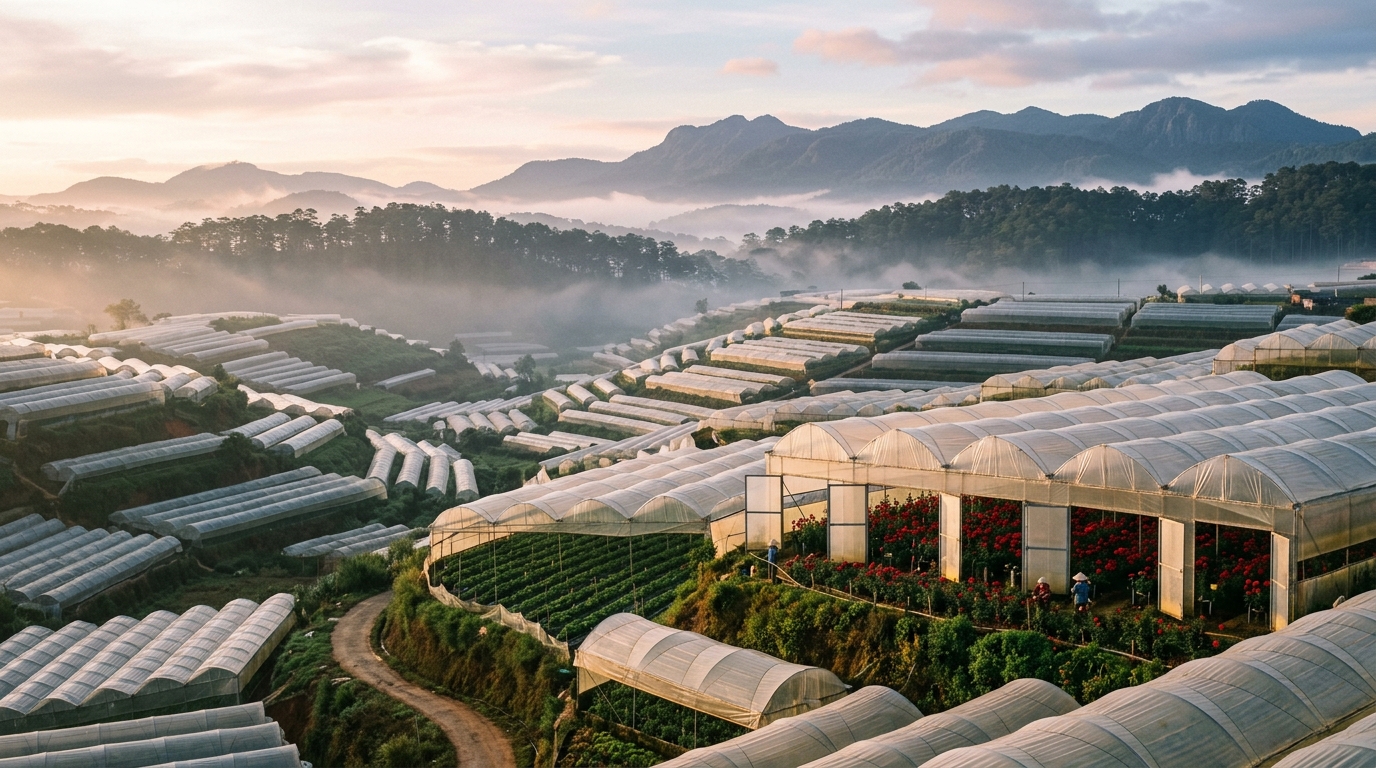
The air in the Central Highlands holds a specific, sharp chill before the sun crests the ridges. At 5:00 AM, the streets of Da Lat are muted, save for the low rumble of a few early-rising delivery trucks and the distant, rhythmic clicking of sandals on wet pavement. While most tourists are still tucked under heavy duvets in the city center, the valleys just a few kilometers away are already humming with life. This is the hour when the da lat flower farm culture truly reveals itself, stripped of the midday crowds and the bus tours that later swarm the more accessible botanical gardens.
To reach these hillside greenhouses, you need to enlist a local driver. The best way to manage this is to approach a friendly xe om (motorbike taxi) driver near the central market the evening before. Agree on a fixed price for a morning excursion, usually for about three or four hours. They know the labyrinth of dirt tracks and narrow concrete paths that wind through the misty slopes better than any GPS. When you hop onto the back of the bike in the pre-dawn dark, make sure you have a heavy jacket; the temperature in the Vietnam highlands morning can easily dip to 10 or 12 degrees Celsius, and the wind-chill factor on the back of a bike will bite through thin layers.
The Ritual of the Harvest
As you descend into the valleys of Trai Mat or Thai Phien, the darkness gives way to a surreal, luminous glow. The vast stretches of greenhouses are lit from within, looking like glowing amber blocks embedded in the dark, folded landscape. This is the industrial heart of Vietnam’s floral industry. Inside the structures, farmers move with practiced efficiency, their headlamps flickering like fireflies as they prune, cut, and bundle roses, lilies, and carnations destined for the markets of Ho Chi Minh City by noon. There is no fanfare here, just the deliberate, quiet work of people who have been doing this for generations.
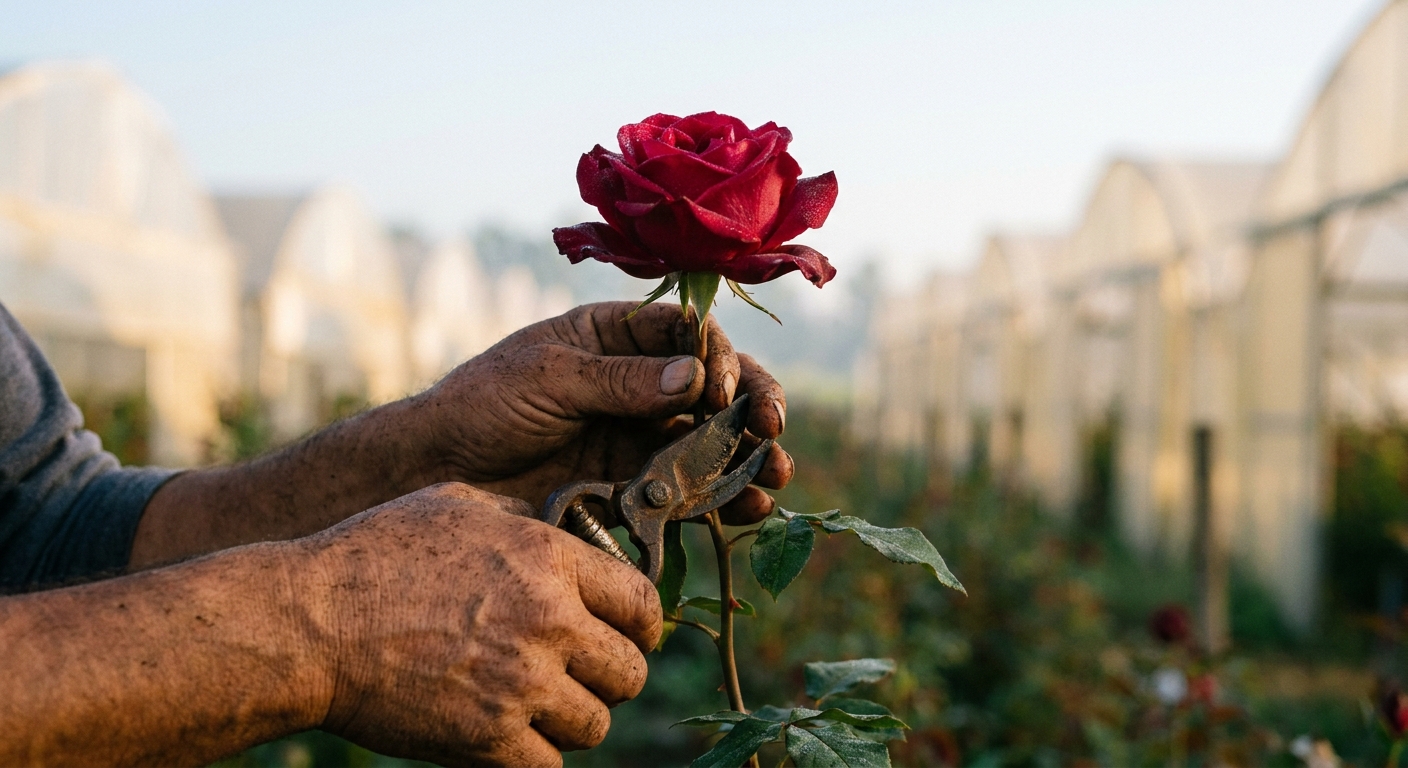
Watching a rose harvest is a study in precision. The farmers here understand the hydration cycle of the plants intimately. By harvesting in the cool, humid stillness of the morning, they ensure the stems remain hydrated and the blooms stay tight, ready to survive the long journey across the country. If you smile and offer a polite nod, you might find yourself invited to watch the sorting process. It is a sensory experience—the smell of wet soil, the sharp, verdant scent of crushed stems, and the persistent, earthy aroma of the highland clay.
If you find yourself venturing slightly further toward the tea plantations that terrace the hillsides, the mood shifts. While the greenhouse workers are often static, focused on their rows of delicate blooms, the tea pickers are dynamic, moving across the slopes like tide markers. They carry large wicker baskets strapped to their backs, their hands dancing over the camellia sinensis leaves with mesmerizing speed. Taking a moment to stand at the edge of a tea slope while the sun finally breaches the mountain horizon turns the entire valley into a golden, shimmering amphitheater.
For those looking to plan their morning effectively, keep these local customs in mind:
- Carry small change to pay your driver directly upon returning to the city center.
- Always ask for permission before entering a greenhouse, even if the door is ajar.
- Wear sturdy shoes, as the paths between plots are often muddy and uneven.
- Avoid taking photos of the workers’ faces without a friendly gesture of consent first.
Once the sun is fully up, the silence of the valley is gradually replaced by the mechanical hum of tractors and the arrival of larger transport trucks. The magic of the early hours is fleeting, tied to that window of time before the dew evaporates from the petals and the heat of the day settles over the valley. Heading back to the city for a bowl of piping hot bun bo—a spicy, fragrant noodle soup that tastes infinitely better after a morning in the cold—feels like the only appropriate way to conclude the expedition. By the time you reach the main road, the city is just beginning to stir, and the intensity of the early morning harvest seems like a secret you have managed to keep from the rest of the world.
A dalat greenhouse tour is not something you find on a brochure rack in a hotel lobby. It is an improvised adventure that rewards curiosity and a willingness to trade sleep for the sight of a landscape waking up. The true character of this region is found in the dirt, the cold morning air, and the hands of the people who cultivate the beauty that fills the markets of the nation. It is a slow, grounding experience that serves as a necessary contrast to the frenetic pace of life in Vietnam’s major coastal cities.