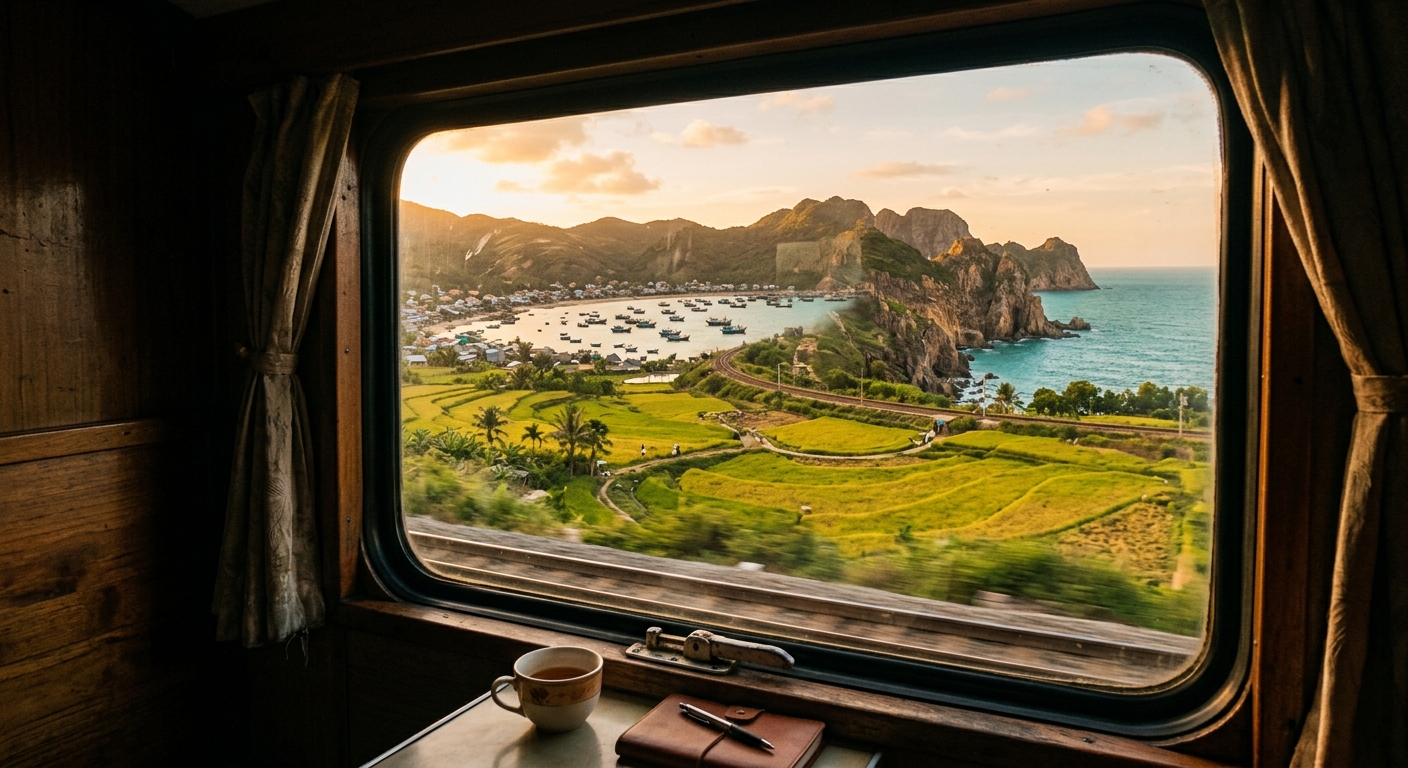
The rhythmic clatter of the Reunification Express is a sound that defines the slow-burn romance of overland travel in Southeast Asia. Stretching over 1,700 kilometers from Hanoi to Ho Chi Minh City, this narrow-gauge marvel cuts through the spine of the country, offering a perspective on the landscape that no budget airline window seat can replicate. However, the decision to commit to a rail pass versus picking up individual segments is a debate that often leads travelers down the wrong track. In reality, there is no official “Vietnam rail pass” that offers the kind of unlimited hop-on, hop-off freedom seen in Europe. Instead, you are looking at a system of point-to-point fares, and frankly, that works to your advantage.
Buying segment tickets gives you the flexibility to pivot. If you fall in love with the limestone karst formations of Ninh Binh or decide that three days in Hue isn’t enough to satisfy your craving for imperial history, you aren’t locked into a rigid itinerary. You simply book the next leg when you are ready. Using the official Vietnam Railways website or a reputable third-party agent to purchase these individual reunification express tickets allows you to curate your pace. You might spend a week drifting through central Vietnam, only to realize you’d rather fly the final stretch to the bustling south to save time for the Mekong Delta. That level of control is worth far more than the illusory convenience of a bundled pass.
Finding Your Comfort in a Soft Sleeper
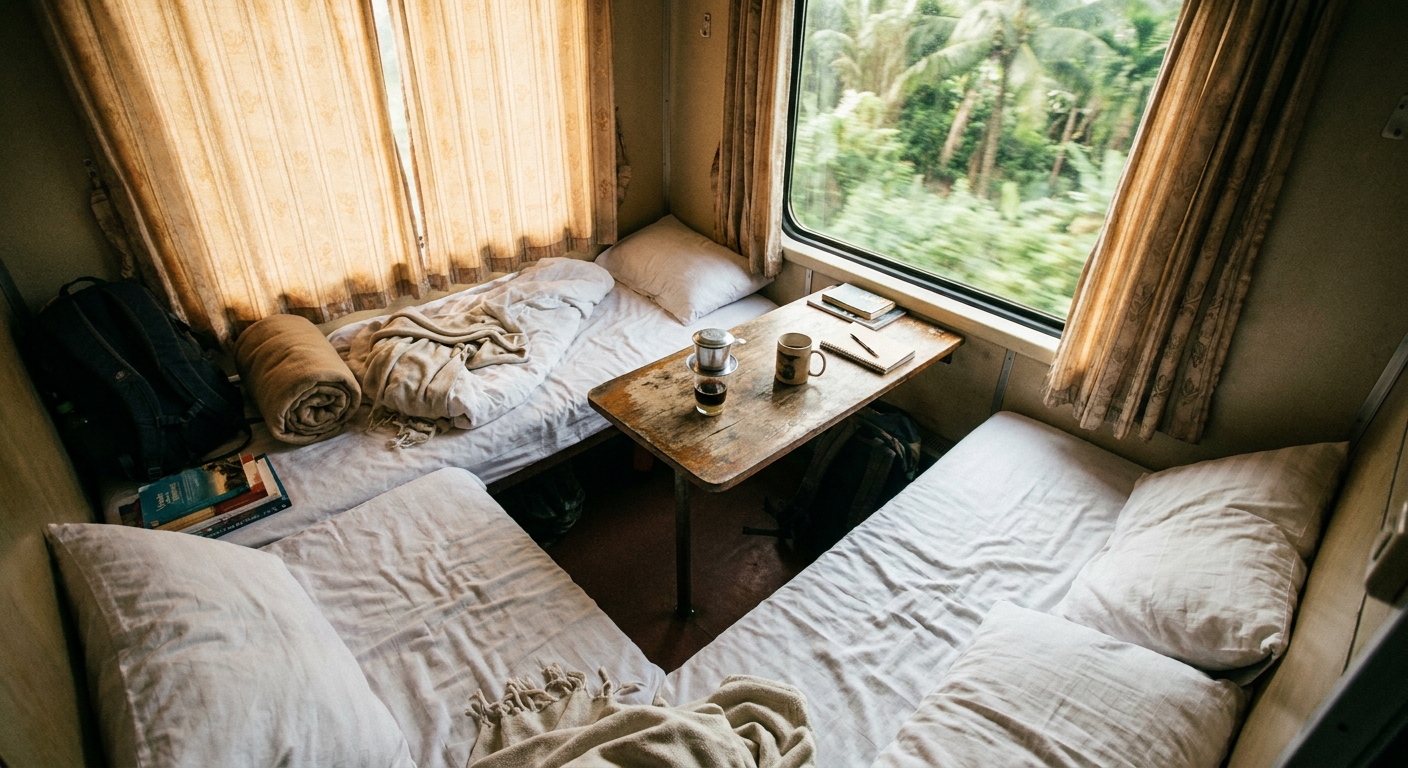
When you are staring at a fourteen-hour journey, the tier of service you choose is the difference between a transformative experience and a regretful morning. The soft sleeper vietnam cabins are the gold standard here, typically featuring four berths with decent mattresses. These are significantly more comfortable than the hard sleepers, which are often just vinyl-covered planks stacked six high in an open-bay configuration. In a soft-sleeper cabin, you get a locking door, a reading light, and a sense of relative privacy. It is worth noting that if you are a solo traveler or a couple, you will likely be sharing the cabin with two strangers. It is almost always worth the effort to book all four berths if you want the room to yourself, especially since prices remain incredibly reasonable by international standards.
Then there is the matter of the dining car. Many guidebooks romanticize the idea of a rolling restaurant, but the reality is much more utilitarian. The meals provided on board are often lukewarm, heavily reliant on pre-packaged rice boxes, and rarely cater to the nuances of local cuisine you’ll find in the city markets. Instead of relying on the train’s culinary offerings, do what the locals do: hit a neighborhood stall or a bakery before you board. Pack some banh mi, a bag of fresh tropical fruit like mangosteen or rambutan, and plenty of bottled water. By the time the train pulls out of the station, you will be well-supplied with a feast that costs a fraction of the cafeteria price and tastes significantly better.
Not every stretch of the track is created equal. While the entire route is historically significant, the scenery fluctuates from industrial outskirts to lush, hidden corridors that are otherwise inaccessible. To get the most out of your time on the rails, keep these stretches in mind:
- The coastal run between Da Nang and Hue via the Hai Van Pass is the absolute highlight, offering cliffside views of the East Sea that feel like a postcard coming to life.
- The passage through the mountain passes north of Nha Trang provides a stark, rugged contrast to the humid, flat rice paddies found in the Red River Delta.
- The approach into Hanoi, which takes you through the narrow urban alleys of the “Train Street” residential areas, offers a visceral, up-close look at the density of Vietnamese city life.
Choosing to travel by train is an admission that you value the transit as much as the destination. It is a slow, dusty, and occasionally loud way to see the country, but it strips away the sterile bubble of modern tourism. When you watch the sunrise over a flooded paddy field from a train berth, you aren’t just crossing a map; you are witnessing the quiet, consistent heartbeat of rural Vietnam. It is a messy, beautiful, and authentic way to traverse the distance between the ancient capital and the modern commercial hub, proving that sometimes, the journey really is the most important part of the itinerary.