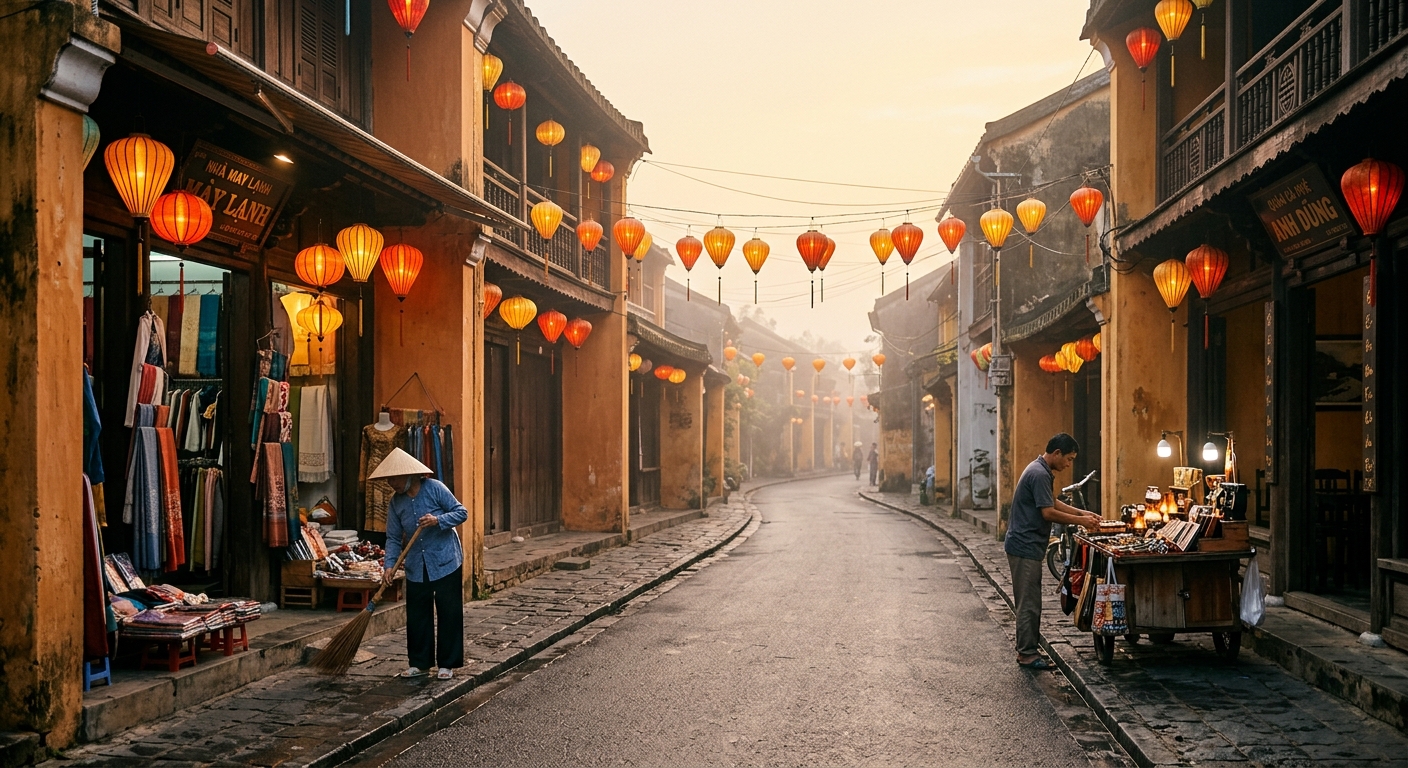
The humidity clings to the skin the moment you step out of the Da Nang airport, a soft, damp reminder that you have finally crossed the threshold into Central Vietnam. By the time the taxi rounds the final bend toward the ancient port town, the sun is already climbing, bleaching the yellow-washed walls of Hoi An into a brilliant, almost blinding shade of mustard. My first morning here began not with the urgency of a tourist itinerary, but with the slow, deliberate drip of a phin filter coffee—a thick, dark nectar sweetened with condensed milk that anchors you firmly to the present moment.
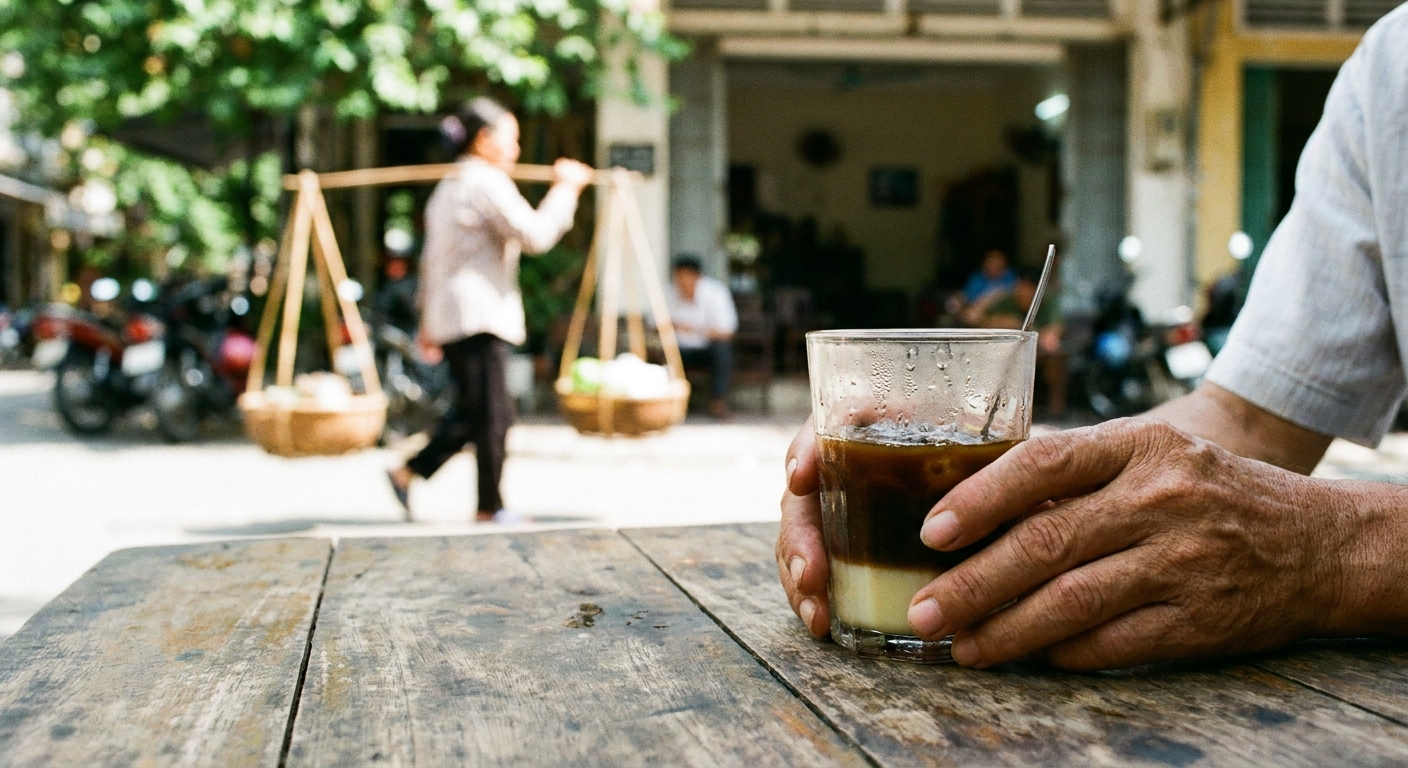
Arriving Hoi An Vietnam after a grueling red-eye flight usually leaves one in a state of sensory suspension. You are physically present, yet your internal clock is still somewhere over the Pacific. Sitting on a low plastic stool at a street corner café, I watched the town wake up. The early morning cycle of life here is rhythmic: vendors hauling baskets of morning glory on bamboo shoulder poles, the persistent hum of motorbike engines, and the deliberate sweeping of storefront porches. It is a world away from the sterile environment of international terminals and customs halls, where you spent hours refreshing an e-visa status page, hoping to see the word “Granted” before your departure date.
Finding Your Rhythm in the Ancient Town
Once the initial fog of travel fatigue lifts, the logistics of settling in become the primary concern. You need three things immediately upon landing: connectivity, currency, and comfortable shoes. I grabbed a local SIM card at the airport arrival hall—the data plans are remarkably affordable and offer speeds that put hotel Wi-Fi to shame. While most places in the Ancient Town now accept digital payments, Vietnam remains a cash-centric society. I stopped at an ATM near the edge of the market to pull out a few million dong; keeping a stack of 10,000 and 20,000 notes is vital for those small, spontaneous purchases like a glass of sugarcane juice or a bánh mì from a roadside stall.
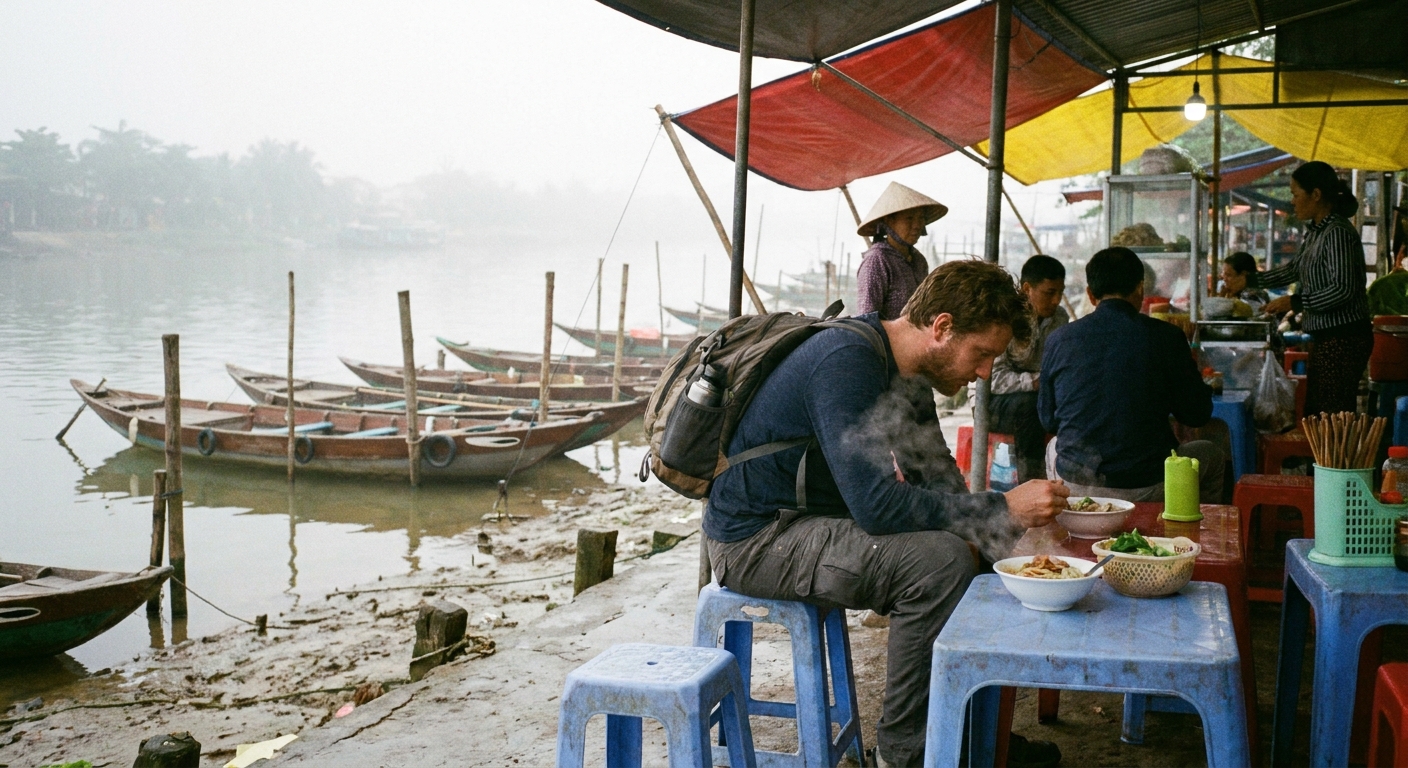
Walking into the heart of the UNESCO World Heritage site requires a certain level of patience. The architecture is a palimpsest of history, with Japanese covered bridges, Chinese assembly halls, and French colonial shutters all vying for attention. If you are still feeling the weight of your flight, stick to the side streets near the river. The main thoroughfares of Tran Phu and Bach Dang become crowded by midday, but the alleys behind them offer a quieter glimpse of domestic life. You will see grandmothers sitting in doorways sewing, children chasing stray cats, and the occasional resident tending to a bonsai tree with the precision of a surgeon.
There is a unique tranquility to a Hoi An first morning, provided you give yourself permission to do nothing. It is easy to feel the pressure to see the pottery village or book a cooking class immediately, but the town rewards those who linger. Instead of rushing to cross off landmarks, I spent my first few hours observing the way the light catches the bougainvillea draped over the ochre walls. It is the kind of place that invites you to put your phone away, despite how useful it was for checking your visa approval or flight updates just forty-eight hours ago.
To make the most of your arrival, keep these small essentials in your day bag:
- A refillable water bottle, as the midday heat can be deceptive.
- An umbrella, which doubles as vital sun protection when the humidity peaks.
- Your passport or a clear photocopy, often required for checking into homestays or renting a bicycle.
By noon, the atmosphere changes. The shops begin to open, the tailors beckon from their doorways, and the riverfront starts to buzz with the promise of evening lantern boat rides. I finished my second glass of coffee and watched a pair of tourists trying to decipher a map, their faces still etched with the weariness of a long journey. They looked exactly as I felt just two hours earlier—a little overwhelmed, slightly disoriented, but undeniably grateful to be exactly where they were. Hoi An has a way of absorbing that exhaustion, turning the stress of travel into a distant memory, replaced by the simple, enduring joy of a slow morning in a town that has mastered the art of standing still while the rest of the world rushes by.