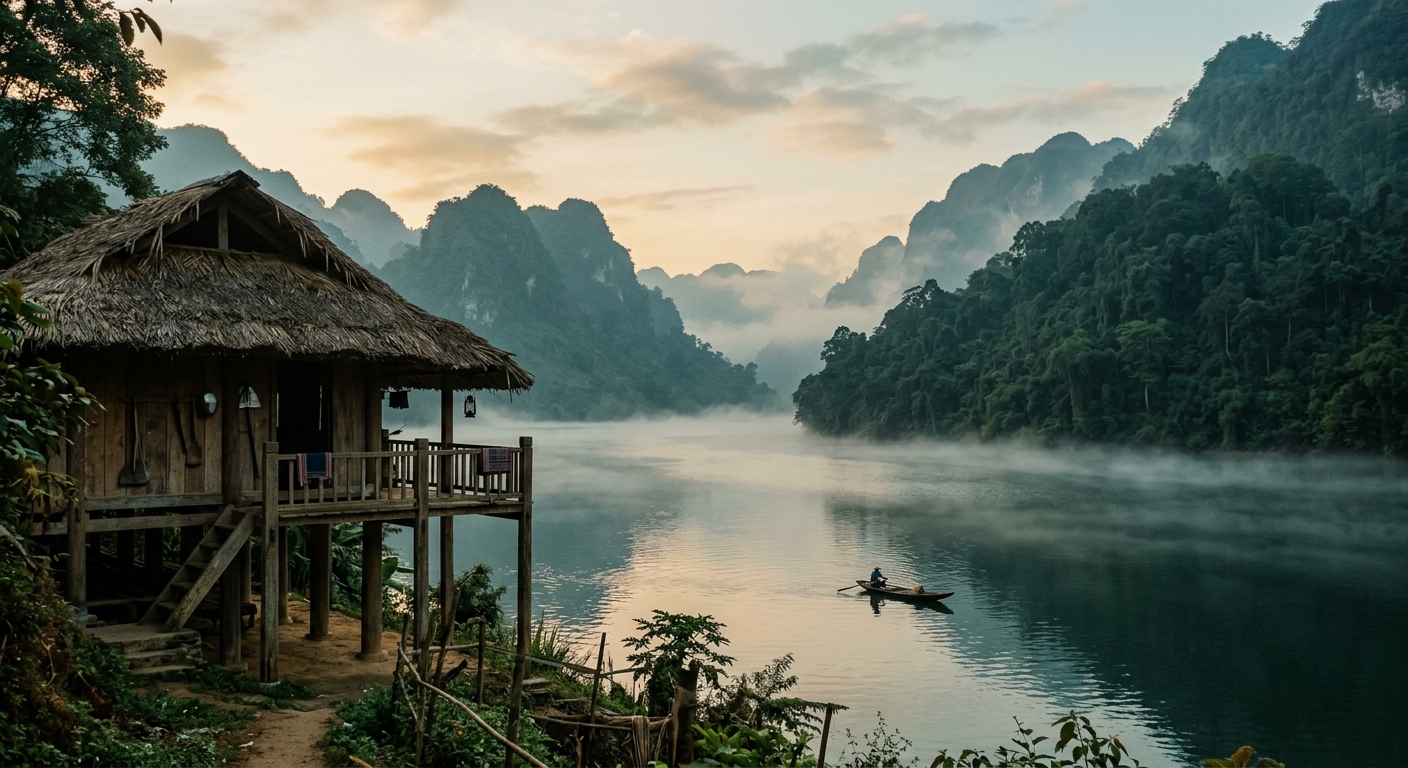
The rooster at the foot of the hill does not care that it is 4:30 in the morning. He begins his work with a rhythmic, piercing urgency that echoes off the limestone karsts surrounding Ba Be Lake, slicing through the thick, cool mist settling over the valley. In the stilt-house homestay, the wooden floorboards creak under the weight of the morning dampness. I sit on the edge of the porch, wrapped in a thin wool blanket, watching the first grey light filter through the canopy of the forest. Down on the narrow dirt path, the soft clatter of wooden wheels signals the arrival of an ox cart. A local farmer, draped in a heavy indigo-dyed jacket, guides his pair of slow-moving beasts toward the fields, their breath visible in the chilled air. It is a scene that feels entirely untethered from the digital rush of Hanoi.
Staying at a ba be lake homestay is an exercise in recalibrating your internal clock. Unlike the high-octane tourist hubs of the north, where motorbikes compete for space on narrow mountain passes, the rhythm here is governed by the growth of rice and the level of the water. When you choose one of these wooden dwellings, you are not just booking a bed; you are participating in a quiet domestic routine. The family downstairs is already awake, the charcoal stove crackling as they prepare a breakfast of sticky rice infused with pandan leaves and a simple, peppery broth made from lake fish.
Trading Connectivity for Clarity
There is a specific kind of honesty in the way Wi-Fi presents itself in this remote corner of northern vietnam quiet destinations. If you are expecting a stable fiber-optic connection, you will likely be disappointed. The signal often arrives like a timid guest, fluttering in and out of existence depending on how the clouds hug the mountains. At my homestay, the router lived in a precarious state of negotiation with the local topography. I spent my first morning trying to send a single photo, only to realize that the delay was a gift. It forced me to put the phone down, walk to the water’s edge, and watch the local fishermen cast their hand-woven nets into the glassy expanse of the lake. The lack of constant connectivity here is not a logistical failure; it is a boundary, a velvet rope that keeps the distractions of the outside world firmly held at bay.
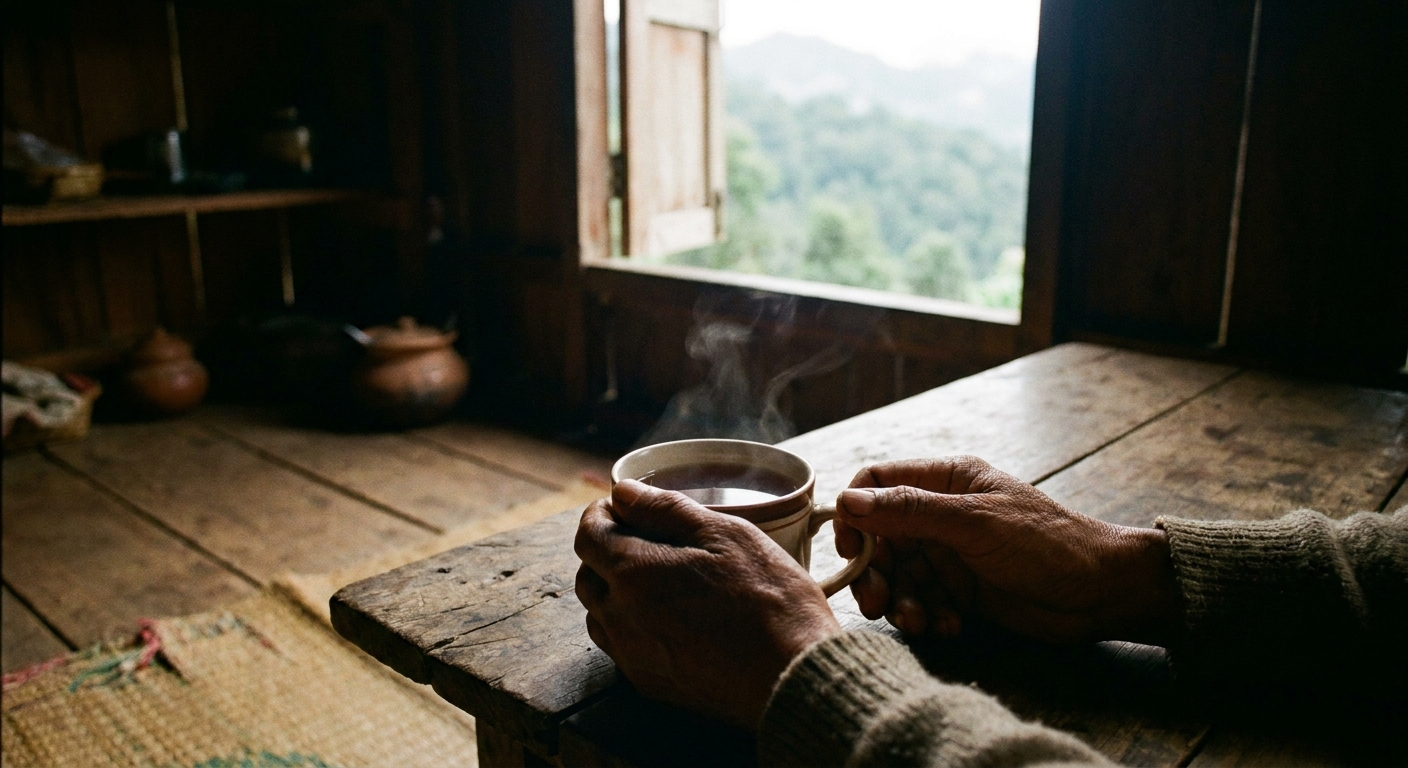
On the second morning, the fog lifted earlier. By the time I finished my coffee—strong, black, and dripping with condensed milk—the sun was gilding the limestone peaks of Ba Be National Park. I walked along the perimeter of the lake, passing small plots of maize and vegetable patches tucked between the stilts of neighboring houses. The landscape here is layered. Below, the water is a deep, bruised emerald; above, the jungle is a riot of tangled vines and ancient trees. The silence is profound, broken only by the occasional splash of a long-tail boat departing from the pier or the distant, melodic whistling of a shepherd.
If you find yourself gravitating toward these quiet pockets of the country, it helps to be prepared for the realities of rural life:
- Carry a small flashlight for navigating back to your homestay after sunset, as village paths are rarely lit.
- Bring a lightweight, quick-dry towel, as the humidity can be significant even in the dry season.
- Pack an external battery pack to ensure your camera stays powered for those sunrise photos.
- Keep cash in small denominations for buying snacks or local crafts from the families you stay with.
By mid-morning, the valley was fully awake. School children cycled past on heavy, single-gear bicycles, their laughter carrying across the water. The farmer with the ox cart was already making his way back, the cart now laden with bundled grass for the cattle. Watching the sun climb higher, I realized that my initial frustration over the slow internet connection had entirely evaporated. The digital world feels microscopic when held against the scale of these karst mountains. In the space of two mornings, I had stopped thinking about emails and started noticing the way the light changed the color of the water from slate to jade. When you travel to places like this, you don’t come to do things; you come to observe the quiet, steady persistence of life as it has been lived for generations.
As I packed my bag to head back toward the main road, the house remained quiet. The family was busy in the back garden, tending to the ginger and chili plants. There was no grand departure, no exchange of business cards—just a nod and a wave, a silent acknowledgment of the brief time shared under their roof. The lake remained undisturbed, a perfect mirror of the sky, indifferent to the fact that I was leaving and equally indifferent to the fact that I had ever been there at all.