Vietnam has no single high season that covers the whole country. Because it stretches so far from north to south, the weather in Hanoi can feel nothing like the weather in Ho Chi Minh City on the same day. Choosing when to visit really depends on which parts of the country you want to see and how much flexibility you have with your schedule.
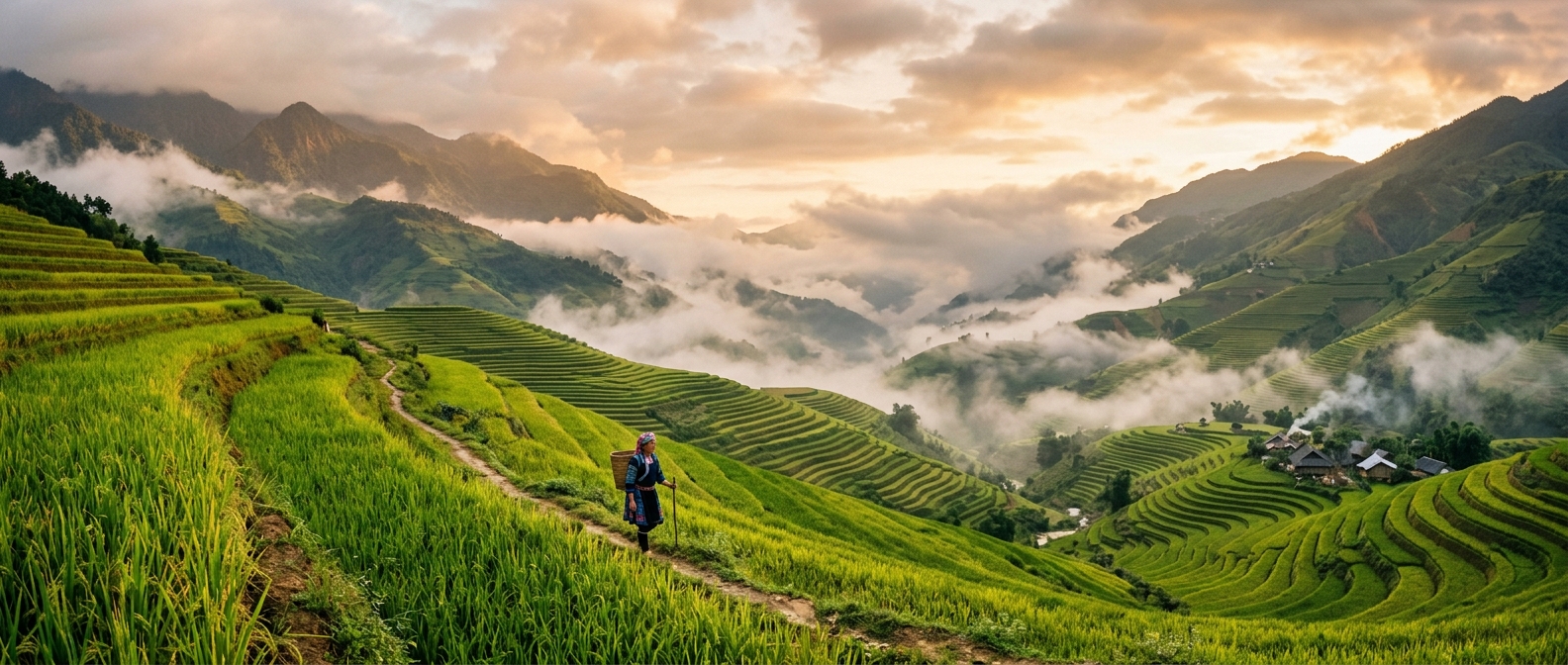
The months from November to April are generally the most comfortable for the north. Hanoi, Ninh Binh, and Ha Long Bay see cooler, drier days during this window, with occasional misty mornings that make the limestone karsts look almost mythical. December and January can feel genuinely chilly, especially in the mountains around Sapa, where a light jacket becomes essential. If you want to see the rice terraces in their famous emerald-green state, plan for September or early October, just before the harvest.
Central Vietnam, which includes Hue, Da Nang, and Hoi An, has its own rhythm. The sweet spot for this region runs from February through May, when the weather is warm but not yet punishing and the rain is minimal. From September through November, central Vietnam enters a wetter period, and typhoons can occasionally disrupt travel plans. That is not a reason to avoid the region during those months, but it is a reason to build in a bit of schedule flexibility.
The south, including Ho Chi Minh City, the Mekong Delta, and Phu Quoc, splits into two seasons. The dry season runs from December through April and offers consistently warm, sunny days that are ideal for beach time and delta exploration. The wet season from May through November brings heavy afternoon downpours, but mornings are often clear, and the countryside turns a vivid green that many photographers prefer over the dusty dry months.
If you want to cover the whole country in one trip without compromising too much, March and April are often the best overall choice. The weather is reasonable almost everywhere, tourist crowds are manageable, and the landscape is coming back to life after the cooler northern winter. Every season has its tradeoffs, but with a little flexibility, there is really no bad time to see Vietnam. Travelers who stay open to shifting their itinerary by a day or two when the forecast turns usually find that the weather has far less impact on the overall experience than they feared it would before landing.