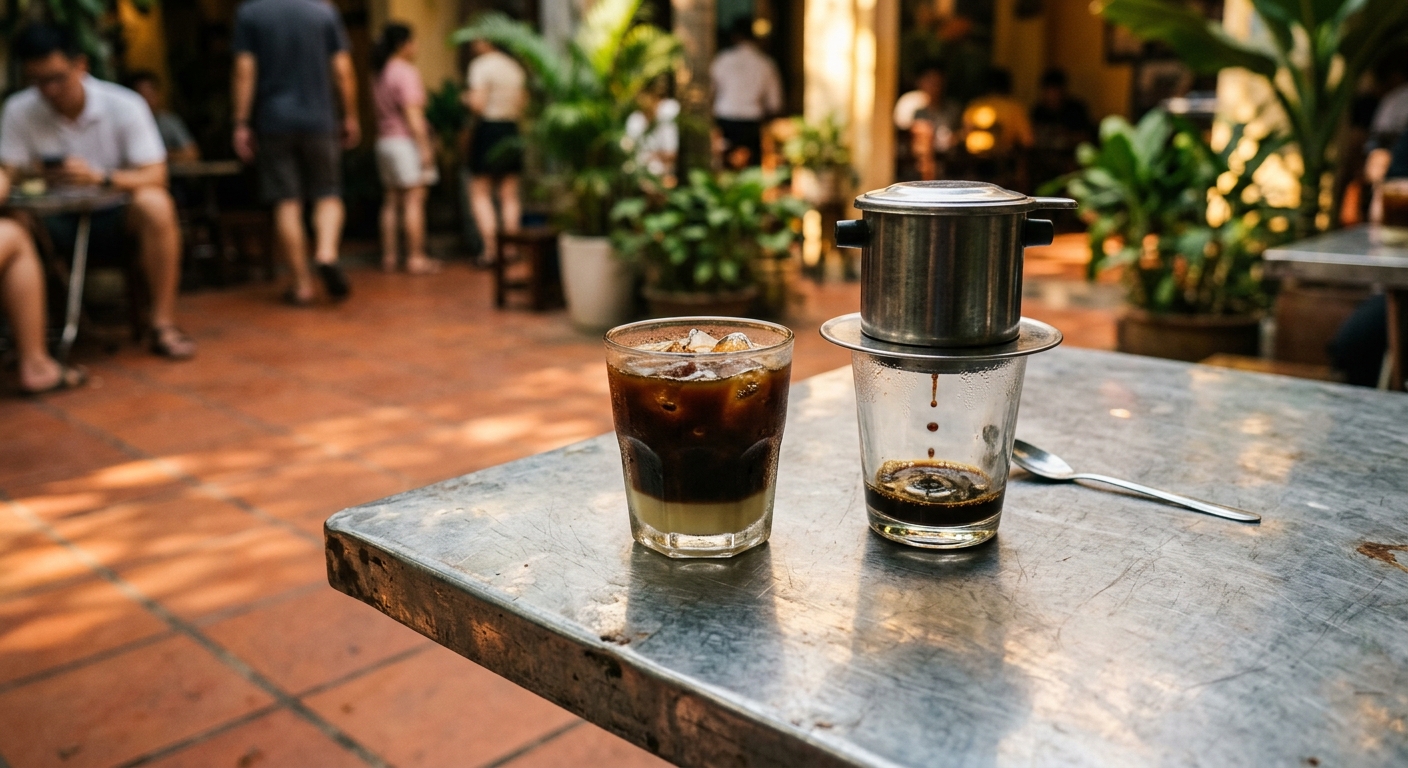
The plastic stool is low, often wobbling on the uneven pavement, placing your knees at an awkward angle against the table. Above, the relentless hum of motorbikes creates a rhythmic backdrop to the morning air, thick with humidity and the smell of exhaust. Yet, right in front of you, perched atop a glass half-filled with thick, ivory-colored sweetened condensed milk, sits a small metal contraption. This is the heart of the morning ritual in Vietnam. It is not merely a beverage; it is a patient, meditative process that demands you slow down and observe the world passing by.
The Physics and Philosophy of the Phin
Most travelers arriving in Vietnam are accustomed to the efficiency of a high-pressure espresso machine or the sheer volume of a standard drip brewer. The Vietnamese coffee phin defies both. It is a slow-drip gravity filter, a modest tool that forces you to relinquish control. You place the grounds inside, tamp them down just enough, and pour a splash of hot water to let the coffee bloom. Then, you fill it to the brim and wait. The resulting brew is not a quick caffeine jolt but a concentrated, viscous elixir that drips with a deliberate, haunting tempo. You watch the dark droplets hit the surface of the condensed milk, swirling into a marbled pattern that signals the start of the day.
The base of this experience is almost always Robusta. While the West has spent decades romanticizing the delicate acidity and fruity notes of Arabica, Vietnam has leaned into the intense, chocolatey, and inherently bitter profile of the Robusta bean. It is a high-caffeine powerhouse, bold enough to stand up to the sugary weight of the condensed milk. When you order a ca phe sua da, you are getting an interplay of extremes: the scorching bitterness of the concentrated dark roast colliding with the cloying, velvety sweetness of the milk, all tempered by a mountain of ice. As the ice melts, the drink changes, evolving from a syrupy dessert-like intensity to a balanced, refreshing pick-me-up.
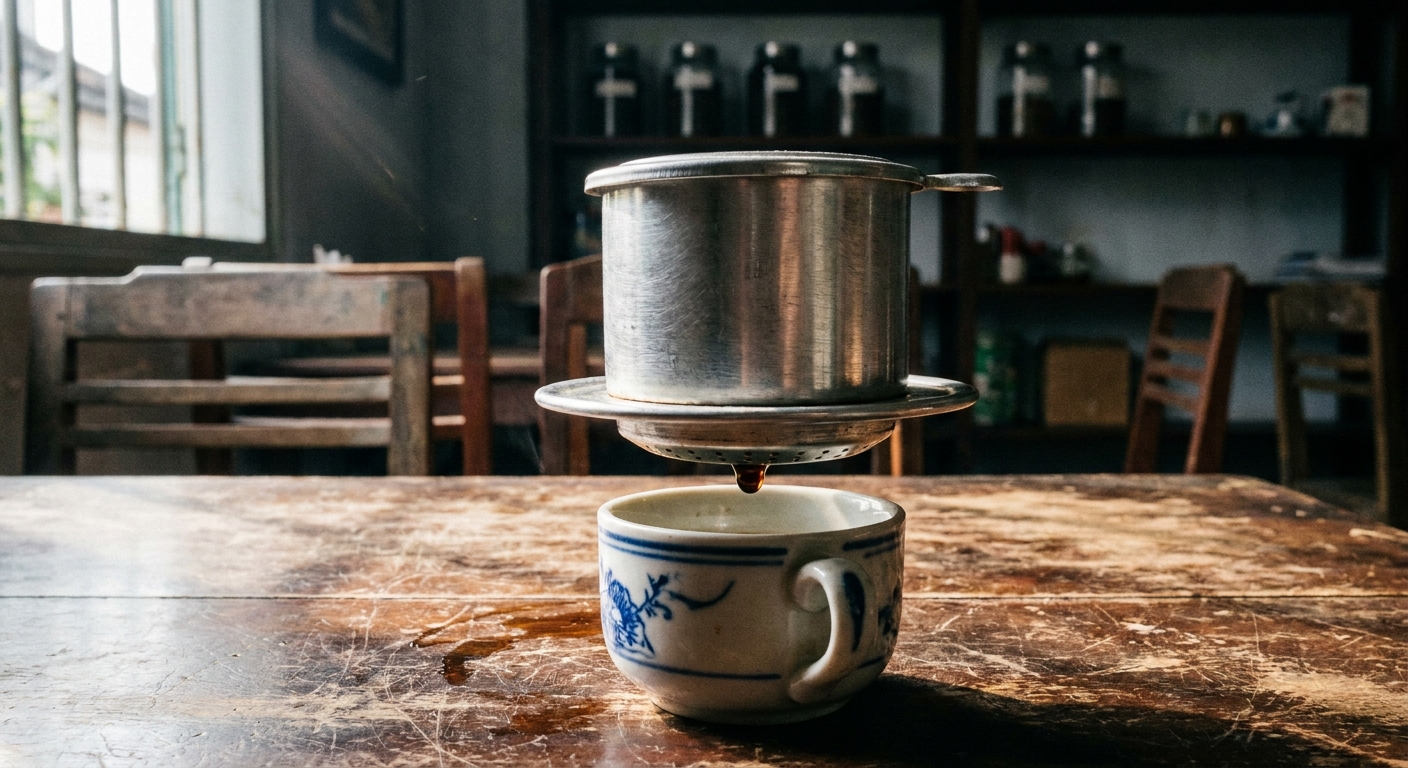
Beyond the chemistry, there is a distinct social architecture to the act of drinking coffee here. In many countries, coffee is a takeaway commodity, a fuel source shoved into a paper cup to be consumed while walking to an office. In Vietnam, it is an anchor. You are expected to linger. You watch the street vendors, the families navigating side streets on scooters, and the city waking up. The wait time for the phin to finish dripping—usually several minutes—is a built-in pause button for your day. If you try to rush it, you miss the point entirely. The slow drip is a gentle reminder that some of the most rewarding things in life cannot be accelerated, whether you are waiting for a bureaucratic process to clear or simply waiting for your morning caffeine to be ready.
A Sensory Shift in Expectations
There are subtle variations in how you might encounter this culture throughout the country, yet the spirit remains identical. You might find the following styles across the provinces:
- Ca phe den: A stark, black coffee that highlights the earthy, intense profile of pure Robusta.
- Ca phe sua: The classic hot version with condensed milk, ideal for the misty mornings in the highlands.
- Ca phe trung: A Hanoi specialty featuring a rich, frothy custard made from egg yolk and condensed milk whipped into the coffee.
- Bac xiu: A milder, milk-heavy concoction that serves as a bridge for those not quite ready for the full-throttle punch of traditional roast.
The sensory experience is tactile. The metal of the filter is often hot, the glass is cold, and the spoon used to stir the thick sediment at the bottom clinks against the side with a sharp, resonant sound. By the time you finally stir the mixture and pour it over a glass of ice, the transformation is complete. The coffee has become something entirely new—more like a liquid dessert, yet retaining an underlying ferocity that keeps you alert.
Perhaps that is why the ritual feels so ingrained in the landscape. Vietnam is a country that operates on its own timeline, one where patience is rewarded and where things are rarely as straightforward as they appear at first glance. Whether you are finding your footing in a bustling city like Ho Chi Minh City or tucked away in a quiet alley in Hue, that small metal filter serves as a common denominator. It strips away the pretense of global coffee chains and returns the act of drinking to its roots: a simple, dark, and sweet interaction between a person and their environment. When the final drop hits the glass, the bustle of the city feels slightly more manageable, and the day begins in earnest.