The air conditioning on the bus from Ho Chi Minh City to Tay Ninh is a fickle companion. One moment it is biting, the next, humid air from the open window carries the scent of burning trash, motor oil, and ripening durian. The drive takes about three hours, snaking through the flat, bustling outskirts of Saigon until the landscape eventually softens into the rural stretches of the Mekong Delta’s northern edge. You are heading toward the border of Cambodia, a journey that marks the primary path for those interested in Vietnam religious tourism, but the destination feels like it belongs to a completely different spiritual geography.
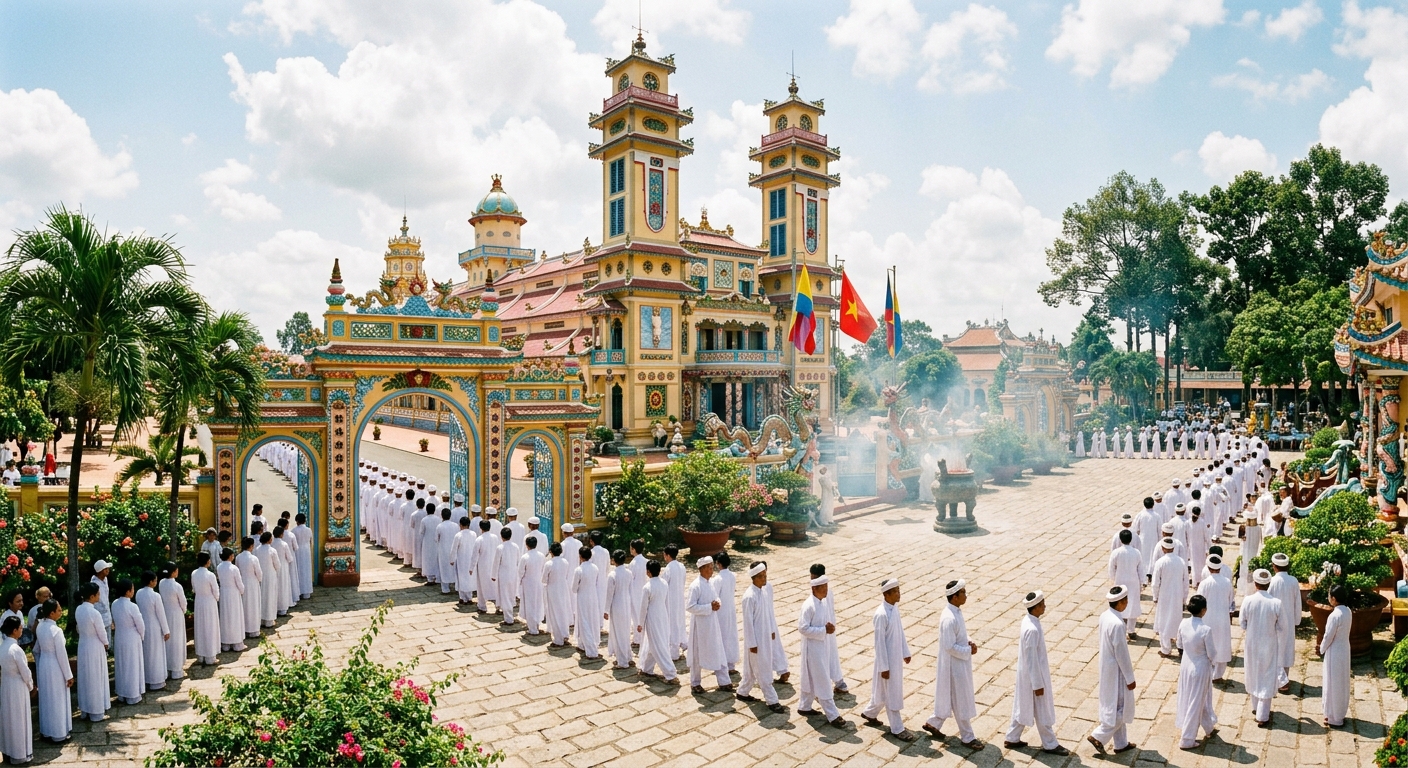
As the bus pulls into the dusty lot, the Tay Ninh Great Temple emerges with a surreal, technicolor intensity. It is not the subtle, weathered timber of a traditional pagoda or the somber grey of a colonial cathedral. Instead, it is a riot of pastel blues, bright yellows, and a shade of pink that seems to vibrate under the midday sun. This is the Holy See of Cao Dai, an indigenous faith that fuses elements of Buddhism, Taoism, Confucianism, and even flashes of Catholicism. The architecture is a fever dream of dragons, lotus flowers, and the omnipresent Divine Eye, painted in colors that defy the austerity typically associated with sacred spaces.
The Geometry of Devotion at High Noon
There is a singular reason to endure the long, bumpy transit: the noon ceremony. Many tourists show up breathless and sweaty just as the gongs begin to vibrate, scrambling to find a spot on the balcony before the doors close. They see the spectacle, but they miss the rhythm. If you arrive forty minutes early, the atmosphere is entirely different. You have time to sit in the quietude of the compound, watch the monks move with deliberate, hushed steps, and acclimate your eyes to the cavernous, dragon-wrapped interior of the temple. Being early allows the space to work on you, shifting your mindset from that of a rushed traveler to a respectful observer of a daily ritual that has unfolded exactly like this for decades.
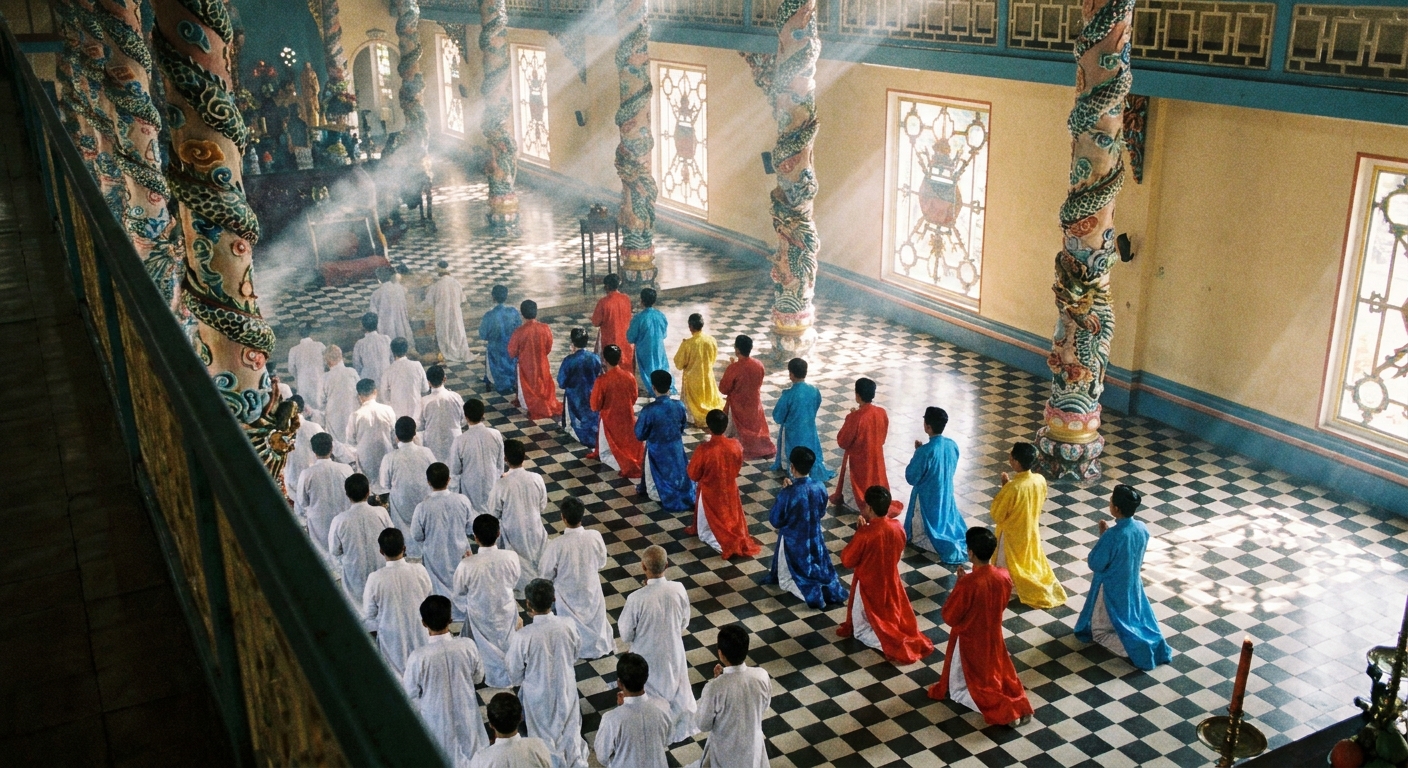
Around 11:30 AM, the courtyard begins to populate. Hundreds of worshippers, all clad in pristine white tunics, begin their silent approach toward the Great Temple. The men enter through one door, the women through another, their synchronized movement creating a visual tide of fabric against the polished tile floor. There is no chatting, no frantic checking of phones, and no sense of a performance. It is a daily obligation, an expression of devotion that feels startlingly intimate despite the scale of the architecture. When they finally kneel on the floor—men in the center, women to the sides—the silence is profound, broken only by the occasional flutter of a fan or the shuffle of a robe.
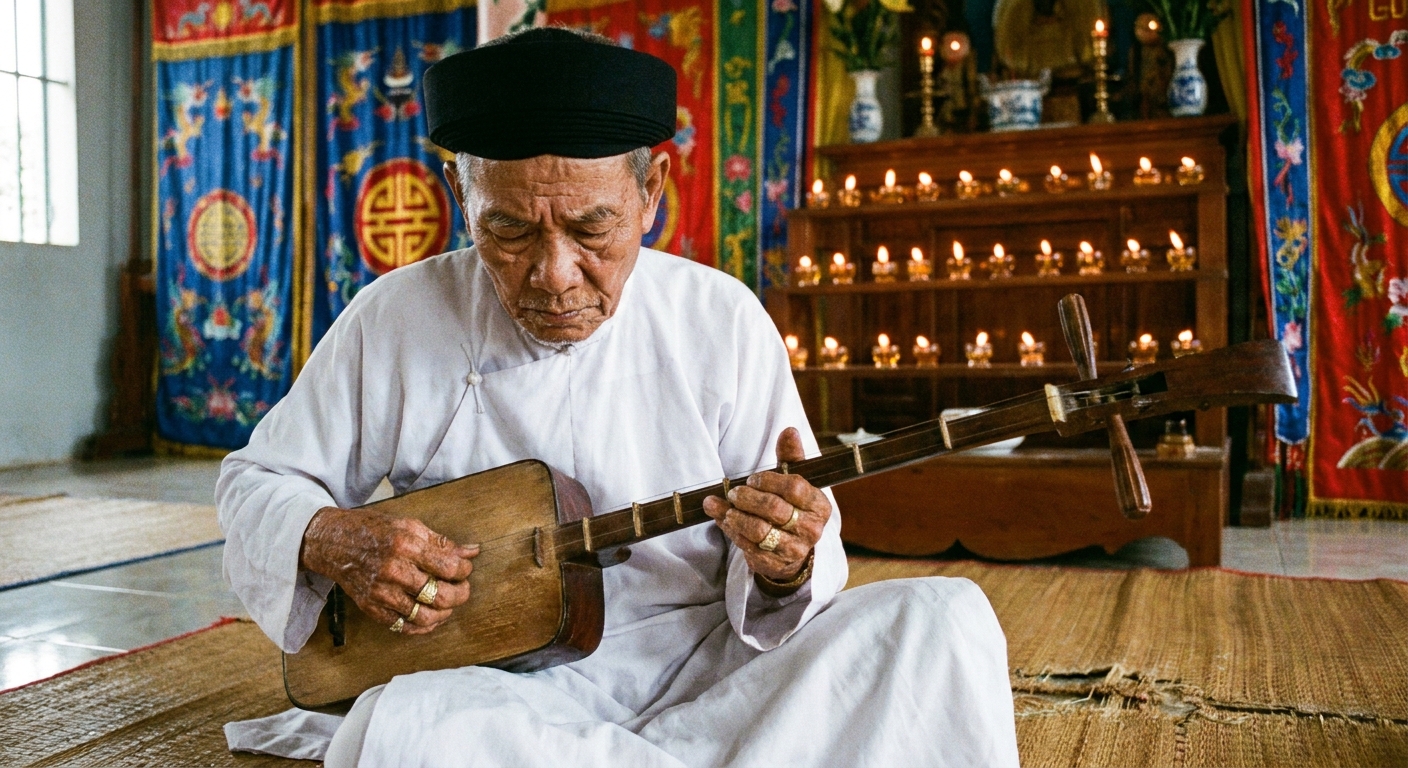
The ceremony itself is a sensory immersion. Musicians sit in the upper galleries, coaxing ethereal, high-pitched melodies from traditional Vietnamese instruments. The sound rises into the high, vaulted ceiling, bouncing off the painted pillars before settling over the congregation. Chanting follows, a rhythmic, hypnotic cadence that anchors the room. The Cao Dai temple ceremony is less about understanding the specific tenets of the faith and more about witnessing the sheer collective focus of the participants. You watch the incense smoke curl around the painted pillars, and for a moment, the chaotic noise of the motorbike-choked streets you left behind in Saigon feels like a hallucination.
To witness this, you have to be prepared for the logistics of the trip. The return bus often leaves in the mid-afternoon, meaning you have to be disciplined with your time. If you dawdle too long in the gardens or get stuck behind a slow-moving tour group, you lose the chance to see the worshippers leave. It is worth noting a few practicalities for your visit:
- Wear modest clothing that covers your shoulders and knees, as you will be entering a house of worship.
- Leave your shoes in the designated racks outside, as walking barefoot is mandatory within the temple.
- Keep your camera usage discreet; avoid using flash, and never obstruct the path of the worshippers during their entry or exit.
- Maintain silence while inside; the acoustics of the building amplify even the smallest whisper, which can be distracting to those in prayer.
By the time the final gong fades and the white-robed figures begin to file out, the afternoon sun has shifted, casting long, sharp shadows across the temple’s front steps. You walk back toward the bus, your senses feeling both sharpened and strangely exhausted by the visual overload. The drive back to Saigon offers a chance to process the stillness of the temple against the inevitable return of the city’s hum. It is a strange, jarring transition, but that is the reality of travel in Vietnam. You trade the quiet intensity of a sacred rite for the visceral, engine-driven energy of the road, carrying the image of the Divine Eye and the scent of sandalwood with you into the dusk.