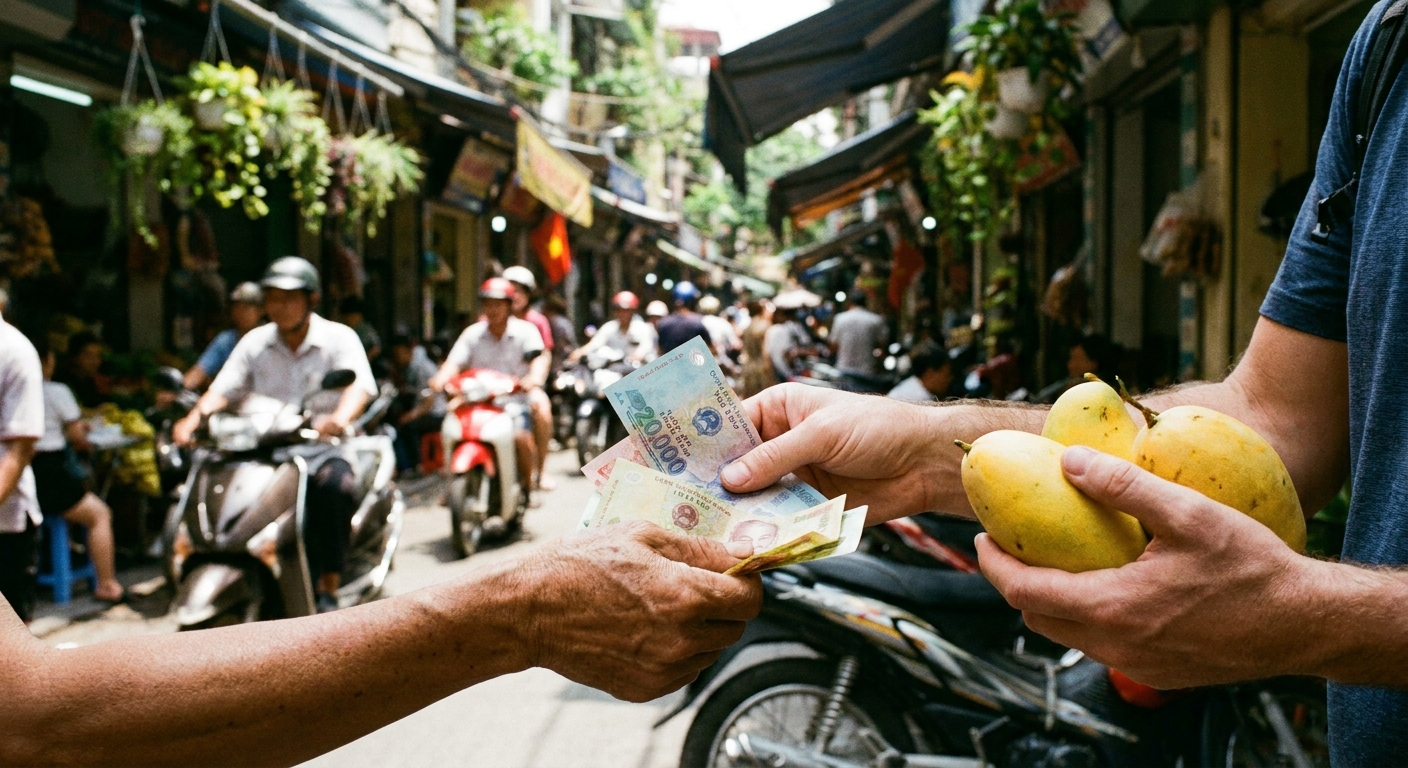
Managing money in Vietnam is straightforward once you understand the basics, but the large numbers on the banknotes can throw first-time visitors off balance. A cup of coffee might cost 30,000 dong, a nice dinner 300,000, and a decent hotel room three million. Those are not scary numbers once you get the rhythm of them, but it helps to set up your wallet thoughtfully before you land.
The Vietnamese dong is the only currency you should be paying in for day-to-day purchases. Some tourist businesses accept US dollars, but the exchange rates they offer are almost always worse than a local ATM, and paying in dollars for small items marks you as a visitor who has not taken time to learn. ATMs are widespread in cities and tourist areas and dispense dong in denominations up to 500,000. Bank-affiliated machines like Vietcombank and BIDV usually have lower fees than airport or standalone ATMs.
Cards work in most mid-range and upscale hotels, restaurants, and shops. Visa and Mastercard are accepted almost everywhere that accepts cards at all. American Express coverage is thinner. That said, cash is still essential for street food, local markets, motorbike taxis, small guesthouses, and the countless small purchases that make up daily travel spending. Aim to carry a mix of small and large notes so you can actually pay a 20,000 dong vendor without expecting them to break a 500,000 bill.
Tipping culture in Vietnam is gentler than in the United States but real. Rounding up taxi fares, leaving small change for street food cooks, and tipping hotel housekeeping a few dollars a day are all appreciated without being expected. In sit-down restaurants catering to tourists, a tip of around 10 percent for good service is becoming more common. Tour guides and drivers on multi-day trips typically receive a more noticeable tip at the end of the tour, and this is where a bit of research on current norms pays off.
Finally, watch out for a few small scams. Motorbike taxi drivers occasionally quote a price in dong and then claim they meant dollars at the end of the ride. Some tourist restaurants add items to the bill that were never ordered. These are the exception rather than the rule, and a quick glance at the bill solves most of them. Overall, handling money in Vietnam is easier than in many comparable destinations, and the cost of everything remains one of the country’s quiet superpowers.