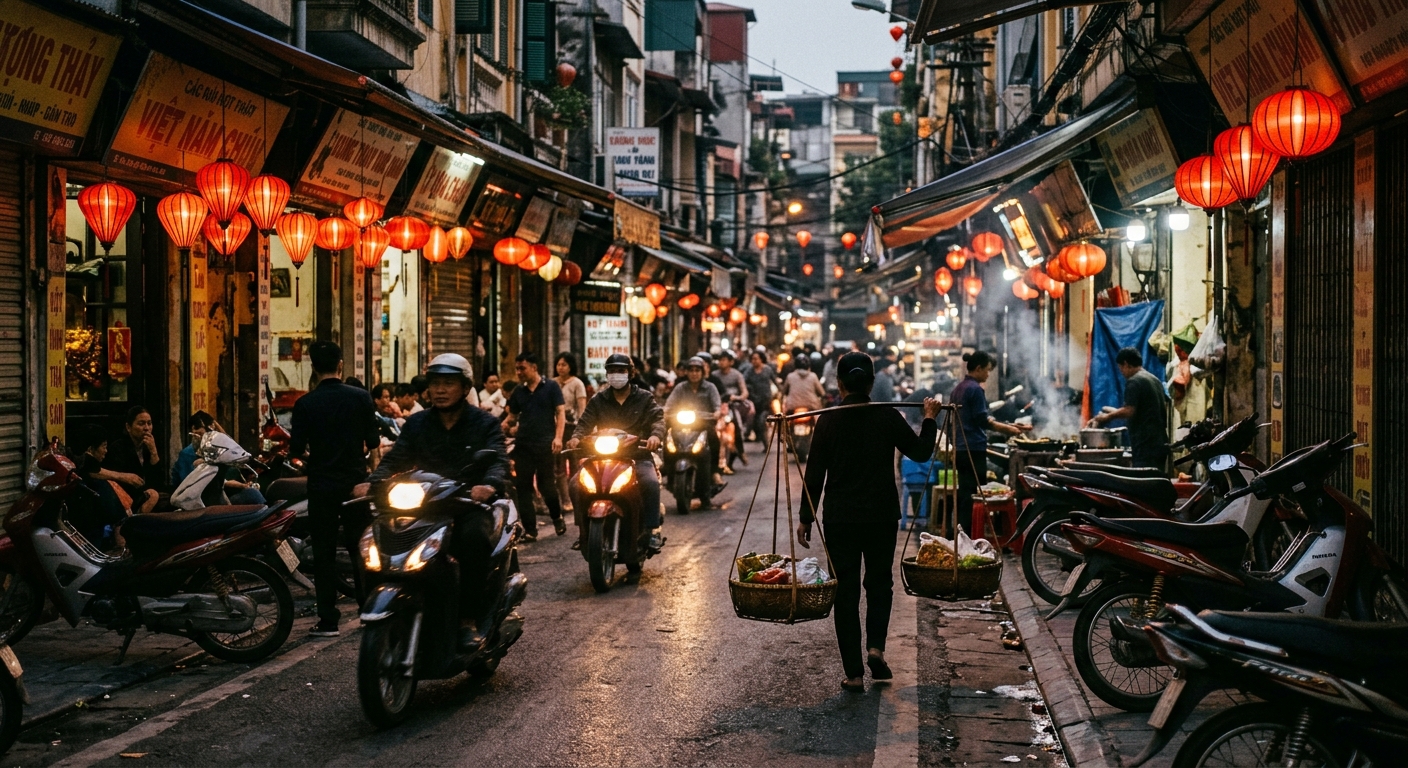
Hanoi’s Old Quarter is the kind of place that overwhelms you on the first day and enchants you by the second. A dense grid of ancient streets named for the guilds that once traded on them, it manages to feel simultaneously chaotic and intimate. Learning to move through it comfortably is a small skill that unlocks a much richer experience than following a map from one official sight to the next.
Start with the streets themselves. Hang Gai is famous for silk, Hang Bac was the silversmiths’ street, and Hang Ma sells colorful paper goods and festival decorations. These names are not just historical curiosities. The character of each street still reflects its old trade, and wandering without a fixed destination is one of the best ways to understand how the quarter actually works. Let yourself get a little lost. The area is small enough that you will always find your way back to a familiar landmark within a few minutes.
Crossing the street is the first local skill to master. The trick is to walk steadily and predictably, without sudden stops or backward steps. The motorbikes will flow around you as long as you move calmly. Freezing in the middle of the road is actually more dangerous than continuing to walk, because it breaks the assumption the drivers are making about your path. Watch how local grandmothers cross and imitate their unhurried pace.
Food follows the same rhythm as the streets. Each corner has its specialty, and many of the best meals in the quarter come from family stalls that have served the same dish for decades. Bun cha, banh cuon, and egg coffee are all neighborhood classics worth seeking out. The smallest places with the most battered plastic stools often serve the best food. If a shop looks polished and tourist-friendly, it is usually not where the locals eat.
Finally, linger by Hoan Kiem Lake in the early morning and late evening. The lake is the emotional center of the Old Quarter, and it becomes a community gathering place twice a day. At dawn, older residents practice tai chi and jog laps. At night, families stroll and couples sit on the benches watching the reflections in the water. Joining that rhythm, even briefly, is the fastest way to feel less like a visitor and more like a temporary local who happens to have arrived from somewhere far away.