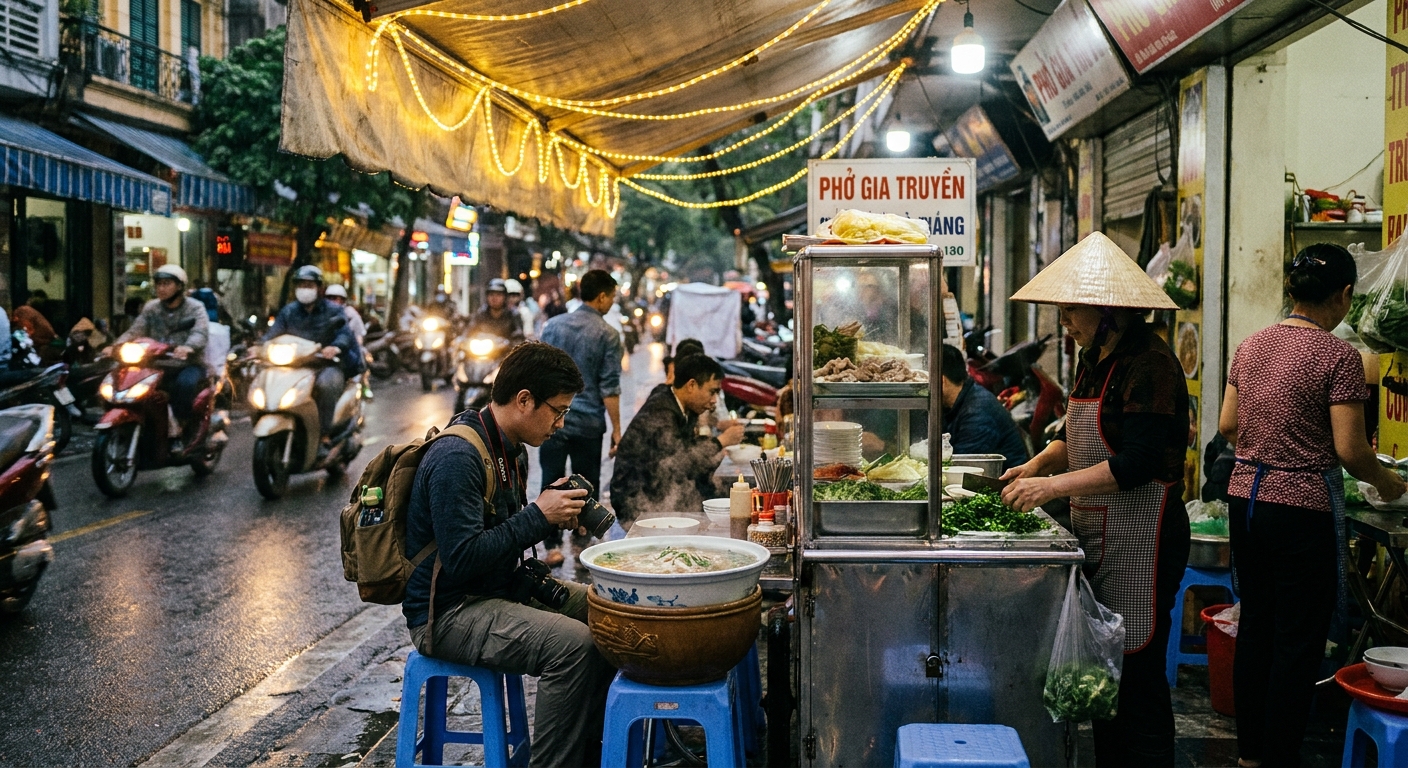
The plastic stool is low, the humidity is thick with the scent of star anise and grilled pork, and the woman behind the pot is moving with a speed that borders on the frantic. This is the authentic heart of Vietnam, but for a visitor who hasn’t mastered the tonal nuances of the local language, it can feel like stepping onto a stage where you haven’t been handed a script. You want the bowl of noodles you saw the person next to you eating, but the fear of accidentally ordering something entirely different—or perhaps nothing at all—can be enough to send you back toward the safe, air-conditioned embrace of a hotel restaurant. Rest assured, you don’t need a vocabulary list to eat well here.
The most reliable method for successful vietnamese street food ordering is the ancient, universal language of the index finger. In a bustling market or a roadside stall, pointing is not considered rude; it is the standard operating procedure. When you sit down, you don’t need a complex sentence to announce your arrival. Simply catch the server’s eye, offer a small, polite nod, and then point directly at the dish you desire, either on a menu or, even better, on the table of a fellow patron. If you see someone eating something that looks delicious, pointing at their bowl while giving a subtle thumbs up is a high compliment to the cook and a clear signal of your intent. It is the purest form of point and eat vietnam, and it works in every corner of the country, from the iced coffee stalls of Saigon to the bun cha joints of Hanoi.
Beyond the Gesture: Small Phrases That Open Doors
While gestures will get the food onto your table, a few basic vietnamese phrases food enthusiasts should know can transform a transaction from a robotic exchange into a moment of genuine warmth. You do not need to attempt complex grammar. The goal is to show respect and clarity. Start with “Xin chào” (seen chow) for hello, and use “Cảm ơn” (cahm un) for thank you. These two markers go a long way in signaling that you are a visitor who appreciates the culture. If you want to order one of something, simply hold up one finger and say “Một” (moat), which means “one.” Adding “cái này” (guy nai), meaning “this,” makes your request instantly clear: “Một cái này, cảm ơn.” It is short, direct, and impossible to misunderstand.
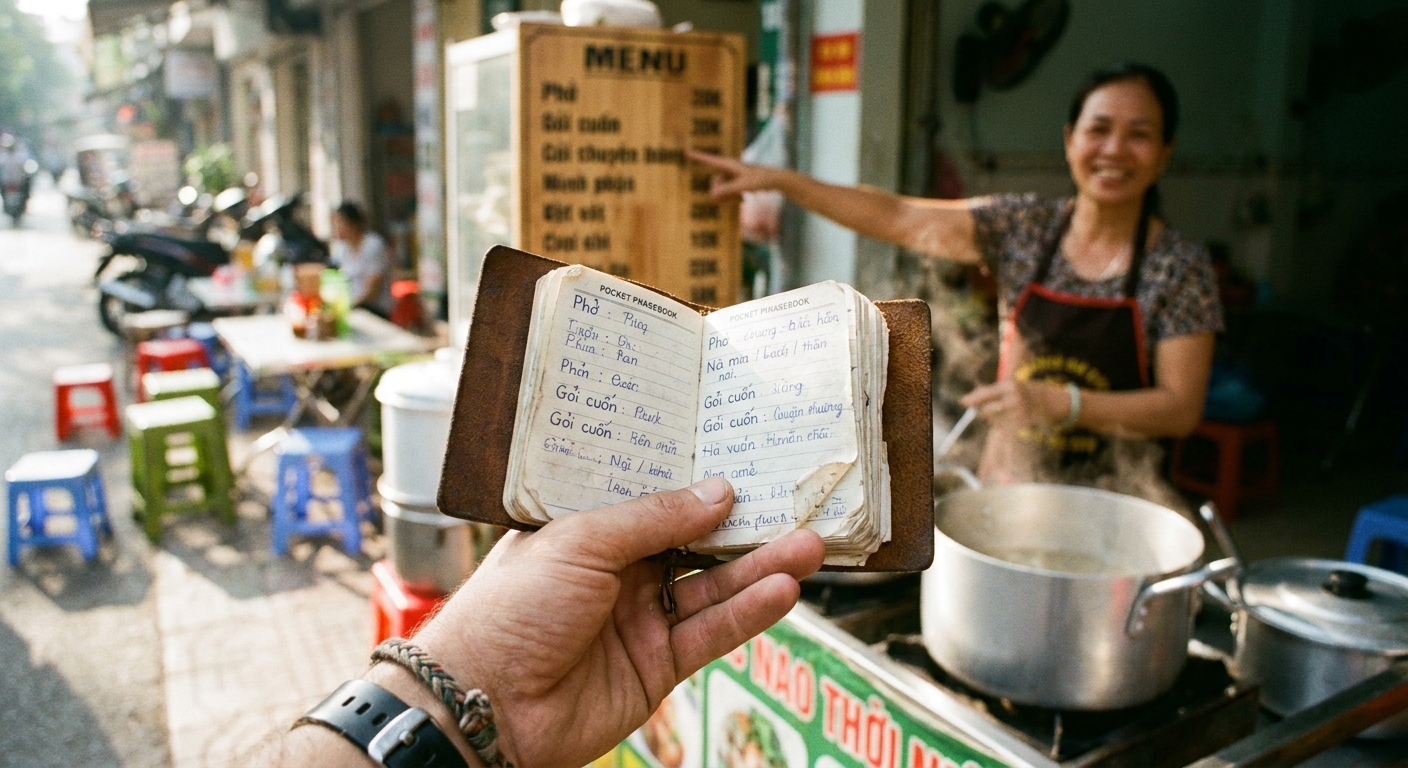
Many menus in popular tourist hubs are increasingly bilingual, but even when they aren’t, you will find helpful cognates. The French colonial influence on the language is profound, and you might spot words like bánh mì (bread/baguette), café, or sữa (related to the French lait for milk). Learning to identify the main protein on the menu—bò for beef, gà for chicken, or heo for pork—will give you enough agency to make an informed choice without needing a dictionary. If you are ever unsure about the heat level of a sauce or the contents of a mysterious broth, a gentle questioning look while pointing at the item will usually prompt a server to signal “yes” or “no” with their hands, or perhaps even hold up a chili to warn you that it is spicy.
There is a specific cadence to street life that rewards observation. Watch how others pay. Often, there is no bill brought to the table. Instead, you simply walk up to the owner or the person managing the cash box near the entrance, say “bao nhiêu” (how much), and they will either tell you the price or tap it into a calculator for you. If you are struggling with the currency, don’t worry about being perfect; showing them a handful of notes so they can pick the right amount is common practice. It removes the stress of trying to count out exact change while standing on a busy sidewalk.
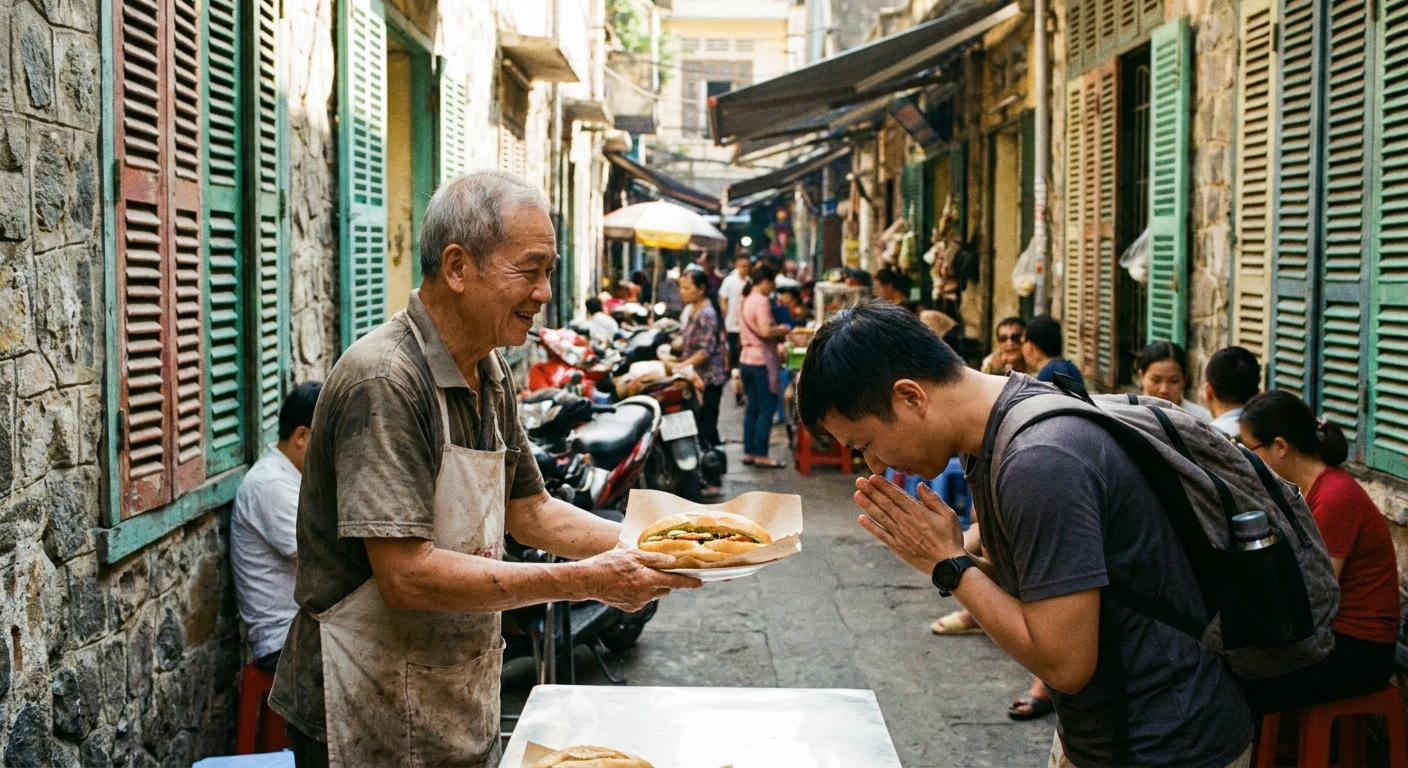
Ultimately, the secret to eating well here is letting go of the need to control every variable. The best meals I have had in Vietnam were not the ones I planned, but the ones where I sat down, pointed at something being served in a bubbling pot, and trusted the process. You are here to taste the local life, and that life is best experienced through the shared, simple act of eating. The language barrier is never as high as it looks from the sidewalk, and the people behind the stalls are almost always happy to feed a traveler who arrives with an open mind and a healthy appetite. Whether you are grabbing a quick snack on a plastic stool or settling in for a long lunch, keep your movements deliberate, your smile ready, and your eyes open for what everyone else is enjoying.