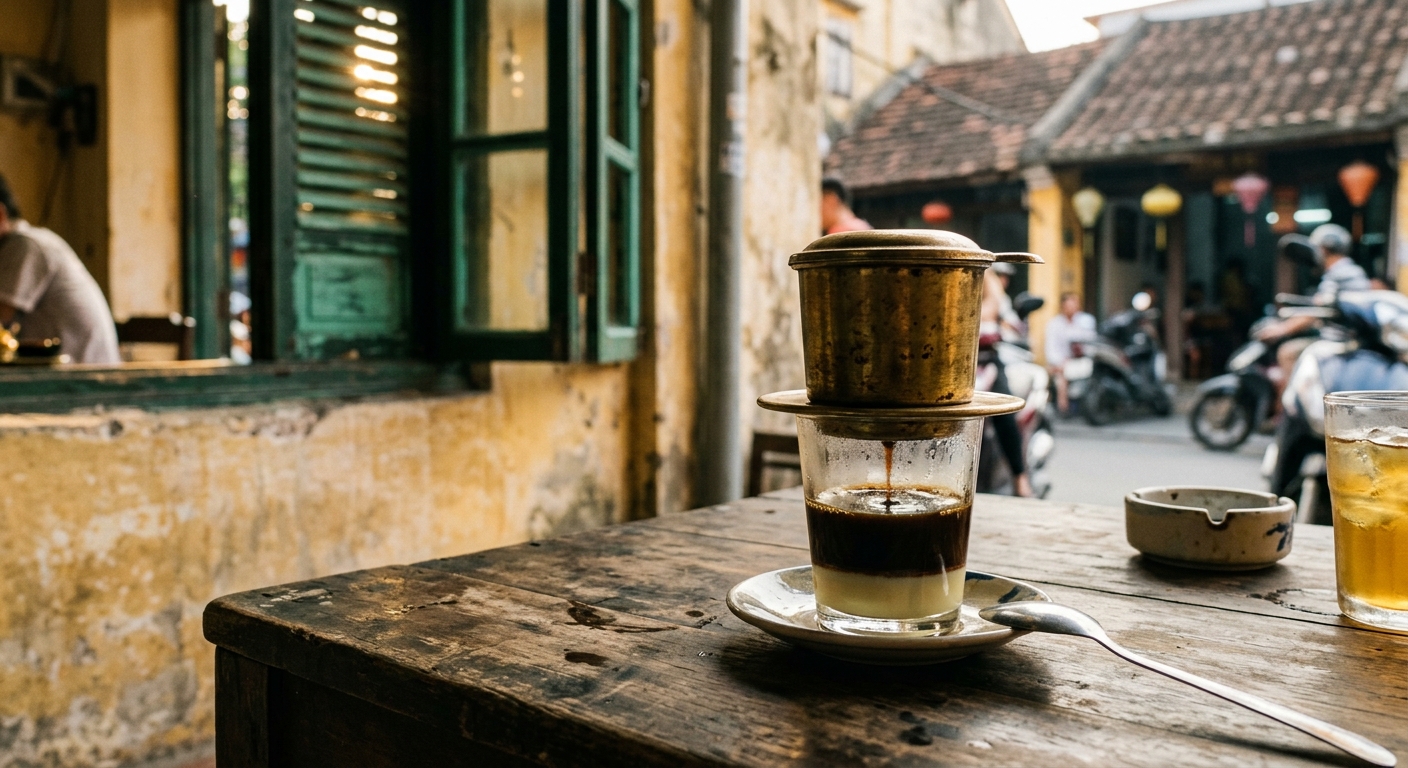
The sidewalk in Hanoi does not exist to be walked upon; it exists to be occupied. By 9:00 AM, the low-slung plastic stools are already arranged in a defensive perimeter around the base of a crumbling colonial-era building. I find a spot in the shade of a banyan tree, tucked between a motorbike repairman and an elderly man reading a broadsheet newspaper. The air is thick with the scent of motor exhaust and the sweet, roasted perfume of robusta beans. This is the heartbeat of a hanoi coffee shop, a place where time isn’t measured in minutes or meetings, but in the slow, mechanical drip of metal against glass.
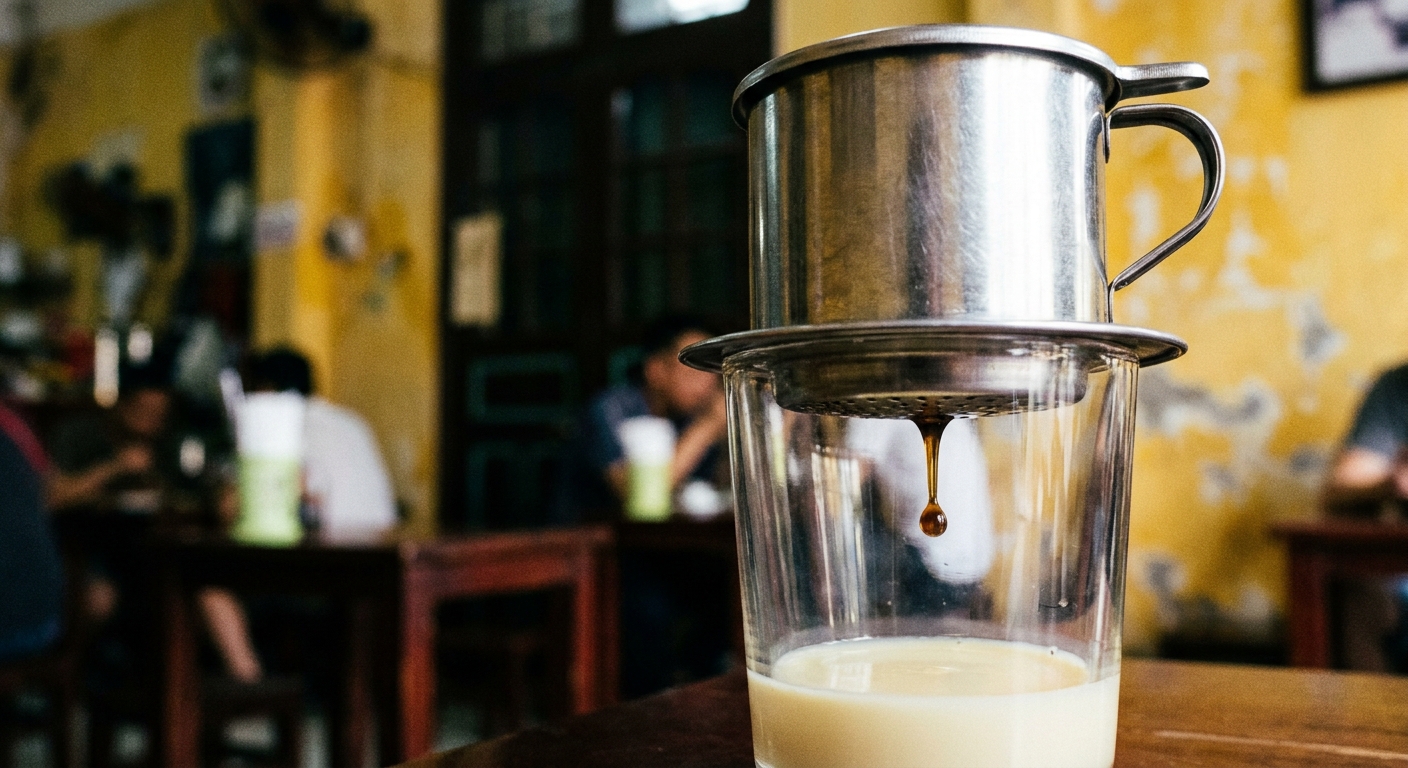
Before me sits the apparatus: a small, brass phin filter perched atop a heavy glass tumbler. A thick, viscous layer of sweetened condensed milk coats the bottom, undisturbed and waiting. The process is meditative, almost liturgical. The server pours the boiling water over the grounds, and then, we wait. This is the defining characteristic of the experience. You cannot rush a phin; it demands a patience that feels entirely foreign to the frantic pace of digital life. It forces you to sit, to watch the street, and to accept that the best things in this city take exactly as long as they need to take.
The Physics of the Drip
There is a specific physics to the way the coffee blooms, swells, and finally begins to weep into the glass. It is a dark, syrupy extraction, far more intense than anything you would find in a paper-filter pour-over back home. While the rest of the world has rushed toward the convenience of espresso machines and single-serve pods, the Vietnamese coffee culture remains stubbornly, beautifully analog. The phin is an egalitarian tool. It makes the same quality of coffee on a luxury rooftop terrace as it does at a dusty corner stall where the stools are only inches off the pavement.
When the last drop finally falls, the transformation happens. You stir the mixture, bringing the hidden sweetness of the milk up to meet the bitter, chocolatey punch of the coffee. If you are doing as the locals do, you are likely ordering it cà phê đá—iced. In Hanoi’s stifling, humid heat, a hot drink is a temporary comfort, but a glass of iced coffee is a survival strategy. The ice doesn’t just chill the brew; it dilutes the intensity of the robusta, turning a sharp jolt into a long, refreshing ritual that can be stretched over an hour or more of conversation.
Sitting here, I observe the cadence of the city. People don’t come to these shops to work on laptops or take conference calls. They come to hold court. A conversation in a Hanoi cafe moves with the same rhythm as the condensed milk—slow, deliberate, and undeniably sweet. You see two friends discussing a property deal, a son arguing with his father, or a group of students laughing over the latest street food craze. The noise of the city—the relentless hum of scooters and the distant chime of bicycle bells—seems to fade into a background hum once you’ve committed to the duration of the filter.
If you are new to the city, the sheer variety of preparations can be overwhelming. While the standard drip is the foundation, the local repertoire is vast:
- Cà phê sữa đá: Classic drip coffee with condensed milk and ice.
- Cà phê đen đá: Pure black coffee over ice, for the purists.
- Cà phê trứng: The famous egg coffee, whipped into a thick, custard-like foam.
- Cà phê cốt dừa: A cooling blend of coffee and creamy coconut milk.
These variations are more than just menu items; they are entries into the local way of life. When you order your coffee, you are signing a social contract with the establishment. You are signaling that you have nowhere else to be. You are acknowledging that the city’s true character isn’t found in the museums or the grand monuments, but in the quiet, sticky dregs at the bottom of a glass.
As the sun shifts, casting longer shadows across the cracked concrete, I watch the barista prepare another round. The brass filters clink against the rims of the glasses, a percussive soundtrack to the mid-morning rush. It is a rhythm that has persisted for decades, surviving wars, economic shifts, and the rapid modernization of the capital. No matter how much the city skyline changes, the fundamental desire for a slow, strong coffee remains the constant thread holding the social fabric together. Eventually, I finish the last of the ice, leaving the glass stained with the dark residue of the morning. It is time to move, but I find myself lingering, watching the street once more before folding the plastic chair and stepping back into the fray.