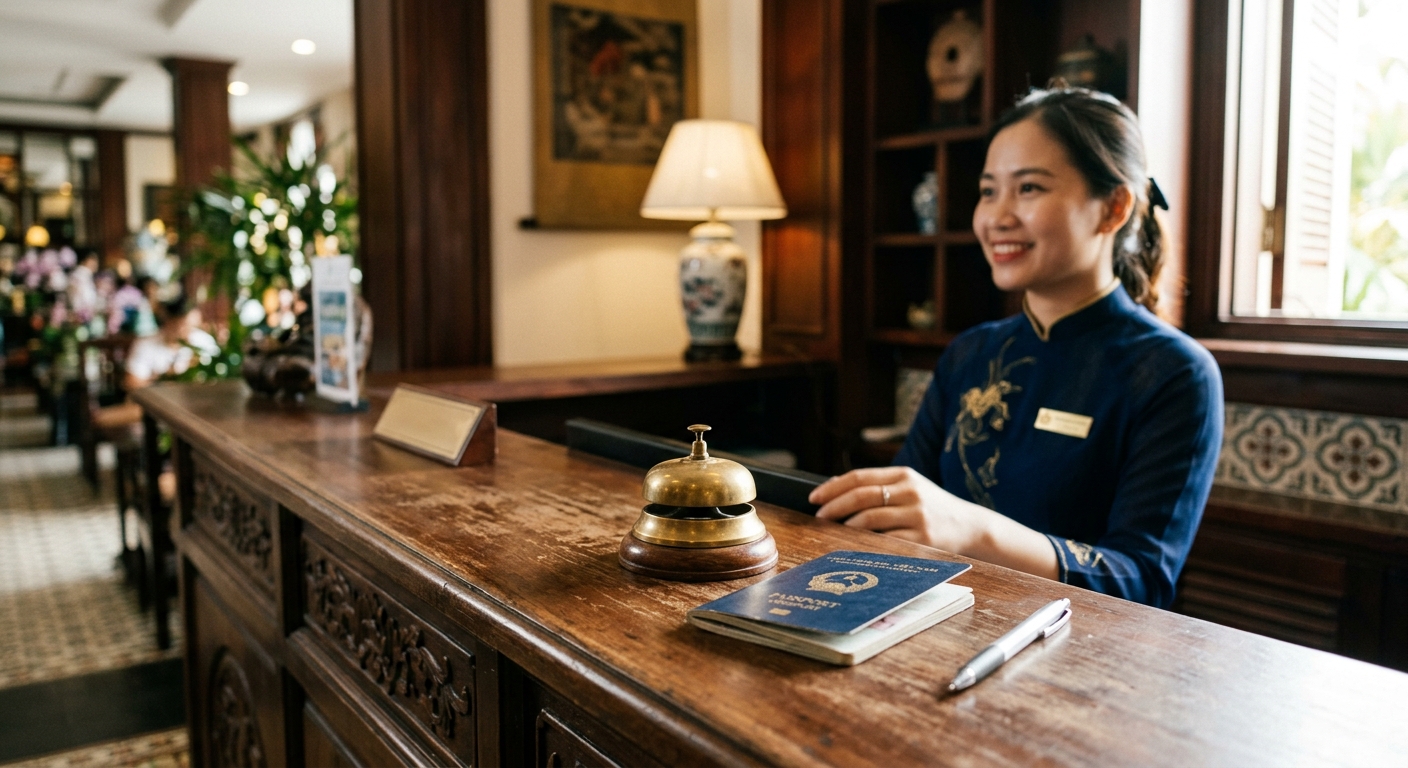
The humidity of a Hanoi morning hits you the moment you step out of the taxi, heavy and smelling faintly of jasmine and exhaust. You drag your luggage into the lobby of your hotel at 9:00 AM, exhausted from a red-eye flight, and head to the front desk with visions of a cool shower and a nap. The receptionist smiles, taps a few keys on their computer, and informs you that your room won’t be ready until 2:00 PM. You point to your booking confirmation, which might have mentioned “flexible check-in” or “early arrival honored,” but the staff member simply gestures toward the luggage room behind the desk. It is a moment of profound travel disappointment.
The gap between what major booking platforms promise and what a hotel actually delivers is often wide in Vietnam. Algorithms on international websites often apply a generic “check-in” policy to every property, regardless of the hotel’s occupancy levels or housekeeping capacity. When you see a promise of an early check-in on a website, it is usually a suggestion rather than a guarantee. Hotels in Vietnam operate on strict turnover schedules; they cannot magically conjure a clean room if the previous guest is still eating breakfast or if the housekeeping staff has a specific rotation to follow. Understanding this reality helps you shift your strategy from demanding a service to negotiating a solution.
The Art of the Pre-Arrival Outreach
The single most effective way to improve your Vietnam hotel arrival is to abandon the automated booking confirmation and initiate human contact exactly 24 hours before your landing. A simple email or a message via the platform’s chat function does more than just announce your arrival; it puts a human face to a reservation number. When you write to them, be specific. Instead of asking if you can check in early, ask, “I am arriving on an early flight and would love to drop my bags off; is there any chance a room might be available for an early check-in, or should I plan to head straight out to explore the city?”
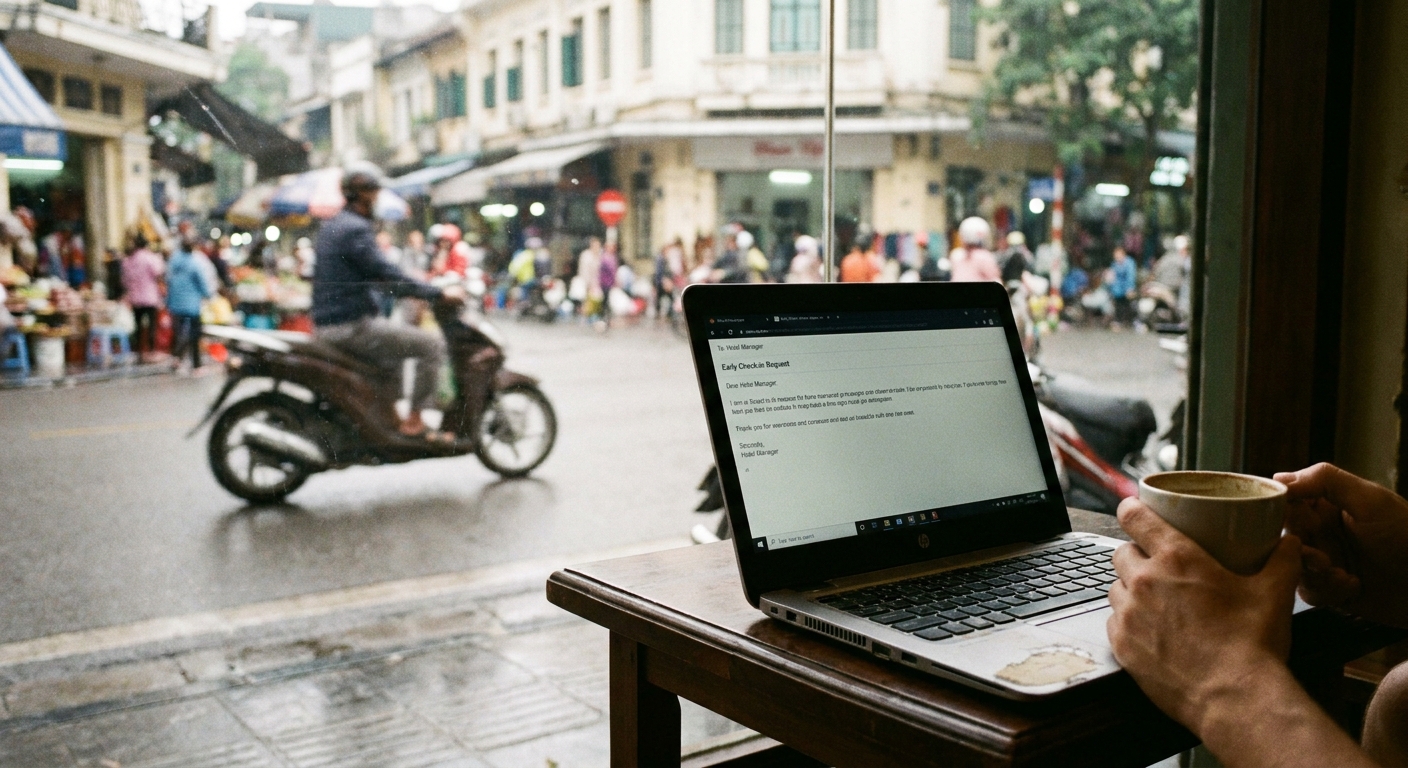
This phrasing changes the dynamic entirely. It shows the staff that you understand their limitations and aren’t arriving with an entitled attitude. By signaling your flexibility, you make it much easier for the front desk staff to say yes. If the hotel is at low occupancy, they might even pre-assign you a room that is currently vacant, skipping the usual wait. If they are full, they now know you are coming and can prioritize your room as soon as the previous guest checks out, potentially trimming that 2:00 PM wait down to 11:30 AM.
If you are planning your trip, consider these factors when gauging your early arrival success:

- Hotel size matters: Boutique properties often have more flexibility than large, high-volume international chains.
- Mid-week vs. weekend: You have a much higher statistical chance of an empty room on a Tuesday than a Saturday.
- The cost of certainty: If arriving early is non-negotiable, booking the room for the night before is the only way to guarantee a bed is waiting.
Sometimes, despite your best communication efforts, the hotel is simply fully booked. In these moments, the best strategy is to have a “day one” plan that doesn’t involve the hotel room. Vietnam is a country that thrives on the street, and there is rarely a reason to sit in a lobby. Leave your bags, ask the front desk for a recommendation for the best local coffee shop or a nearby park, and change your clothes in the lobby restroom if necessary. Having a map or a list of nearby sights ready allows you to lean into the arrival rather than fighting the clock.
Building a relationship with the staff before you walk through the door turns a transactional relationship into a collaborative one. When you finally return to the hotel after a few hours of wandering, you aren’t just another traveler checking in; you are the guest they were already expecting and trying to accommodate. This shift in approach usually results in a much warmer welcome and, more often than not, a room that is suddenly ready for you to enjoy.