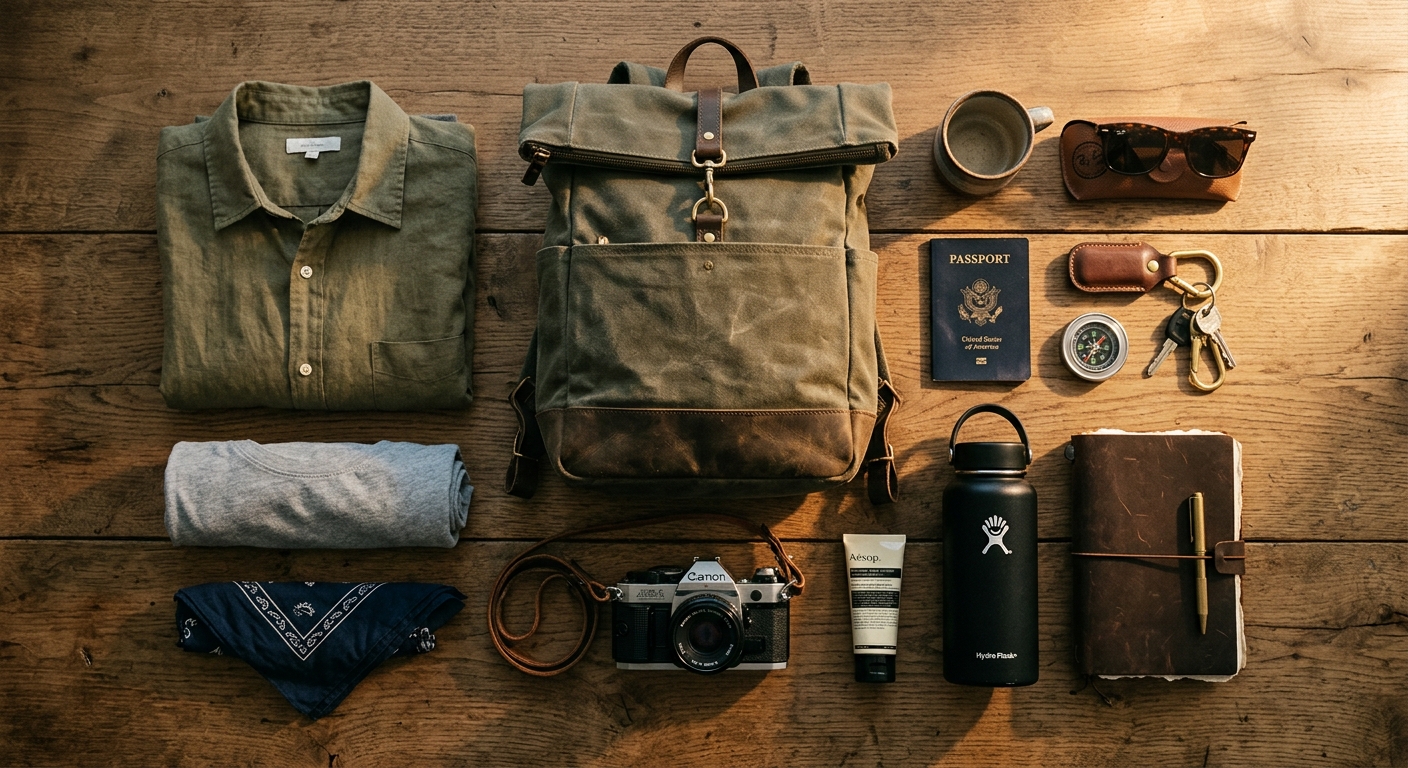
Packing for Vietnam depends heavily on when and where you are going, but a few core principles apply to almost every trip. The country is warm for most of the year in most places, the streets are often crowded and uneven, and you will probably want to do more walking than you expect. Packing light and smart is almost always better than packing for every theoretical situation.
Clothing should lean toward light, breathable fabrics. Cotton and linen handle the humidity better than synthetic materials. A few short-sleeved shirts, one or two pairs of lightweight trousers, and a comfortable pair of shorts will cover most situations. Temples and pagodas expect modest dress, which means shoulders and knees should be covered when you visit them, so pack at least one outfit that respects this even if the rest of your wardrobe is more casual.
Footwear matters more than many travelers realize. Vietnamese sidewalks are uneven, often shared with parked motorbikes, and wet during rainy season. A pair of comfortable walking shoes or trail sneakers will serve you far better than fashion sneakers that were not designed for long days on your feet. Sandals are useful for beaches and hotel downtime but less suitable for long walking days in busy cities.
Weather can surprise you. The north can feel genuinely cold from December to February, especially in Sapa and the surrounding mountains, so a light fleece or packable jacket is worth the space. Rainy season in the south brings sudden downpours that end as quickly as they start, so a compact umbrella or a small rain jacket saves you from being caught out. A wide-brimmed hat and strong sunscreen handle the other extreme on sunny days.
Beyond clothes, a few practical items earn their place in every Vietnam bag. A reusable water bottle with a built-in filter reduces plastic waste and saves money. A portable power bank keeps your phone alive during long sightseeing days. A small dry bag protects documents and electronics during boat trips or sudden rain. And a basic first-aid kit with rehydration salts, blister plasters, and any personal medications rounds out a practical kit that covers almost every real-world situation without overloading your luggage. Keeping the total bag weight under ten kilograms makes airport transfers, overnight trains, and last-minute room changes noticeably less stressful than dragging around an oversized suitcase through narrow streets and up steep hotel staircases at the end of a long travel day.