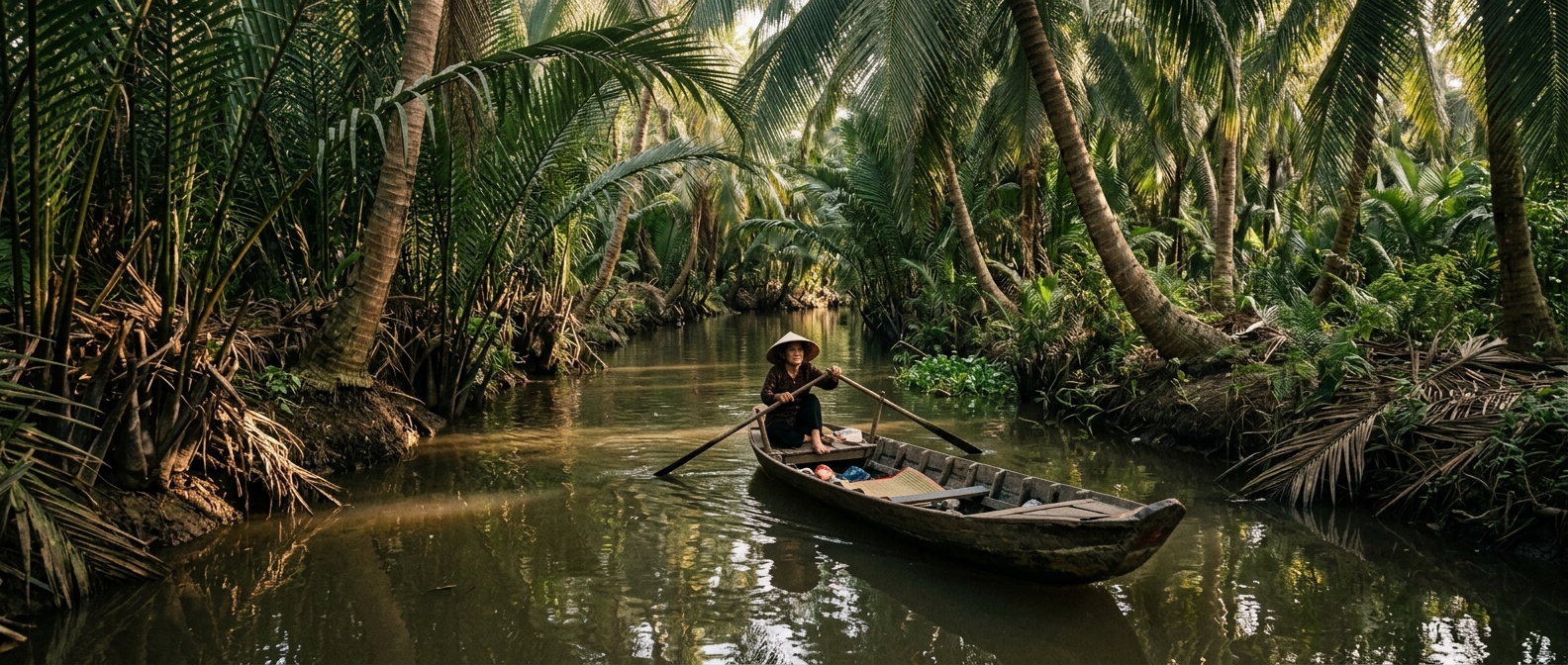
The alarm clock at 6:30 a.m. in Ho Chi Minh City usually signals the start of the quintessential one-day Mekong Delta tour. It is a blur of minibus exhaust, highway gridlock, and the hurried clicking of shutters. You spend four hours on a bus just to get to the water, only to be shuffled onto a wooden boat, ushered through a honey farm, and fed a pre-packaged lunch before the sun starts to dip. By 3:00 p.m., the tour guide is already herding the group back to the bus, anxious to beat the evening traffic back to the city. You have seen the Mekong, but you have barely touched its pulse.
The Difference Between Watching and Living the Delta
There is a fundamental misunderstanding about what the Mekong actually is. To the day-tripper, it is an attraction—a series of photo opportunities involving conical hats and coconut candy factories. To those who commit to at least two nights, however, the Delta reveals itself as a rhythm. It is not just about the water; it is about the silence that settles over the canals once the tour boats vanish. When you choose to linger, you trade the frenetic pace of a guided group for the slow, damp heat of the afternoon and the cool breeze that rolls off the river at dusk.
Staying at a Ben Tre homestay shifts your perspective entirely. Instead of being an observer on a boat, you become a guest on the riverbanks. The experience of sleeping on a wooden bed in a family-run house, protected by a simple mosquito net, is far more immersive than any high-end hotel room in District 1 could offer. You wake up not to the sound of a tour operator’s megaphone, but to the distant hum of long-tail boat motors and the rustle of palm fronds. This is where you witness the true trade routes of the Delta, watching farmers load their flat-bottomed skiffs with pomelos, bananas, and dragon fruit to be delivered to the morning markets before the day gets too hot.
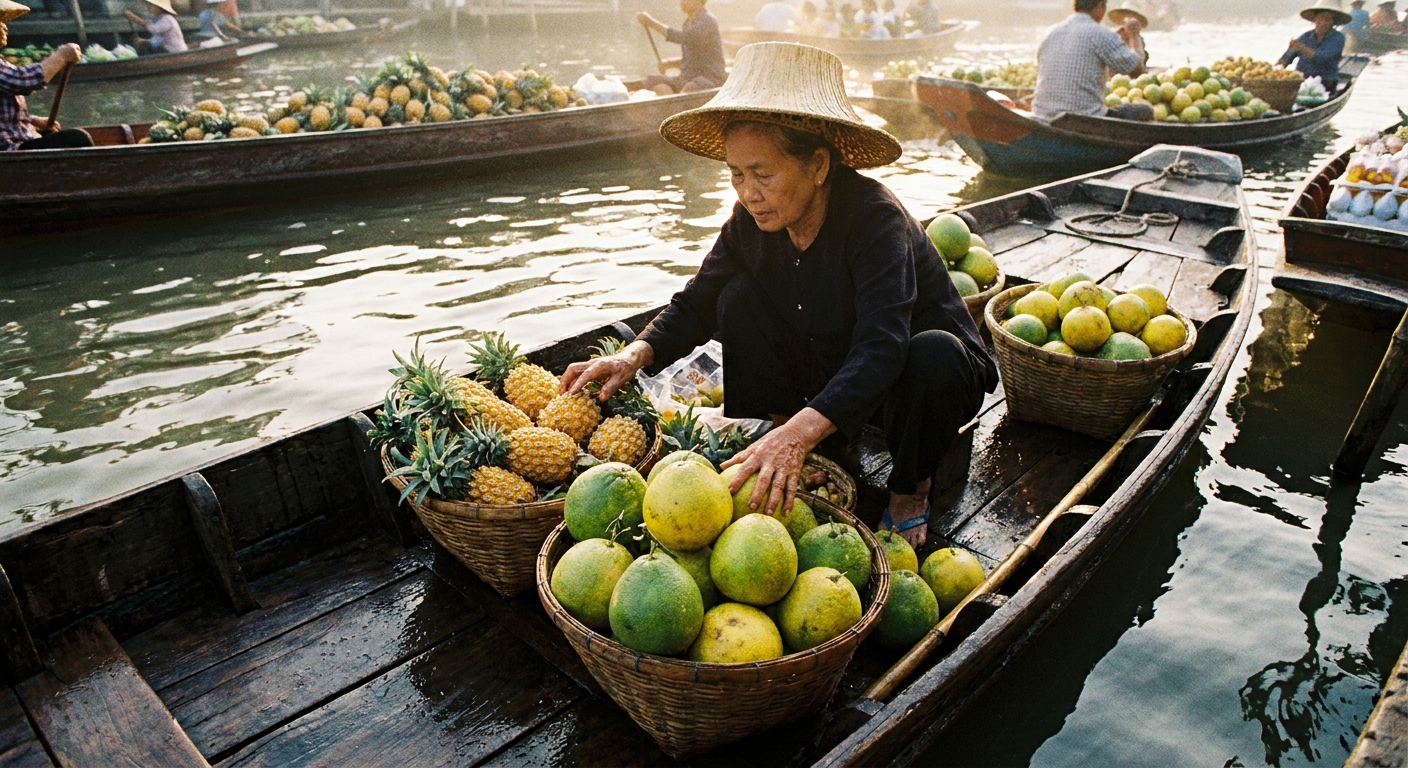
If you have spent your time waiting for your Vietnam e-visa approval, you know that patience is a recurring theme in your travel plans. That same patience is the golden key to the Mekong. By staying longer, you gain access to the deeper channels that the massive tourist boats cannot reach. You can rent a bicycle and weave through the dirt paths of the orchards, where the air is thick with the scent of tropical ripening and irrigation. You can sit with your hosts as they prepare dinner, learning the difference between the various types of river fish that make up the local diet, rather than consuming the generic menu served to day-trippers.
A longer stay offers a rhythm that day trips simply cannot replicate. Consider the small, essential moments that make a journey memorable:
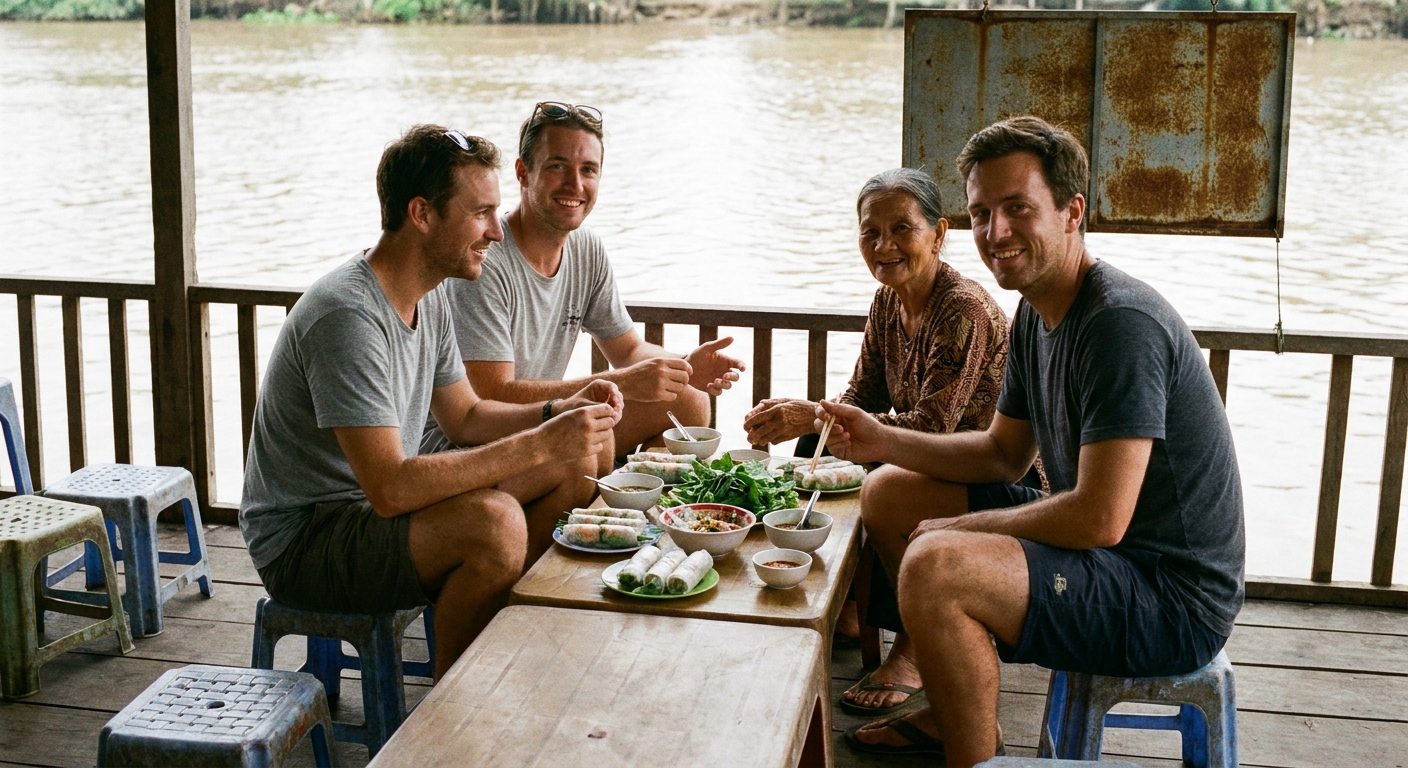
- Waking up to the sound of the Mekong’s early morning floating markets before the tourist crowds arrive.
- Cycling through quiet village lanes where the local children greet you with genuine curiosity rather than practiced sales pitches.
- Participating in the evening ritual of preparing traditional southern Vietnamese dishes with your homestay hosts.
- Watching the sunset over the river from a private hammock without the pressure of a bus departure time.
The irony of the one-day trip is that you spend the majority of your time in transit, effectively paying to sit in traffic rather than experience the landscape. The Mekong Delta is a vast, complex ecosystem of water and mud, and it takes time to acclimatize to that environment. When you stay for two nights, you give yourself the permission to stop moving and start noticing. You notice the way the water color changes with the tide, the subtle shift in local dialects, and the hospitality that feels less like a transaction and more like an invitation.
As you plan your itinerary, remember that the most profound travel experiences are rarely found on the busiest schedules. The Delta isn’t meant to be consumed in a single, rapid-fire sitting. It is meant to be absorbed slowly, over shared meals and long, humid evenings where the only thing on the agenda is watching the river flow toward the sea. By the time you head back to the city, you will find that you haven’t just visited a tourist destination; you have actually lived in the Mekong for a little while.