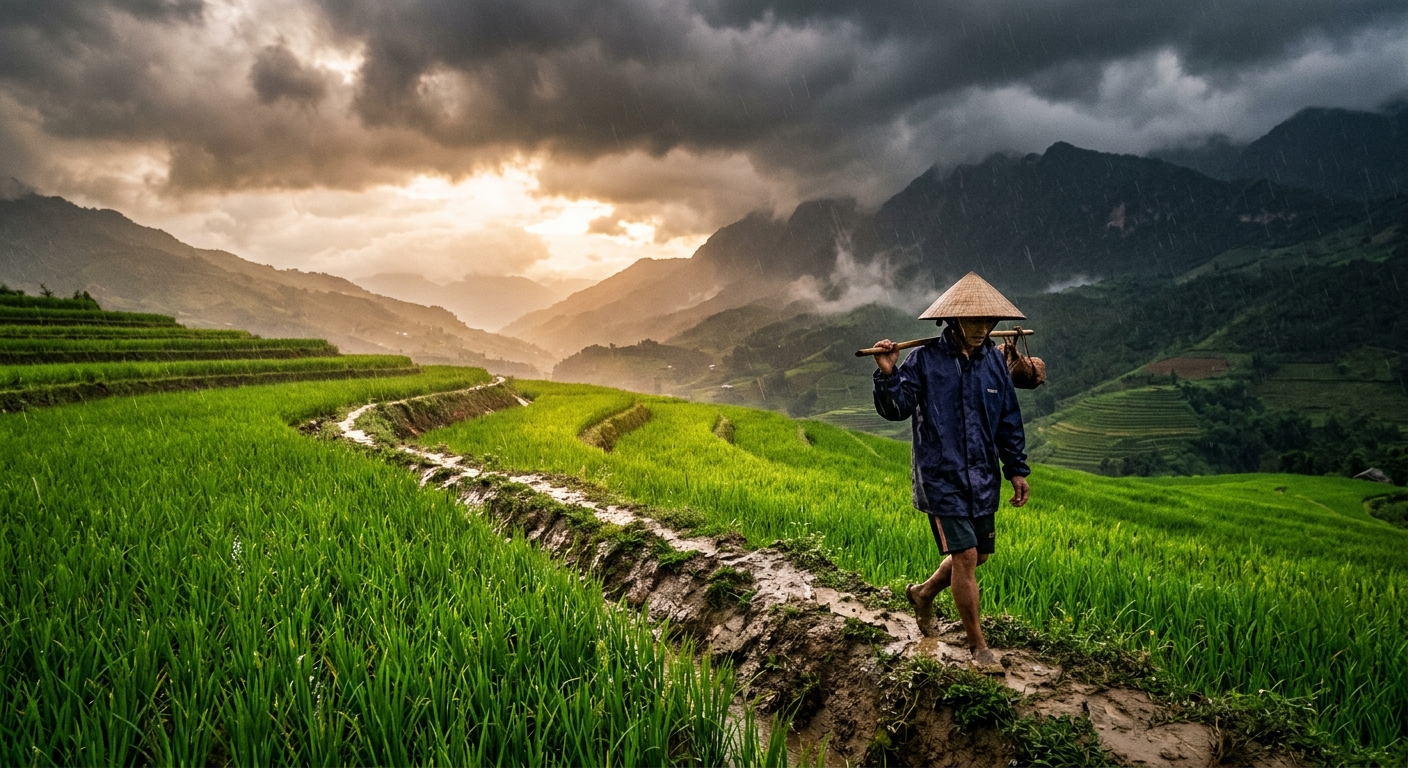
Most travel guides push Vietnam’s dry season as the obvious time to visit. What they rarely mention is that the rainy season, running roughly from May through October in the south and September through November in central Vietnam, has its own compelling advantages. Lower prices, thinner crowds, greener landscapes, and a dramatic atmosphere that the dry months simply cannot match. If you are flexible with your plans and comfortable with a little unpredictability, the wet season might actually be the better trip.
What the Rain Actually Looks Like
The phrase “rainy season” conjures images of all-day downpours, but that is not how it works in most of Vietnam. In the south, rain typically arrives as a short, intense afternoon thunderstorm that lasts an hour or two and then clears completely. Mornings are usually sunny and hot, evenings are warm and pleasant, and the daily rhythm of life barely pauses for the rain. In Hanoi and the north, rain is more frequent and less predictable, but still comes in bursts rather than all-day blankets. Central Vietnam is the exception, where October and November can bring sustained rain and occasional typhoons that genuinely disrupt travel plans.
Understanding this pattern matters because it means the rainy season is not a write-off for most of the country. Plan your outdoor activities for the morning, keep a compact umbrella or light rain jacket handy, and treat the afternoon downpour as a good excuse to duck into a cafe and enjoy Vietnamese coffee. Our packing guide for Vietnam covers the specific rain gear and clothing that makes wet-season travel comfortable.
The Advantages Nobody Talks About
Prices drop noticeably during the wet season. Hotels that charge premium rates in December and January often offer 30 to 50 percent discounts in June and July. The same applies to tours, cruises, and flights. A Ha Long Bay cruise that costs 250 dollars in peak season might run 150 during the quieter months, with fewer boats on the water and more personal attention from the crew. For tips on planning that cruise, see our Ha Long Bay planning guide.
The landscape also transforms. Rice paddies glow an almost impossibly vivid green, rivers run full, waterfalls are at their most dramatic, and the general lushness of the countryside is noticeably richer than during the dry dusty months. Photographers specifically target the rainy season for exactly this reason. The light is softer, the air is cleaner after a rain, and the atmosphere has a moody quality that makes for memorable images.
Practical Planning for a Rainy-Season Trip
The key to a successful rainy-season Vietnam trip is flexibility. Book refundable accommodations when possible, keep your daily plan loose enough to shift activities around the weather, and have a few indoor backup options ready for each destination. Museums, cooking classes, spa treatments, and the tailoring shops of Hoi An all work perfectly when the sky opens up.
Your visa application works exactly the same regardless of when you travel. The e-visa takes three working days, and you can check your visa status at any time on the official portal. For a complete overview of seasonal timing across every region, our month-by-month guide breaks down what to expect throughout the year. And if you want help building a rainy-season itinerary that maximizes the advantages and minimizes the wet, VietnamVisaHelp.com can put together a customized travel plan based on your dates and interests.