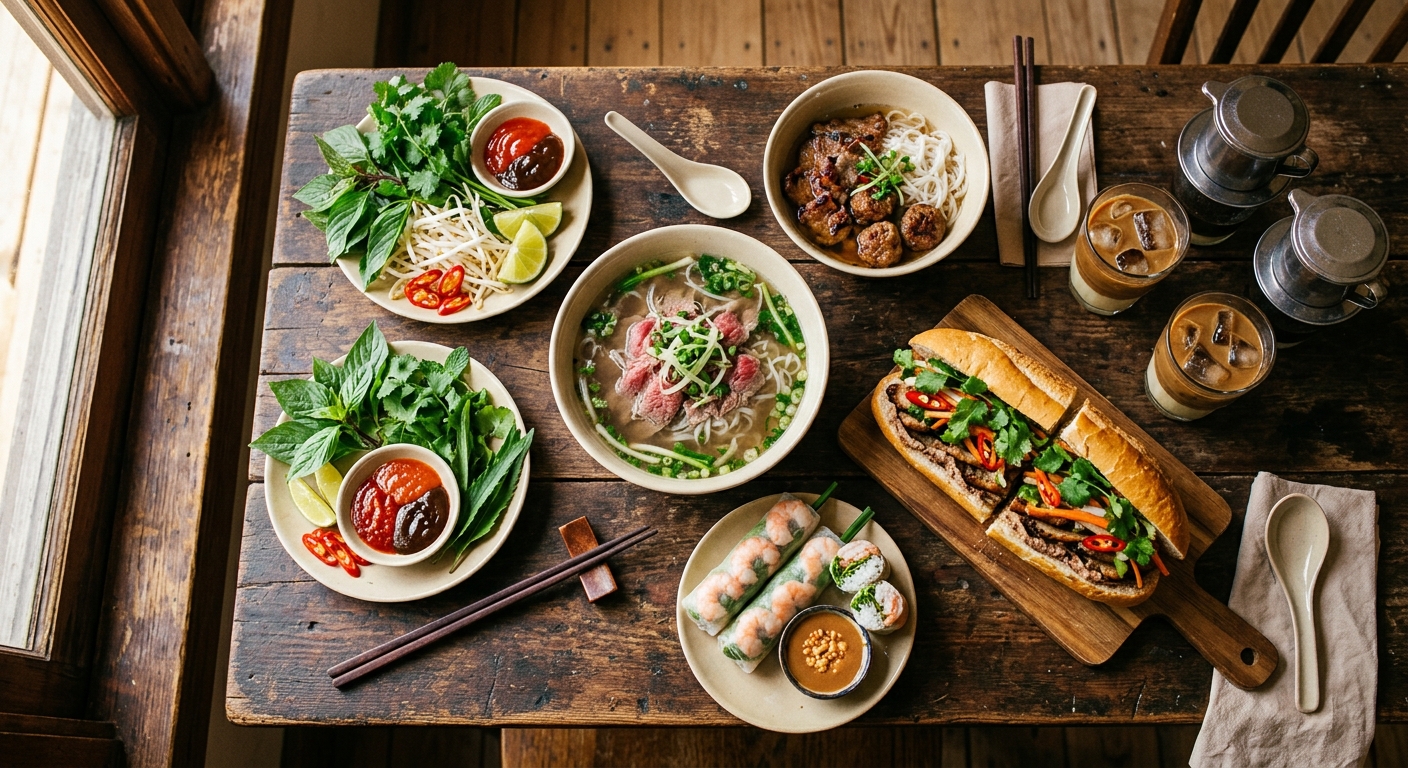
Vietnamese food is one of the great cuisines of the world, and eating your way through it is honestly reason enough to book the trip. The balance of fresh herbs, clean broths, fermented sauces, and crunchy textures makes Vietnamese cooking feel lighter and more vibrant than most other Southeast Asian kitchens. Every region has its specialties, and tasting them in the places where they originated is a fundamentally different experience from eating Vietnamese food abroad.
The Essential Northern Dishes
Pho bo (beef pho) is where most people start, and Hanoi is where it reaches its purest form. Northern pho is simpler than the southern version, with a clear, deeply flavored beef broth, flat rice noodles, and thin slices of beef, finished with a scattering of green onion and a squeeze of lime. The best bowls come from tiny stalls that serve nothing else and have been perfecting the same recipe for decades. For tips on finding these stalls and eating confidently from the sidewalk, check our street food beginner’s guide.
Bun cha is Hanoi’s other gift to the world. Small patties and slices of pork are grilled over charcoal and served in a bowl of sweet, vinegary dipping sauce alongside rice noodles and a mountain of fresh herbs. It is the dish that Barack Obama ate with Anthony Bourdain in Hanoi, and every neighborhood has its own loyally defended version. Egg coffee (ca phe trung) rounds out the Hanoi essentials — a dense, sweet whip of egg yolk and condensed milk sitting on top of strong Vietnamese coffee, served warm in winter and cold in summer.
Central Vietnam Specialties
Cao lau is unique to Hoi An and exists almost nowhere else. Thick, chewy noodles in a small amount of rich broth, topped with sliced pork, crispy croutons, and fresh greens. The noodles are traditionally made with water from a specific local well and ash from a specific local tree, which gives them a distinctive texture and color. Banh xeo, the sizzling crepe, reaches its crispiest and most generous form in central Vietnam. A turmeric-yellow rice flour pancake stuffed with shrimp, pork, and bean sprouts, wrapped in lettuce leaves and dipped in nuoc cham. Bun bo Hue from the old imperial capital is a spicy, complex beef noodle soup that many Vietnamese people consider the country’s best noodle dish, even ahead of pho.
Southern Favorites
Banh mi is everywhere in Vietnam, but Saigon does it best. The baguette is crustier, the fillings are more generous, and the combination of pate, cold cuts, pickled daikon and carrot, cilantro, and chili creates a sandwich that routinely appears on international best-of lists. Com tam (broken rice) is Saigon’s everyday lunch, a plate of fractured rice grains served with a grilled pork chop, a fried egg, shredded pork skin, and a side of pickled vegetables. Simple, cheap, and completely satisfying. Goi cuon (fresh spring rolls) are the clean counterpoint to the richer dishes, with shrimp, herbs, vermicelli, and lettuce wrapped in translucent rice paper and dipped in peanut or hoisin sauce.
Where to Eat and How to Get There
The best Vietnamese food is almost never in restaurants with English menus and tourist prices. It is on the sidewalk, in the market, and in the small family-run shops that serve one or two dishes and do them perfectly. For practical advice on how to navigate these places with confidence, our street food guide covers everything from choosing a safe stall to managing the bill. And for money tips including how much street food actually costs and how to handle the large dong denominations, see our money guide.
Before you fly, make sure your visa is sorted. The Vietnam e-visa takes three working days and you can check your status here. If you would like help planning a food-focused itinerary, VietnamVisaHelp.com can arrange cooking classes, guided street food tours, and market visits alongside your visa processing.