Every Vietnam e-visa status check runs on the same three pieces of information: the registration code, the email address used on the application, and the date of birth. Lose the first one and the other two are not enough on their own — the portal will not let you search by name or passport number alone. If you have gotten this far because a search box is staring back at you empty, the situation is more recoverable than it feels, but the fix depends on how the application was actually submitted.
The registration code is generated the moment an application is accepted, not when it is approved, and it is sent out in a single confirmation email at that exact point. That means it exists somewhere in an inbox even if the visa itself is still pending or was approved weeks ago — the code does not expire or get replaced by a later message. The first real step is a proper search, not a scroll: search your email for the sender’s domain rather than a subject line, since spam filters occasionally rewrite or truncate subjects in ways that make them impossible to spot by eye. Check the promotions and spam folders specifically, and if you applied from a work account with aggressive filtering, check whether IT quarantines anything from unfamiliar government domains before it ever reaches your inbox.
If you applied yourself directly on the official portal and a thorough search still turns up nothing, look at how the application was paid for. A bank or card statement showing the charge will usually carry a merchant reference distinct from the registration code, and while it will not get you into the status checker directly, it is proof an application exists and a useful thing to have ready if you end up contacting support. If the charge never appears at all, that changes the situation completely — it likely means the application was never actually submitted, which is a different problem with a different fix.
When someone else applied on your behalf
A large share of “lost code” situations are not really lost at all — they were never in the traveler’s own inbox to begin with. If a travel agency, a hotel, or a family member filed the application using their own email address, the confirmation went to them, not to you. In that case the fastest fix is simply asking whoever submitted it to forward the original email or read out the code directly, rather than trying to recover something that was never yours to search for. This is common enough with group bookings that it is worth checking before assuming anything has gone wrong.
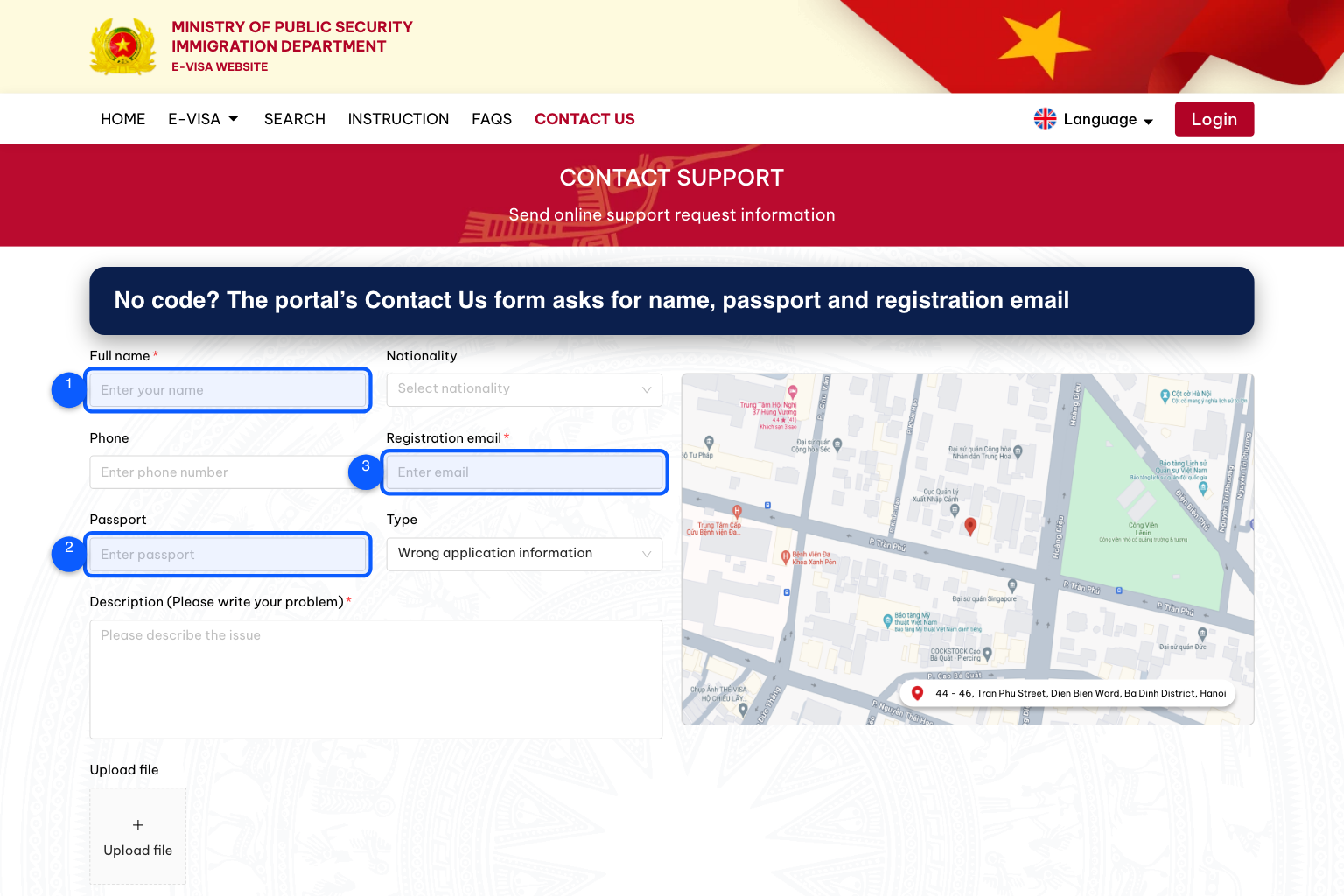
If none of that resolves it — no email trace anywhere, no one else holds the code, and the payment records lead nowhere — the portal itself has an official support and contact channel built for exactly this gap, and it is the right next step rather than repeated guessing at search fields. Have your full name, passport number, and the approximate date you applied ready when you use it, since that is what support will need to locate a file that the public search cannot find without its code. Reapplying from scratch should be a last resort, not a first instinct, since a duplicate application on the same passport can create more confusion than the one you started with.