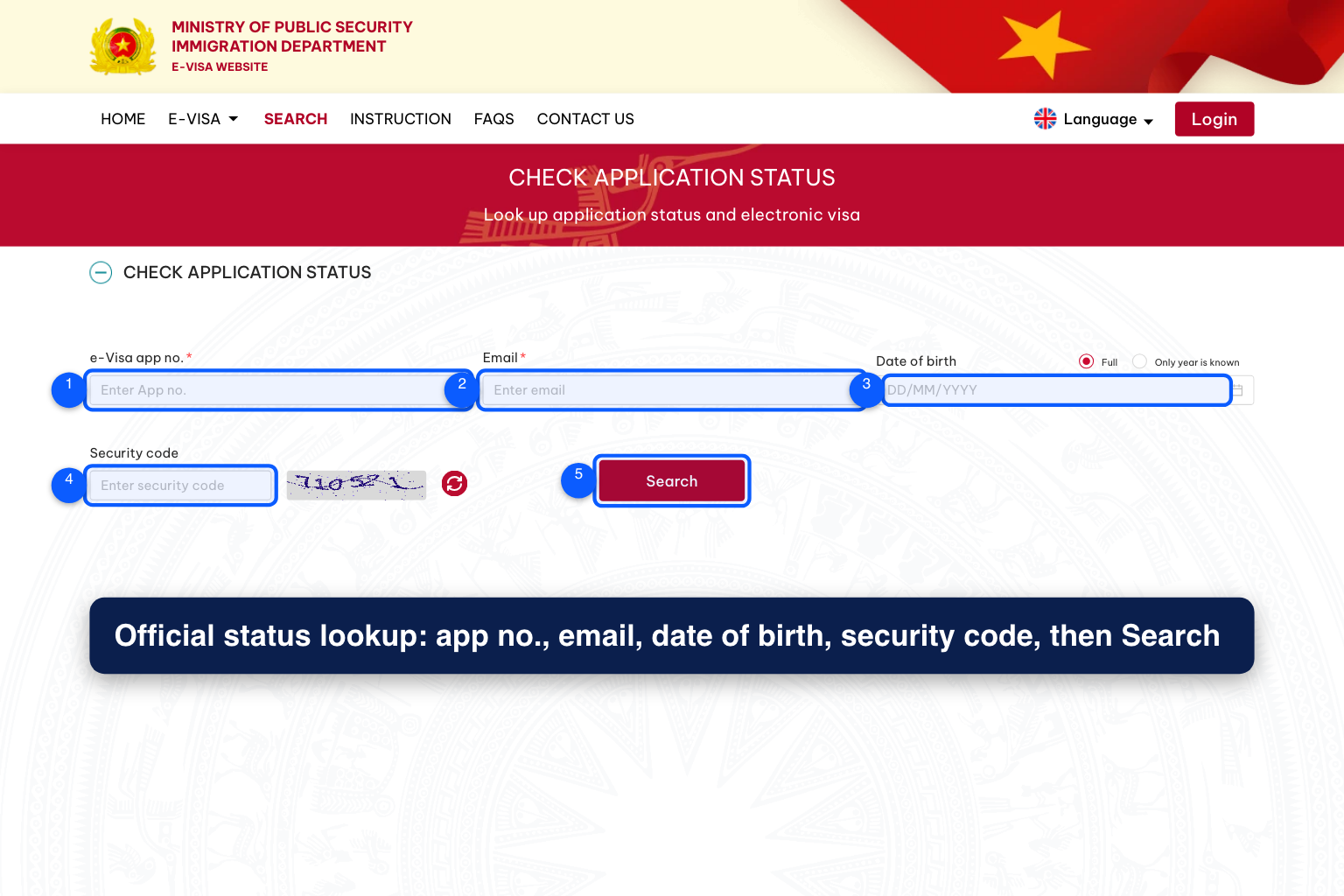
A Vietnam visa still processing after you paid is normal for the first three to five working days. That is the window the US State Department quotes for the e-visa, and weekends and Vietnamese public holidays do not count toward it. “Pending” or “processing” means your payment and documents are in the queue and no officer has decided yet. It is not a refusal in disguise. It turns into a problem on one condition only: your flight is closer than the working days left in that window.
The standard e-visa, the one most travelers select without reading the fine print, usually takes three to five working days, the range the US State Department gives. In practice the low end is a floor, not a promise. It excludes weekends and Vietnamese public holidays entirely, and it does not account for queue depth — the volume of applications the immigration department is processing that particular week. A file submitted on a quiet Tuesday in February moves differently than one submitted the week before Tet, when the entire country slows down for its biggest holiday. If you paid for an expedited or urgent tier, the promised window shrinks to hours rather than days, but “pending” can still appear briefly even on a fast-tracked file — it simply means your payment and documents have been accepted and are now in the review stage, not that something has stalled.
What “pending” does not mean is nearly as important as what it does. It is not a rejection in disguise, and it is not immigration flagging your file for a problem. Vietnam’s e-visa system uses a small set of status labels, and “pending” is the default holding state for every application that has not yet been reviewed by an officer — the vast majority of files pass through it without incident. The status only becomes meaningfully informative once it changes to “approved” or “not approved,” so checking every hour and finding the same word does not indicate anything has gone wrong; it indicates your file simply has not reached the front of the queue yet.
When “still processing” or “pending” starts to matter
There is a real point where patience should turn into action, and it is tied to your travel date rather than to the calendar in the abstract. If your flight is more than five days away and you are still within the standard three-working-day window, there is genuinely nothing to do but wait — reapplying or emailing the consulate at this stage tends to slow things down rather than speed them up, since it creates a duplicate record that support staff then have to reconcile. The moment that changes is when you cross the outer edge of the quoted processing window with no status change at all, particularly if your departure is inside 72 hours. At that point, a stagnant pending status stops being normal friction and starts being a signal worth escalating, whether that means checking your status through the official portal one more time on a fresh browser session or looking at whether an urgent-tier resubmission is realistic given the time you have left.
It is also worth ruling out the mundane explanations before assuming the worst. Payment confirmation delays, a mismatched passport number entered at submission, or a photo that failed an automated check silently can all leave a file sitting in a pending-like limbo longer than it should. None of these are catastrophic, but none of them resolve themselves by waiting longer — they need the applicant to go back into the portal and confirm the submission actually went through cleanly, rather than assuming “pending” always means “in a normal queue.” If you submitted days ago and have not received any confirmation email at all, that is a different problem than a pending status that simply has not updated, and it is worth checking your application reference number is valid before you do anything else.
The most useful thing you can do while a file sits in pending is decide, in advance, what your actual deadline is — not the day you fly, but the last day an alternative would still be possible if the standard application does not come through in time. Knowing that number turns a vague, anxious refresh-the-page loop into a concrete decision point: wait calmly until that date, and only then consider escalating. Most pending statuses resolve inside the quoted window without any intervention at all; the ones that do not are rare enough that a clear deadline, not constant checking, is what actually protects your trip.