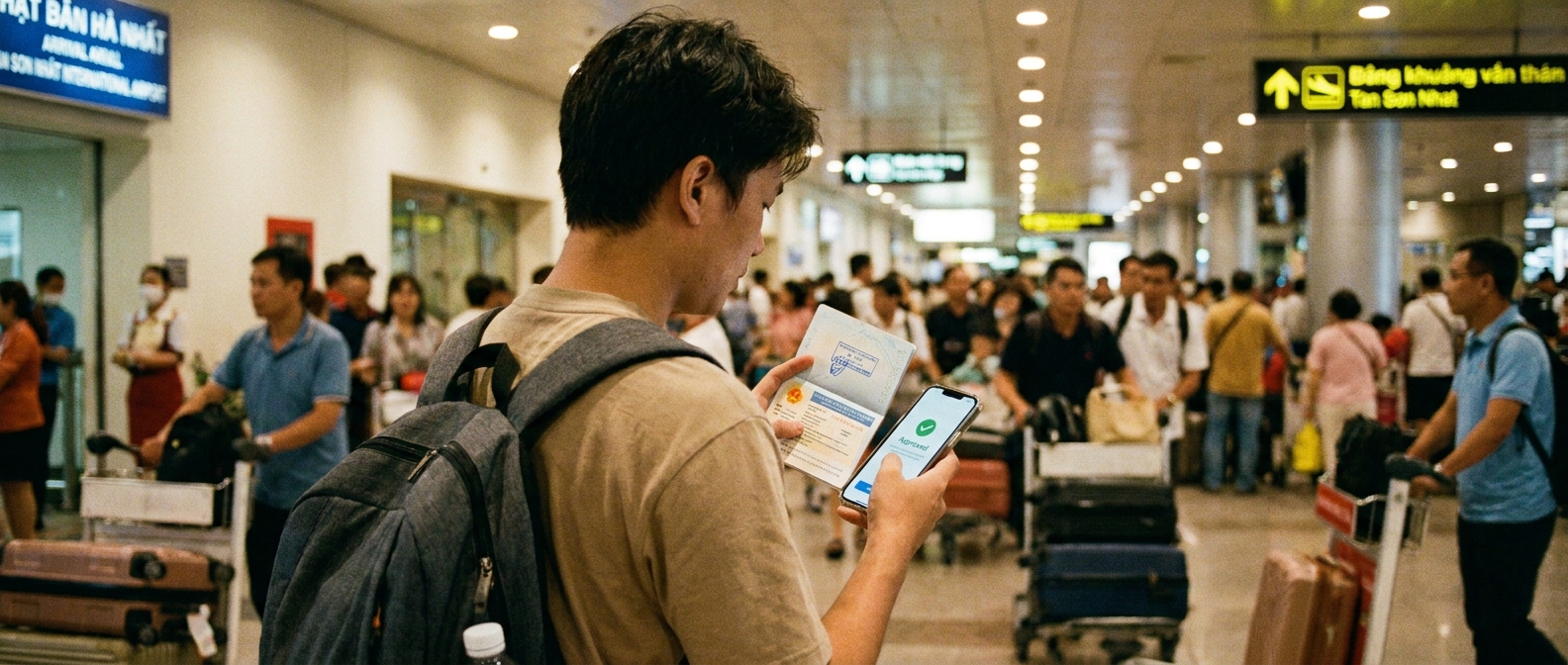
The humid air of Hanoi hits you the moment you step out of Noi Bai International Airport, and the last thing you want is a bureaucratic headache at the immigration desk. By 2026, the digital infrastructure for entry permits has become the standard, but the system remains notoriously opaque for those who aren’t familiar with its quirks. If you have submitted your documents and are currently staring at a blinking cursor or a blank government portal, take a breath. Checking your Vietnam visa status is a process that rewards patience and requires a very specific set of credentials that you likely saved in a confirmation email weeks ago.
To begin, you need to be absolutely certain you are on the official government website. There are dozens of third-party agencies that look official but are actually just middleman services. When you need to check your vietnam visa status, you should always return to the official immigration portal issued by the Ministry of Public Security. If you find yourself on a site ending in .com or .net, you are likely in the wrong place. Look for the .gov.vn domain extension. This is the only place where the government stores the authoritative record of your application, and it is the only portal that will give you a definitive answer regarding your entry eligibility.
Decoding the Portal and Your Application Details
Once you are on the correct page, you will need three distinct pieces of information: your registration number, your email address, and your date of birth. This is where many first-time applicants run into trouble. The registration number is not your passport number, nor is it the transaction ID from your bank statement. It is the alphanumeric code generated the moment you hit “submit” on your initial application. If you lost this, you are in a difficult position, as the system does not have a simple “forgot my number” recovery flow. Dig through your email archives for the subject line that mentions your application receipt, as that code is the key to unlocking your data.

When you input these details, the portal will display a status label. These labels are intentionally brief, and they often cause unnecessary panic. A status of “Processing” simply means your file is sitting in a queue. It does not mean there is a problem, nor does it mean you have been forgotten. The official processing time is typically three working days, but during peak travel seasons or around holidays like Tet, this can extend significantly. If you see “Payment Pending,” it suggests that your bank transaction may have stalled midway through the approval process, which is a common issue that requires you to re-attempt the payment portal before the application can move forward.
If the system returns “No Results Found,” do not immediately assume your application has been rejected or deleted. In many cases, this is a simple synchronization lag between the database and the public-facing portal. Try clearing your browser cache, using a different browser, or waiting a few hours before checking again. If you are still seeing nothing, check the email address you used to register. If the immigration office sent a request for supplemental documentation—perhaps a clearer scan of your passport or an updated photo—your status might be paused or hidden until you provide that missing link.

Understanding the labels is about managing your own expectations while waiting for the final document. Here is a breakdown of what you might see as you track your progress:
- Processing: Your application has been received and is currently being reviewed by an immigration officer.
- Payment Successful: The fee has been confirmed, and your file is officially in the queue.
- Granted: Your visa is approved and ready to be printed or downloaded for your trip.
- Rejected: Your application was denied, usually due to an error in the submitted personal details or a mismatch in documentation.
If you find that your departure date is approaching and your status hasn’t budged from “Processing,” the most effective path is to double-check the email account associated with your application. The immigration authorities rarely call; they communicate almost exclusively via the email you provided. Sometimes, a notification about a clerical error gets filtered into a spam folder, leaving you waiting for a status update that will never change because the system is waiting for your response. If you have confirmed there is no communication in your inbox and the deadline is within 48 hours, you have entered the realm of urgent inquiries. At this stage, you are looking at potential delays that might require re-submitting an application with a paid expedite service, though official government channels rarely offer a “fast-track” button once an application is already in the system.
Travelers often forget that the immigration officers behind these portals are human beings working through thousands of requests. Being methodical when you check your vietnam visa status is your best defense against the stress of last-minute travel changes. Keep a digital copy of your registration number in a secure location, and ensure your passport scan is perfectly legible before you hit the upload button. If the system shows that your visa has been granted, download the e-visa document immediately and save it in two separate places, such as a cloud drive and an offline folder on your phone. The goal is to arrive at the border with everything you need, confident that your paperwork is already waiting for you in the system, letting you move past the arrival hall and directly into the streets of Vietnam.