The 30-day e-visa is ideal for budget-conscious travelers planning a short vacation or a single-region trip. Conversely, the 90-day e-visa is the superior choice for digital nomads, slow travelers, or those planning to explore multiple regions across Vietnam, as it provides significantly more flexibility and eliminates the need for mid-trip extensions.

30-Day Vietnam E-Visa vs 90-Day Vietnam E-Visa — quick comparison
| Dimension | 30-Day Vietnam E-Visa | 90-Day Vietnam E-Visa |
|---|---|---|
| Maximum stay | Allows a total stay of up to 30 days from the date of initial entry. | Allows a total stay of up to 90 days from the date of initial entry. |
| Cost difference | The government e-visa fee is $25 for a single-entry authorization. | The government e-visa fee is $50 for a multiple-entry authorization. |
| Entry count | Restricted to a single entry; leaving the country invalidates the visa. | Permits multiple entries, allowing travel to neighboring countries and return to Vietnam. |
| Suitable trip length | Best for trips lasting between 3 and 25 days. | Best for trips exceeding 30 days or itineraries involving regional travel. |
| Cost per day | Approximately $0.83 per day based on a 30-day maximum utilization. | Approximately $0.55 per day based on a 90-day maximum utilization. |
| Extension possibility | Extensions are rarely granted and typically require complex agency processing. | Extensions are generally not required given the long duration, though subject to local immigration policy. |
| Decision triggers | Choose this if your dates are fixed and you do not plan to leave Vietnam. | Choose this if you want to visit Cambodia or Laos mid-trip or stay longer than a month. |
When planning a trip to Vietnam in 2026, the choice between a 30-day and a 90-day e-visa often comes down to the rigidity of your itinerary. The 30-day e-visa is the standard entry permit for most tourists. At a cost of $25, it is the most economical option for those who have a specific, short-term plan. However, the single-entry restriction means that if you decide to take a weekend trip to a neighboring country like Cambodia or Laos, your visa will be voided the moment you exit Vietnamese territory. Re-entering would require a brand-new visa application, which involves a 3-5 working day processing window.
The 90-day e-visa, priced at $50, is designed for travelers who prioritize flexibility. While the upfront cost is double that of the 30-day option, the daily cost is significantly lower. More importantly, this visa allows for multiple entries. This is a critical distinction for travelers who want to use Vietnam as a base for regional exploration. If you are planning to visit the northern mountains, fly to Thailand for a week, and then return to visit the Mekong Delta, the 90-day multiple-entry visa is the only legal way to accomplish this without repetitive bureaucratic hurdles.

A common mistake travelers make is underestimating the duration of their trip. If you arrive with a 30-day visa and realize you want to stay for 40 days, you cannot simply pay a small fee to extend your stay. In 2026, the extension process for e-visas remains administratively difficult and expensive, often requiring the services of an immigration agency. The cost of an extension frequently exceeds the initial price difference between the 30-day and 90-day visas. Consequently, if there is any doubt about your departure date, the 90-day visa acts as a form of insurance against forced overstays, which carry significant fines and potential blacklisting from future entry.
Port-of-entry behavior also plays a role in your decision. Both visa types are accepted at major international airports like Noi Bai in Hanoi and Tan Son Nhat in Ho Chi Minh City, as well as various land border crossings. However, you must ensure that your visa approval letter matches your exact point of entry. If you apply for a 90-day visa but your travel plans change and you arrive at a different port than the one stated on your application, you may be denied entry. Always double-check that your chosen port of entry is listed as an approved e-visa site before finalizing your application.
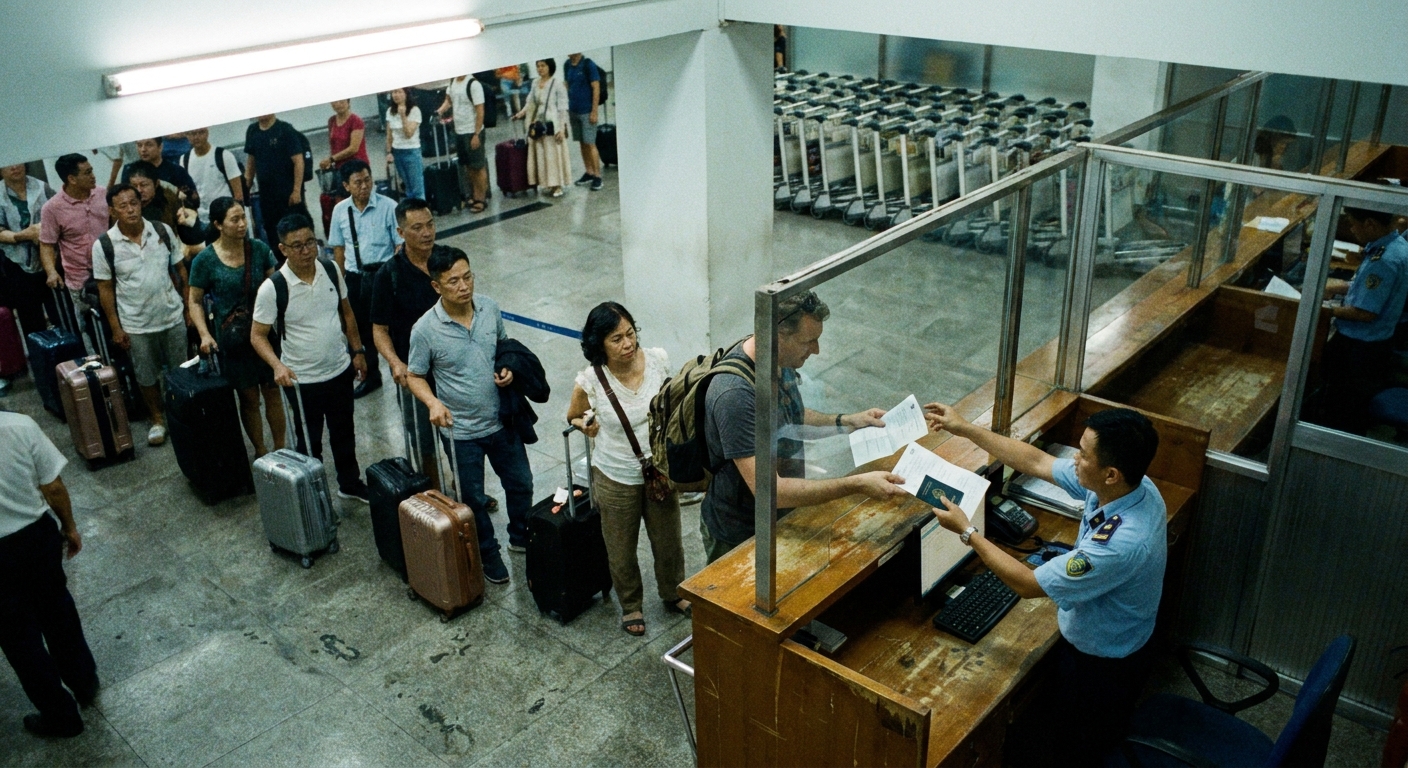
For digital nomads and long-term travelers, the 90-day visa is the clear winner. The ability to stay in one country for three months allows for a slower pace of travel, which often results in lower overall spending on transportation and accommodation. Conversely, the 30-day visa is perfectly adequate for the standard two-week vacation. If your itinerary is locked in and you have no intention of leaving the country, paying the extra $25 for a 90-day visa is unnecessary. By accurately assessing your travel goals, you can avoid both the risk of an overstay and the unnecessary expenditure of extra visa fees.
Frequently asked questions
Is the 90-day Vietnam e-visa worth the extra cost?
The 90-day visa is worth the extra $25 if your trip exceeds 30 days or involves multiple entries. It provides significantly better value per day and eliminates the high costs and logistical difficulties associated with attempting to extend a 30-day visa while you are already inside the country.
Can a 30-day Vietnam e-visa be extended to 90 days?
Extending a 30-day e-visa is not a standard procedure and is generally discouraged due to its complexity and high cost. It often requires hiring a third-party immigration agency to process the request, which is significantly more expensive than simply applying for the 90-day visa before your initial arrival in Vietnam.
Does the 90-day e-visa allow multiple entries?
Yes, the 90-day Vietnam e-visa is specifically designed to allow multiple entries. This feature enables travelers to exit Vietnam to visit neighboring countries and return without needing to apply for a new visa, provided the total duration of their stay does not exceed the 90-day limit granted upon their first entry.
Which is better for a 6-week trip — 30-day or 90-day visa?
A 90-day visa is the only viable option for a 6-week trip. Since a 30-day visa will expire two weeks before your planned departure, you would be forced to overstay your visa, which results in daily fines, potential legal issues, and complications when attempting to exit the country at the airport.
What is the daily-cost comparison between a 30-day and 90-day Vietnam visa?
The 30-day visa costs approximately $0.83 per day when utilized for the full duration. The 90-day visa costs approximately $0.55 per day when utilized for the full duration. While the 90-day visa has a higher initial price, it offers a much lower daily rate for travelers staying longer than one month.