Already applied and still waiting for your Vietnam e-visa?
Check the official status first. If it still says Processing and you fly soon, we can expedite the application you already submitted, with no new application and no second government fee.
Other speeds: 48 h US$69 · 4 h US$159 · 1 h US$209 per applicant. Private service, not the Vietnamese government.
Search for a way to track a Vietnam e-visa and you will find more than one option claiming to do the job — the official government lookup, a handful of third-party status checkers, and sometimes a tracking page buried inside the site of whichever agency processed your application. They are not interchangeable, and the differences matter more than most travelers realize until the moment one of them gives an answer the other doesn’t.
Only want to check your status? Use the official portal — our step-by-step Vietnam visa status check shows what to enter and what each result means.
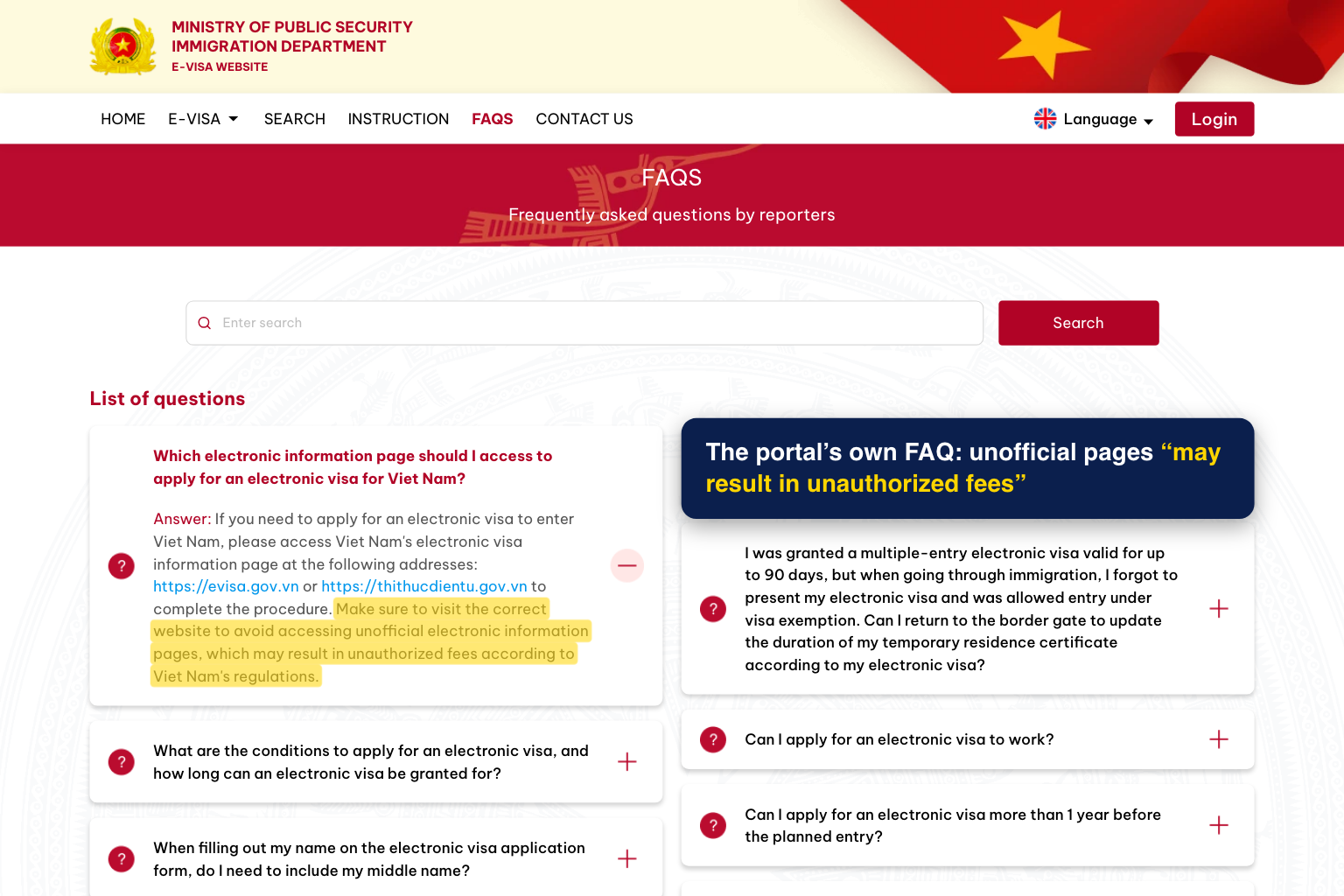
The official government portal is the source of truth in the most literal sense: it is the same database an immigration officer would consult, updated the moment a decision is actually made. Nothing about your application exists anywhere else first. A third-party tool can only re-ask the portal the same question on your behalf, using the details you hand it; Vietnamese immigration publishes no separate feed for anyone to tap. The tradeoff is that the government interface is built for function rather than clarity. It expects your application number and date of birth exactly as submitted, offers no explanation when a status doesn’t change for days, and uses a small, terse set of labels that assume you already understand Vietnamese immigration terminology. For someone checking calmly a week before their flight, that bluntness is rarely a problem. For someone checking anxiously the night before, it can feel like being told nothing at all.
Third-party checkers exist to fill exactly that gap. None of them can show you anything the portal doesn’t already have, and no service, however polished, has a faster or more privileged connection to Vietnamese immigration than the government’s own system. What a good one adds is context: plain-language explanations of what a given status actually means, estimated timeframes based on patterns across many applications, and a cleaner interface that doesn’t require you to remember an exact application number format. What a bad one adds is false confidence — a friendly progress bar or a reassuring percentage that implies a precision the underlying data simply doesn’t have, since the government source itself only exposes a handful of discrete states, not a live percentage of completion.
Which one to trust when they disagree
On the rare occasion a third-party tool and the official portal show something different, the official portal is correct by definition — not because it is more trustworthy in spirit, but because it is structurally the only place the underlying record actually lives. A mismatch almost always traces back to one of two causes: the third-party tool cached an older result and hasn’t re-queried yet, or you entered your details slightly differently between the two systems, most commonly a passport number transcribed with one digit off. Before assuming anything alarming, re-enter your details on the official portal by hand rather than copying and pasting, since a stray space or an autofill error is a more common culprit than an actual discrepancy in your application’s status.
The practical approach that avoids most of this confusion is to treat the two tools as having different jobs rather than competing for the same one. Use a well-explained third-party checker for the day-to-day question of “is this still normal,” since that is exactly the reassurance-and-context role it is suited for. Reserve the official government portal for the moment that actually matters — confirming the final status before you travel, and retrieving the approval document itself, since that is the one place guaranteed to have both. Checking obsessively on either tool multiple times an hour does not speed anything up on the immigration side; the record updates on its own schedule regardless of how often it is queried, so a single check each morning tells you everything a dozen checks would.
If you are down to your final 48 hours before departure and still see no change on either system, that is the point where the distinction between the two tools stops mattering and direct action starts — verify your application number is correct on the government portal one more time, and if it genuinely shows no record or an unchanged pending status against a departure that close, treat it as a real deadline rather than something to keep monitoring passively.