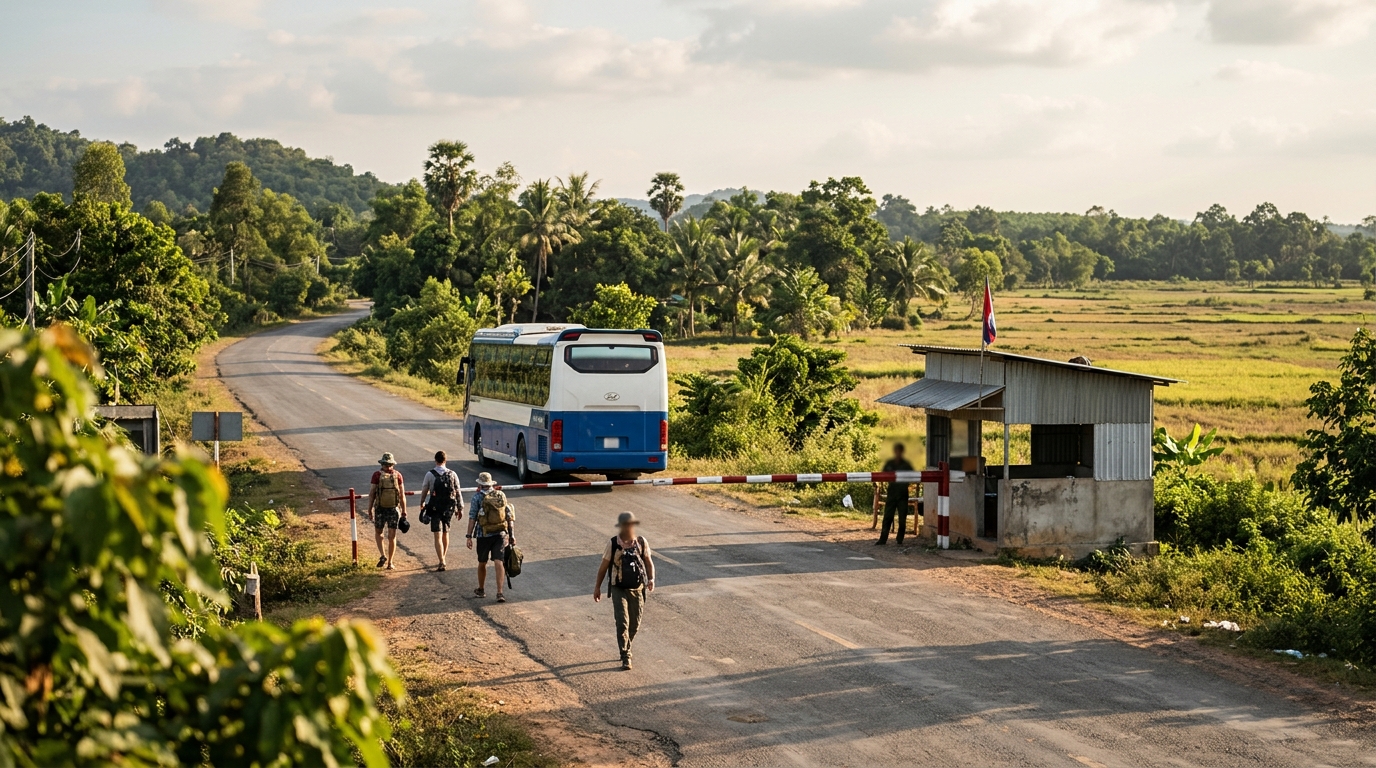
A visa run is a day trip out of Vietnam and straight back in, so your stay starts again. In 2026 it still works, and the bill is small if the timing holds. The catch is the paperwork order: if you entered on an e-visa, the new e-visa you come back on must be approved before you reach the border, ideally with the border gate named as its entry point. The official queue is 3 to 5 working days. Book the bus for day two of that window and you are standing in Cambodia with no way home.
Ask online, we answer right awayType your question on this page. No app to install, no number to save.Ask onlineWho needs a visa run, and who doesn’t
| You entered on | What a run does | Paperwork |
|---|---|---|
| A visa-exempt passport (UK, most of the EU, Japan, Korea and the other 45-day countries; ASEAN neighbours on 14–30 days) | Resets your stay. A fresh 45-day (or 30-day) stamp on re-entry. | None for Vietnam. The old rule that you had to stay out 30 days between visa-free visits was removed by Law 51/2019; the Ministry of Public Security’s own Q&A says the only conditions left are six months’ passport validity and not being on a ban list. |
| A single-entry e-visa | Ends it. Your e-visa is used up the moment you exit. | A new e-visa, approved and printed, entry point = the gate you come back through. |
| A multiple-entry e-visa | Nothing. You can leave and return, but the valid-to date on the e-visa doesn’t move. | None until the e-visa expires; then it is a new e-visa, same as above. |
The Ministry of Public Security’s published answer on “nhập cảnh theo diện đơn phương miễn thị thực” (entry under the unilateral visa exemption) is in Vietnamese; the operative line is that the 30-day gap “đã được bỏ” (has been removed) and no further condition was added. Officers at Moc Bai apply it; blog posts from 2019 do not.
The runs people actually do
| From | Gate | Other side | Day |
|---|---|---|---|
| Ho Chi Minh City | Moc Bai → Bavet | Cambodia: visa on arrival at the land crossing, US$30 for a 30-day tourist visa according to Cambodia’s Ministry of Tourism visa guide, paid in US dollars cash, one photo. Or the Cambodian e-visa, applied at least 4 days ahead. | Same day. This is the run most expats mean. |
| Da Nang / Hue | Lao Bao → Dansavanh | Laos: visa on arrival at major checkpoints, single entry, 30 days; the fee depends on your passport. Lao e-visa needs 5 days’ notice. | A long day from Hue, longer from Da Nang. |
| Hanoi | by air | The land gates north of Hanoi lead into China, which needs a Chinese visa or a visa-free passport, so most Hanoi runs are a flight out and back (Bangkok or Kuala Lumpur). Your new e-visa then names Noi Bai airport, not a land gate. | One night away, usually. |
Gate opening hours, what the Vietnamese side checks, and why a visa-on-arrival letter is useless at a road crossing are covered in Vietnam land border crossing: the visa rules that apply. This page stays on the run itself.
The e-visa catch, in order
- Apply from inside Vietnam, early. You are allowed to; the UK Foreign Office notes an e-visa issued while you’re in the country only starts once you exit and re-enter. Official processing is 3 to 5 working days, and Vietnamese public holidays don’t count.
- Set the entry point to the gate you’ll walk back through (Moc Bai, Lao Bao, or the airport). The US State Department advises entering at the port you chose on the application. The official e-visa portal’s FAQ adds that e-visa holders must use the international gates the government designates, but do not have to leave through the gate they came in by.
- Print it. The US State Department’s guidance is to carry the printed e-visa with your passport; a PDF on a phone with no signal at Bavet is not a document the officer can read.
- Leave on or before your stamped date. One day over is an overstay: the UK Foreign Office warns that the authorities can hold you until the fine is paid and can bar you from coming back. The new e-visa does not erase it.
What a run costs
The Vietnamese side is US$25 for a single-entry e-visa on the government portal (US$50 multiple), plus the Cambodian US$30 on the day. Transport is a bus ticket. That is the whole bill if your timing holds.
Where it stops being cheap is an e-visa that is still “processing” with the bus leaving tomorrow. You can check your Vietnam e-visa status first; if it has not moved, you can expedite the application you already filed rather than file again:
| Approved within | 48 h | 24 h | 12 h | 4 h | 2 h | 1 h |
|---|---|---|---|---|---|---|
| Price | $69 | $99 | $139 | $159 | $189 | $209 |
Filing a second application does not help: the first fee is gone and you now have two file numbers for one passport at the border.
Four ways a visa run goes wrong
- Counting the 30-day gap. It no longer exists. Someone telling you to spend a month in Cambodia first is reading 2019 advice.
- The wrong gate on the e-visa. Your e-visa says Tan Son Nhat; you are on foot at Moc Bai. The e-visa is valid only at the point it names, so at any other gate you are a traveller without a visa, and the way back is through Phnom Penh airport.
- “Processing” on the morning of. What pending means on the Vietnam e-visa portal explains which statuses are waiting on you and which are waiting on the Immigration Department. Don’t cross until it says approved.
- Treating the run as a renewal. It is a new entry. If you want 90 days rather than another 45, that is a decision you make on the e-visa form (90-day validity, single or multiple entry), not at the gate.
Is a visa run still allowed in Vietnam in 2026?
Yes. Vietnam sets no limit on repeat entries and, since Law 51/2019 took effect in 2020, no waiting period between visa-exempt visits; the Ministry of Public Security confirmed this in a public answer in January 2024. What does close the door is an overstay: the UK Foreign Office notes you can be fined, deported and prevented from visiting Vietnam again, so keep every stay inside the stamped date.
Can I do a visa run on a single-entry e-visa?
Only with a new e-visa in hand. A single-entry e-visa is used up when you exit, so the one you come back on must already be approved and printed, ideally with the border gate as its entry point. Apply at least five working days before the run.
Can I apply for the new Vietnam e-visa while I am still in Vietnam?
Yes. The e-visa is issued online regardless of where you are, but it only takes effect once you leave and re-enter, which is exactly what a visa run does. Set the entry point to the crossing you will use.
Which border is best for a visa run from Ho Chi Minh City?
Moc Bai to Bavet, the standard road crossing west of the city. Cambodia issues a 30-day tourist visa on arrival at the crossing for US$30 in cash with one photo, and you can turn around the same day. Make sure your new Vietnam e-visa names Moc Bai as the entry point.
What if my new e-visa is still processing on the day of the run?
Don’t cross. Without an approved e-visa you can leave Vietnam but not come back, and the Cambodian visa only covers Cambodia. Check the status, and if the date is fixed, expedite the application you already filed; priority handling runs from 48 hours down to 1 hour.