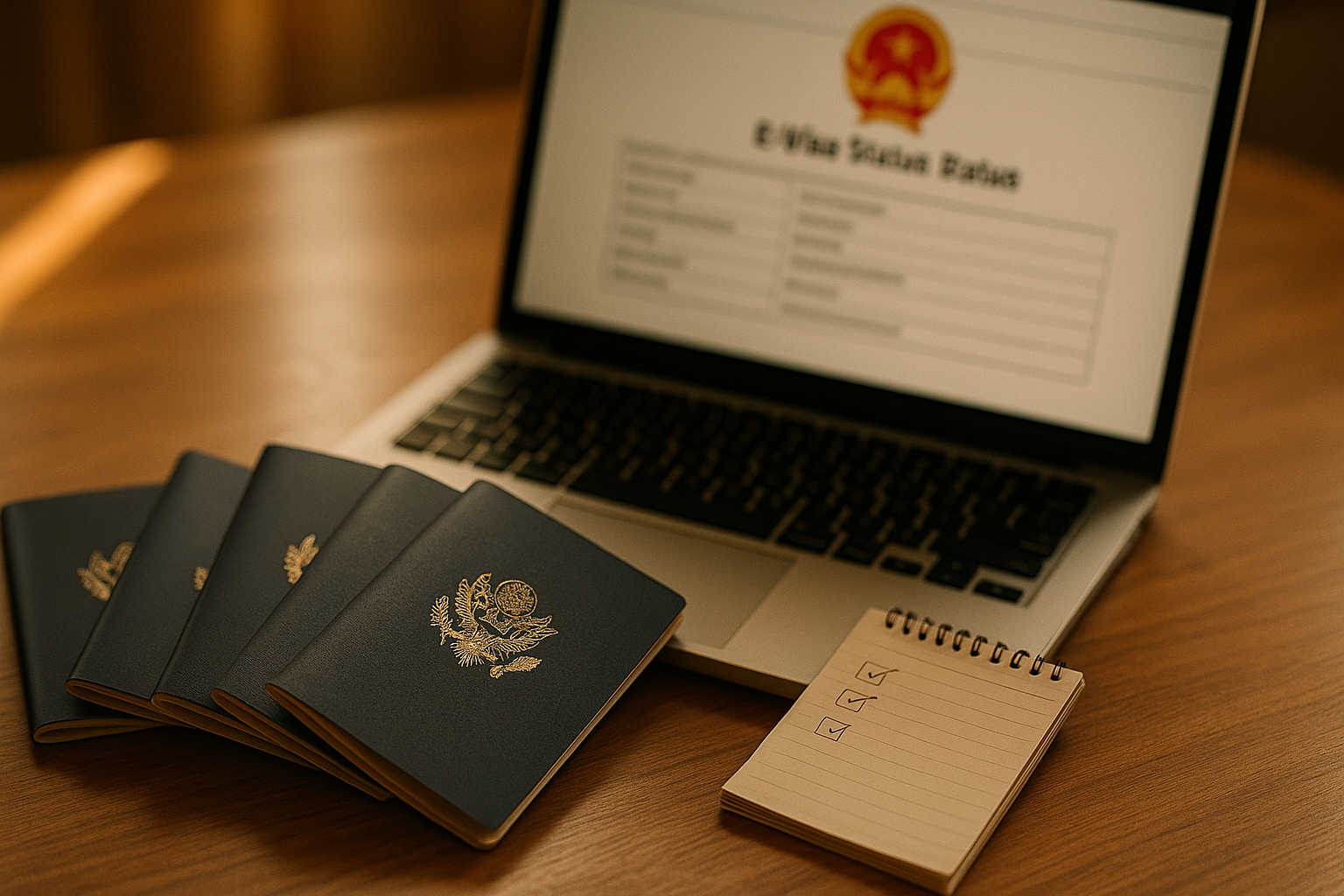
A family of four or a group of friends booking a trip together naturally starts looking for one status check that covers everyone, the same way one flight booking reference covers a whole itinerary. Vietnam’s e-visa system does not work that way. It is built entirely around the individual passport, which means a group application submitted in a single sitting still produces as many separate registration codes as there are travelers, each tracked on its own timeline with no shared reference number tying them together.
This catches people off guard mainly because the confirmation email can make it look unified. Applying for several people through the same portal session, or through a single agency booking, often lands in one inbox as one message — but read that message closely and it typically lists a distinct registration code per name rather than one code for the whole party. If that email gets skimmed rather than read line by line, it is easy to walk away thinking there is a single code to save, and then find the status checker rejecting it later because it only ever matched one of the travelers.
The practical implication is that “checking the group’s status” actually means checking it once per person, using that person’s own code, their own email address as submitted, and their own date of birth. There is no shortcut where checking one traveler tells you anything reliable about another, even if they applied at the exact same time from the exact same device. Processing speed can also genuinely differ between two applications submitted minutes apart — one passport’s file can clear review while another in the same group sits in the queue longer, for reasons that have nothing to do with how the application was filed.
Keeping a group’s codes from getting mixed up
The cleanest habit, especially for groups of three or more, is a single shared note or spreadsheet made at the time of submission — one row per traveler, holding their registration code, the email address used, and their date of birth exactly as entered on the form. Built at submission time, this takes a minute; reconstructed later from memory after someone has misplaced their confirmation email, it can take much longer, especially if one traveler in the group is not the one who is fluent in checking these things.
It is also worth deciding, before departure, who in the group is responsible for confirming that every single code has reached “approved” — not just the organizer’s own. A group where everyone assumes someone else checked their status is exactly how one unapproved application makes it all the way to the airport unnoticed. Five minutes spent confirming each code individually, a day or two before travel, is what actually closes that gap.