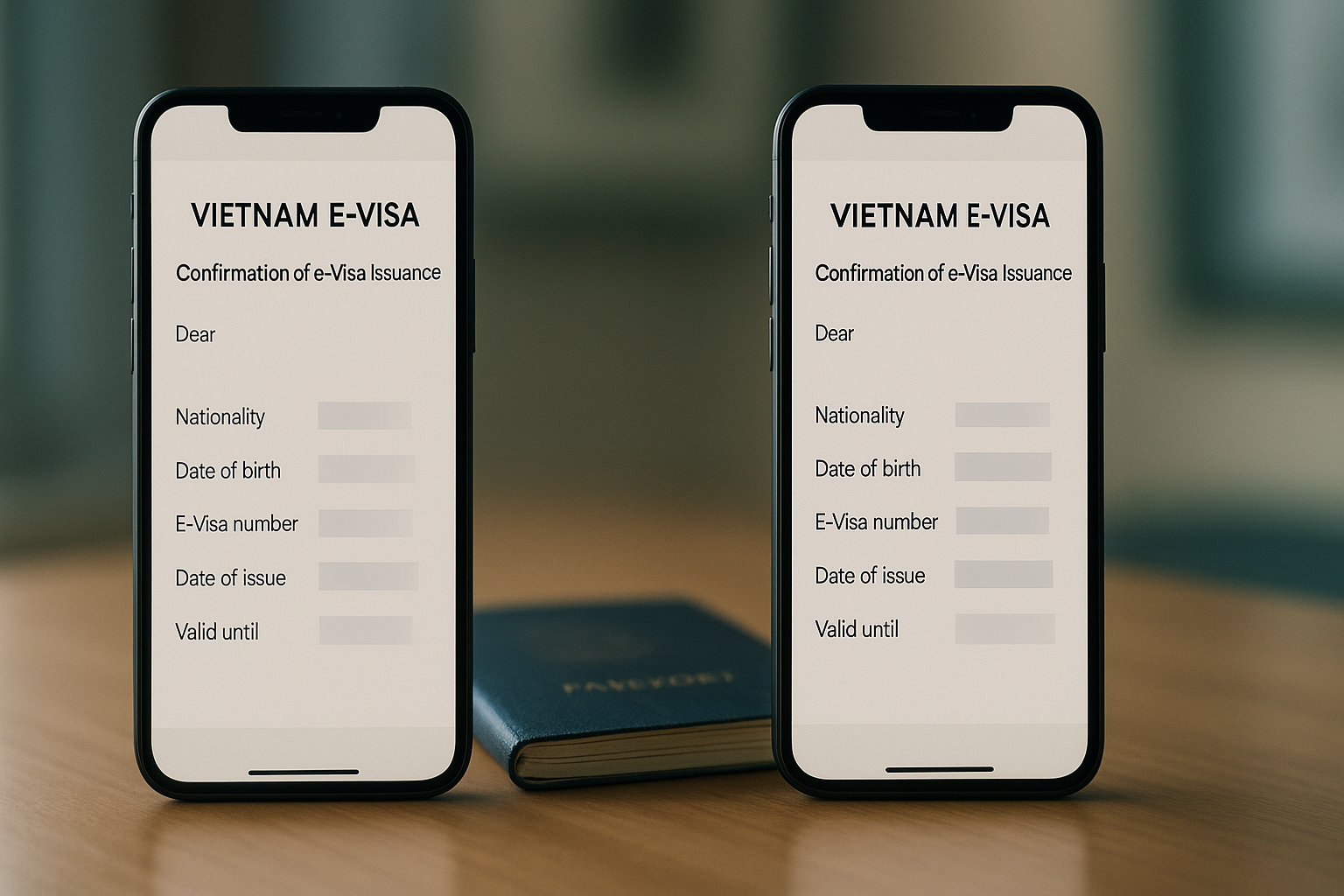
Two confirmation emails landing in the same inbox for what was meant to be one application is more unsettling than it should be, especially when the two registration codes come back with different statuses when checked. One says “pending,” the other says “approved,” and suddenly the question is not just which one is correct, but whether you are about to travel on the wrong document entirely. The short version: both are real applications, the portal treats them as completely separate files, and nothing about it merges automatically. Here is how to check each code on the official portal.
This almost always traces back to the payment step rather than anything done wrong with the travel details themselves. A card gets declined or the confirmation page hangs after a payment attempt, the applicant assumes nothing went through and submits again, and the first attempt turns out to have gone through after all — just slowly. Because the portal has no way to detect that the same person is reapplying for the same trip, it processes the second submission exactly like a first-time application, generating its own registration code, its own review, and its own independent status. Nothing in the system flags the two as related, which is exactly why both can sit there with different answers when you check.
The practical question is which one to trust, and the answer is whichever one actually reaches “approved” first with details that match your passport correctly — checked on the government portal rather than a third-party status checker. A registration code that resolves to “approved” is the one worth keeping and printing; the other should not simply be ignored, because a second live application on the same passport can occasionally cause confusion at immigration if both happen to be raised at once. If the second file is still pending once the first has cleared, it is worth using the portal’s official contact channel to have the duplicate formally withdrawn rather than letting it run in parallel indefinitely.
What not to do while both are live
Do not submit a third application on the theory that one of the first two must be broken. Each new submission is a new government fee, and the fee is not refunded for an application that turns out to have been unnecessary — three live files is a harder problem to untangle than two, not an easier one. It is also worth resisting the urge to check both every few minutes; checking does not change the outcome, and the two statuses updating on different timelines is normal rather than a sign either one has stalled.
Once you know which application is the real one, keep both registration codes on hand anyway, at least until you have landed. If an immigration officer ever asks about a second record turning up under the same passport, being able to explain it — and show that the approved application is the one you are traveling on — resolves it in seconds. The confusion is administrative, not a mark against you, and it clears up completely the moment one of the two files reaches a final decision.